Stop Decorating Like Everyone Else: The Rules of Eclectic Interior Design

Eclectic Interior Design

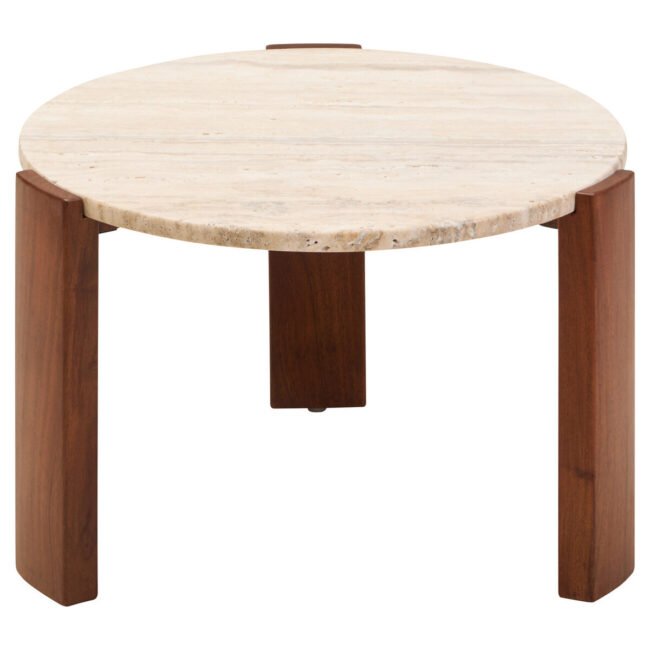
There’s a particular kind of exhaustion that sets in when you scroll through yet another living room that looks exactly like the last fifty you’ve seen. Same bouclé sofa. Same arched floor lamp. Same travertine coffee table with the same carefully styled coffee table books. The algorithm has spoken, and apparently, we’ve all agreed to live in minor variations of the same beige, minimalist dream—a dream that, for many of us, doesn’t actually feel like home.

This is where eclectic interior design enters as both rebellion and refuge. It’s the design philosophy for people who’ve realized that a home should tell stories, not follow scripts. It’s for those who understand that personality isn’t a design flaw—it’s the entire point. But here’s the crucial distinction: eclectic interior design isn’t about throwing everything you love into a room and hoping for the best. It’s not visual chaos masquerading as creativity, nor is it the maximalist cousin of hoarding. True eclecticism is a sophisticated art form that requires more thought, not less, than picking matching furniture sets from a single catalog.

The word “eclectic” comes from the Greek eklektikos, meaning “selective” or “choosing the best.” And that’s precisely what makes this approach so powerful and so misunderstood. Eclectic interior design is about curation, intention, and the courage to trust your own aesthetic instincts rather than outsourcing them to trend cycles. It’s the practice of mixing furniture styles, historical periods, cultural influences, textures, and color palettes in ways that somehow—almost magically—create cohesion through contrast.

This isn’t decorating without rules. It’s decorating with different rules—ones that prioritize harmony over uniformity, personality over perfection, and visual interest over playing it safe. In the pages ahead, we’ll unpack the principles that separate thoughtfully eclectic spaces from cluttered confusion, exploring how to build rooms that feel both boldly individual and beautifully balanced. Because the truth is, eclectic interior design isn’t just accessible—it’s liberating. And it might be exactly what your space has been waiting for.

Before we can master eclectic interior design, we need to clear up what it is—and what it categorically is not. This matters because eclecticism has become a catch-all term for everything from carefully curated bohemian spaces to rooms that simply lack any discernible design direction.

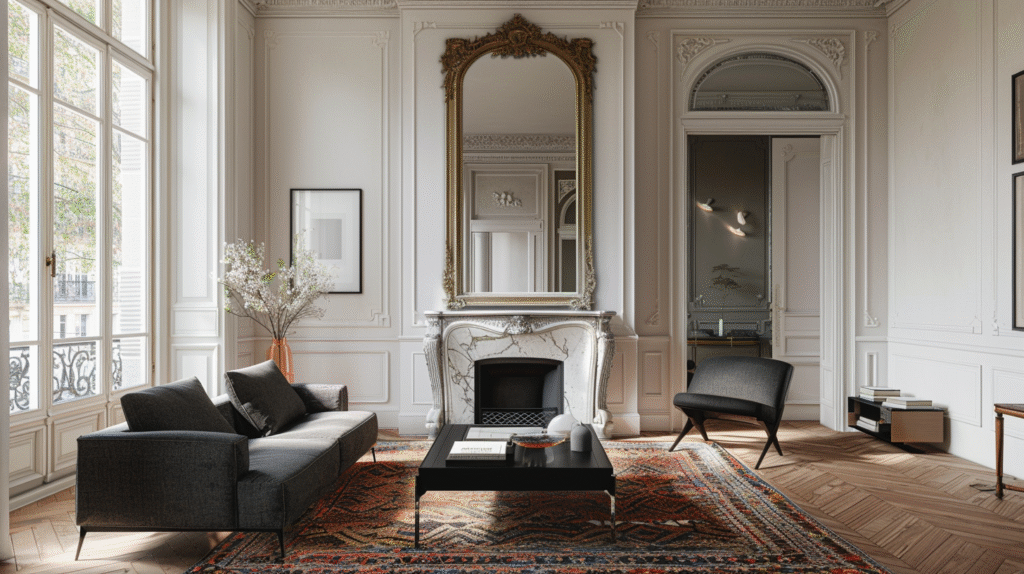
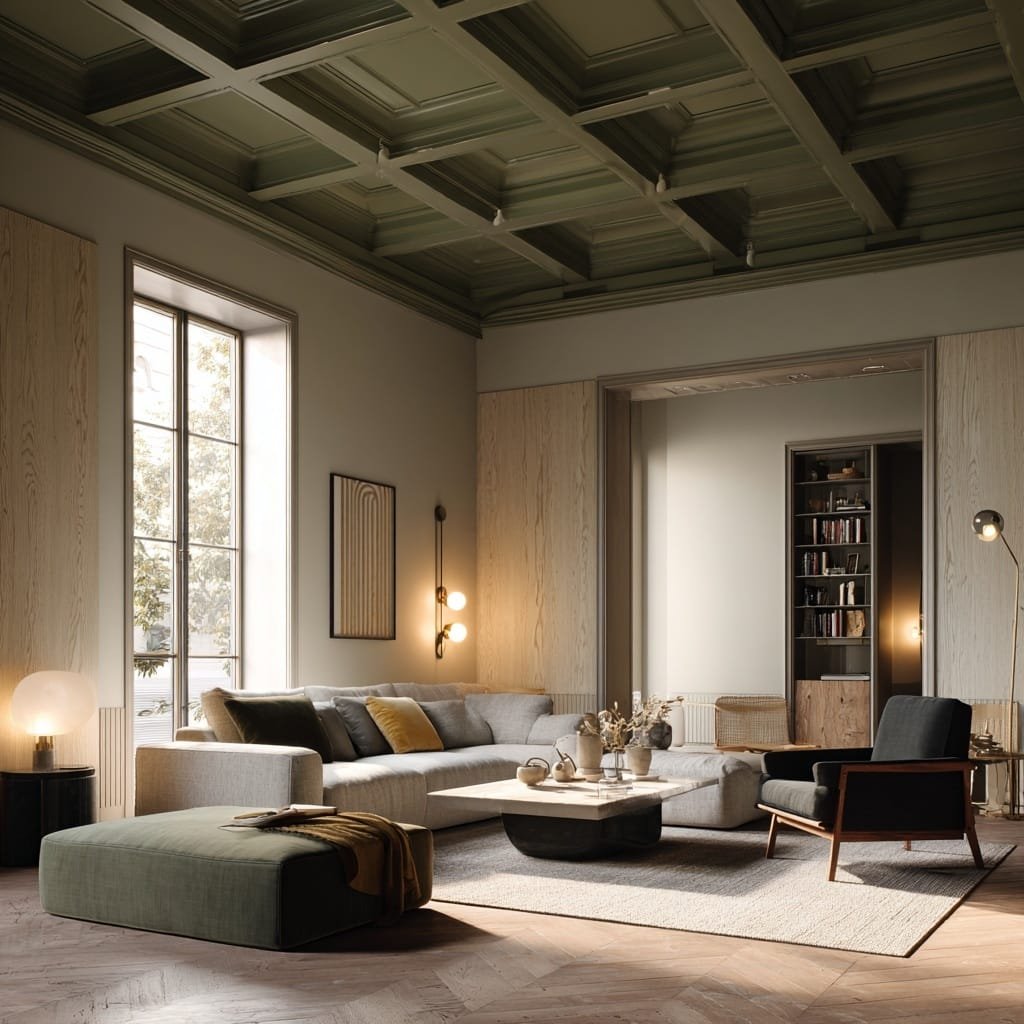
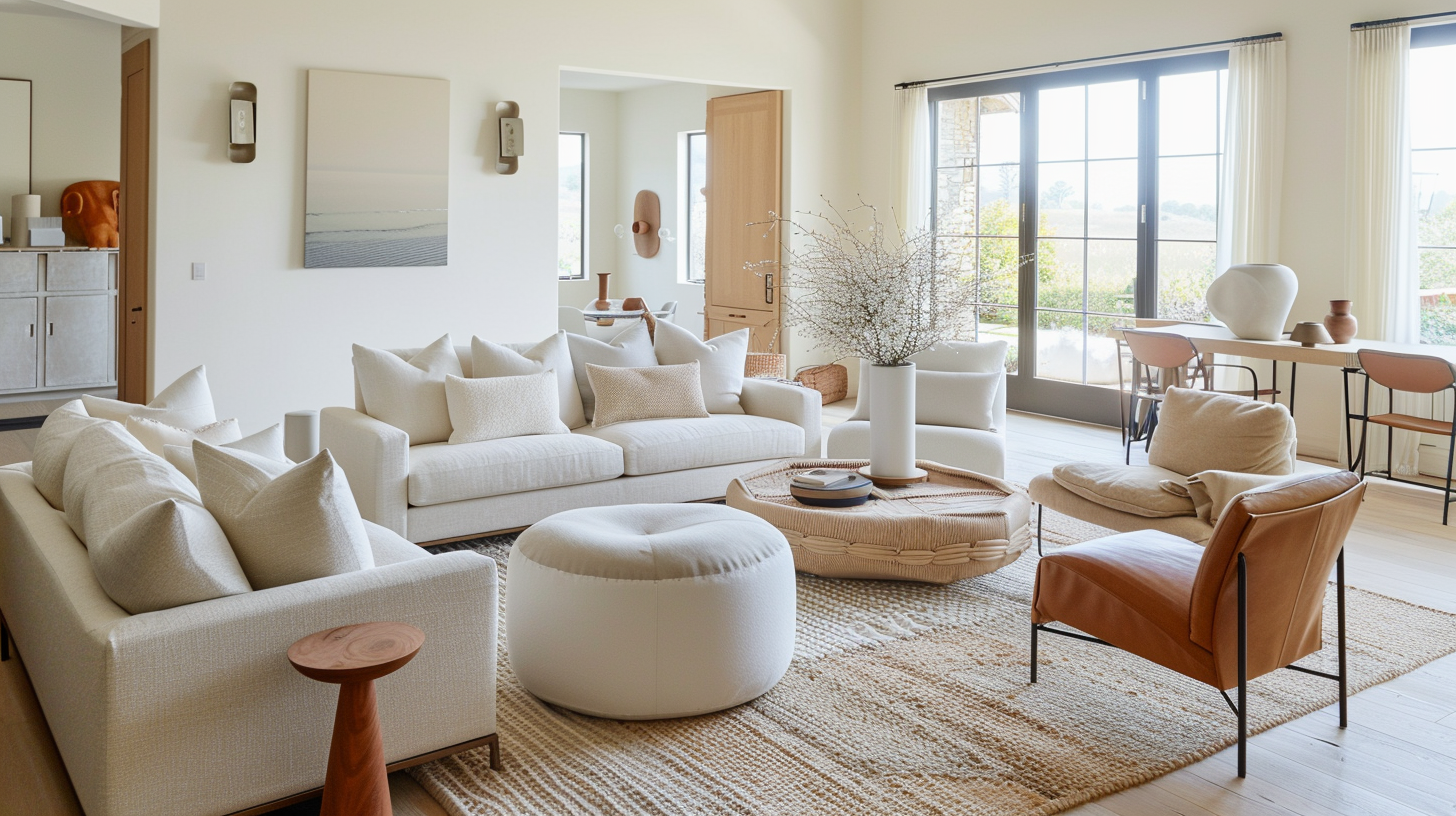
Eclectic interior design is the intentional practice of combining elements from different design styles, time periods, geographical origins, and aesthetic traditions to create a unified whole that reflects individual taste and lived experience. It’s the mid-century modern credenza next to the ornate Victorian mirror. It’s the Moroccan rug anchoring a room with sleek Scandinavian furniture. It’s the contemporary art gallery wall above an antique French settee.

What it’s not: random assemblage. Cluttered maximalism without editing. The accumulation of every trend you’ve ever liked without considering how they speak to each other. A room where nothing relates to anything else beyond happening to exist in the same physical space.

The distinction lies in intention and cohesion. Every piece in a truly eclectic room has been chosen for a reason—not just because you like it in isolation, but because it contributes to the room’s overall narrative. There’s a throughline, whether that’s a color story, a mood, a textural dialogue, or a conceptual theme that ties disparate elements together.

This is why eclectic interior design actually requires more design knowledge than sticking to a single style. When you buy everything in a contemporary minimalist vein, the pieces are designed to work together by default. When you’re pulling from Art Deco, industrial, bohemian, and traditional influences simultaneously, you need to understand proportion, scale, color theory, and visual weight well enough to create harmony from diversity.

Think of it like music. A single instrument playing alone is simple and safe. An orchestra playing together—strings, brass, percussion, woodwinds—creates something exponentially more complex and moving. But it only works because there’s a conductor, a score, and musicians who understand how their individual contributions fit into the larger composition. Eclectic interior design is your orchestra. You’re the conductor.

eclectic interior design

We’re living through a fascinating cultural moment in interior design. After years of Instagram-perfect minimalism and the algorithm-driven homogenization of taste, there’s a palpable hunger for spaces that feel authentically personal rather than algorithmically optimized.

Eclectic interior design speaks directly to this desire for individuality. It’s a rejection of mass-produced sameness and the idea that good design means erasing evidence of who you actually are. In a world where globalized supply chains mean the same furniture appears in apartments from Brooklyn to Berlin to Bangkok, eclecticism is an act of resistance—a way of saying that your home should reflect your specific history, travels, inheritances, finds, and aesthetic evolution.

This resonance isn’t just about aesthetics—it’s psychological. Trend-chasing creates anxiety. There’s always a new “it” color, a new must-have chair, a new styling rule that renders last season’s choices obsolete. Eclectic interior design offers freedom from this exhausting cycle because it operates on different metrics. Instead of asking “Is this on-trend?” you ask “Does this speak to me? Does it work with what I already love? Does it make the room feel more like home?”

There’s also a growing appreciation for sustainable, thoughtful consumption. Eclectic spaces naturally accommodate vintage finds, inherited pieces, secondhand treasures, and items with stories. You don’t need to replace your grandmother’s sideboard because it doesn’t match the new sofa—in fact, that contrast might be exactly what makes the room interesting.

Additionally, our increasingly globalized, culturally diverse world has expanded our aesthetic vocabularies. We’re exposed to Japanese minimalism, Moroccan color palettes, Italian mid-century design, British country house charm, and American industrial loft aesthetics simultaneously. Eclectic interior design allows us to honor these varied influences rather than forcing ourselves to choose just one lane.

Perhaps most importantly, eclecticism acknowledges that we’re not static beings. Our tastes evolve. We travel, discover new artists, inherit meaningful objects, and develop new interests. A single-style home requires you to edit out these aspects of yourself. An eclectic home grows with you.

eclectic interior design

Here’s the secret that separates beautiful eclectic rooms from chaotic ones: every successful eclectic space has anchoring elements that create unity beneath the surface diversity. These are the threads that tie everything together, the common language that allows wildly different pieces to have a conversation instead of talking over each other.

Color as Your Primary Anchor

The most powerful anchoring tool in eclectic interior design is color. Not necessarily a strict color scheme, but a considered approach to how colors relate across the room. This might mean:

Shared undertones: Using warm-toned woods (walnut, teak, oak) throughout a space even when the furniture styles vary wildly. Or ensuring that all your metallics lean either warm (brass, gold, copper) or cool (chrome, silver, nickel).

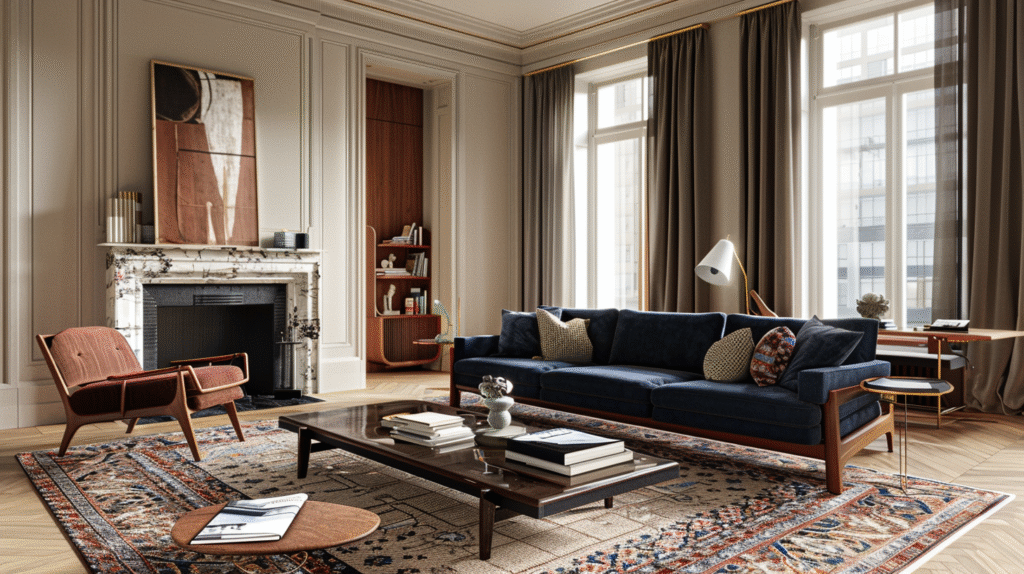
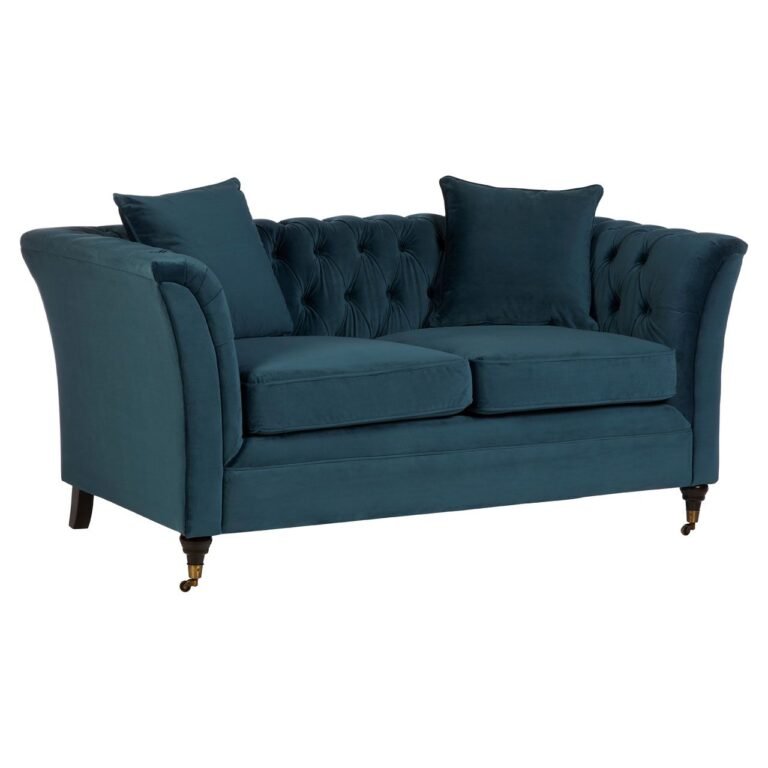
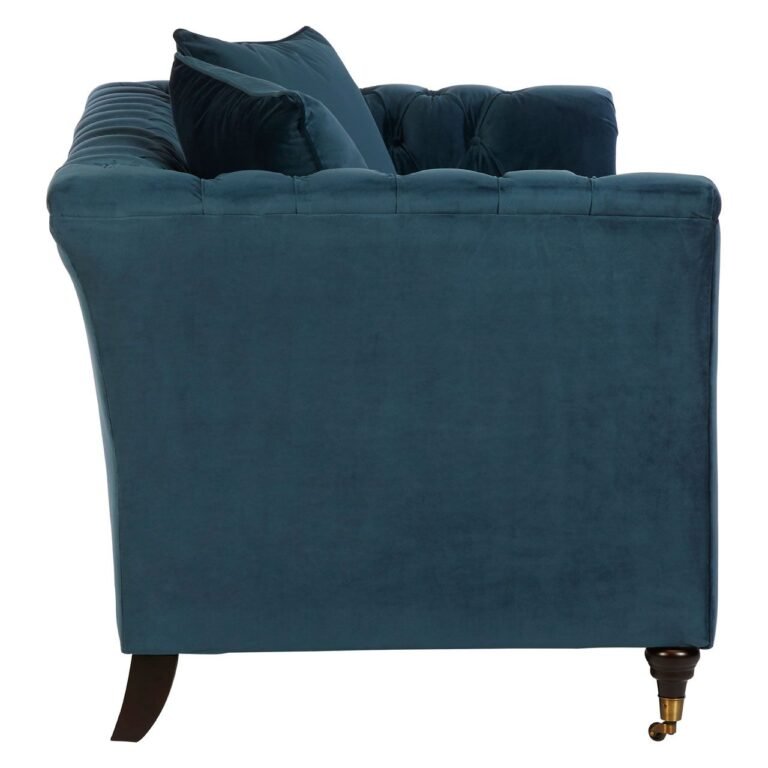
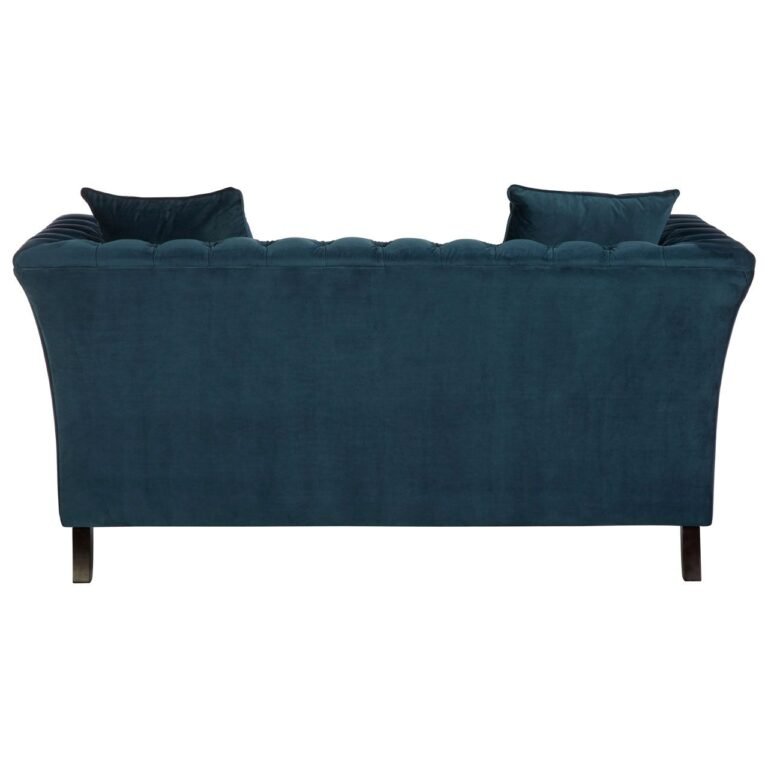
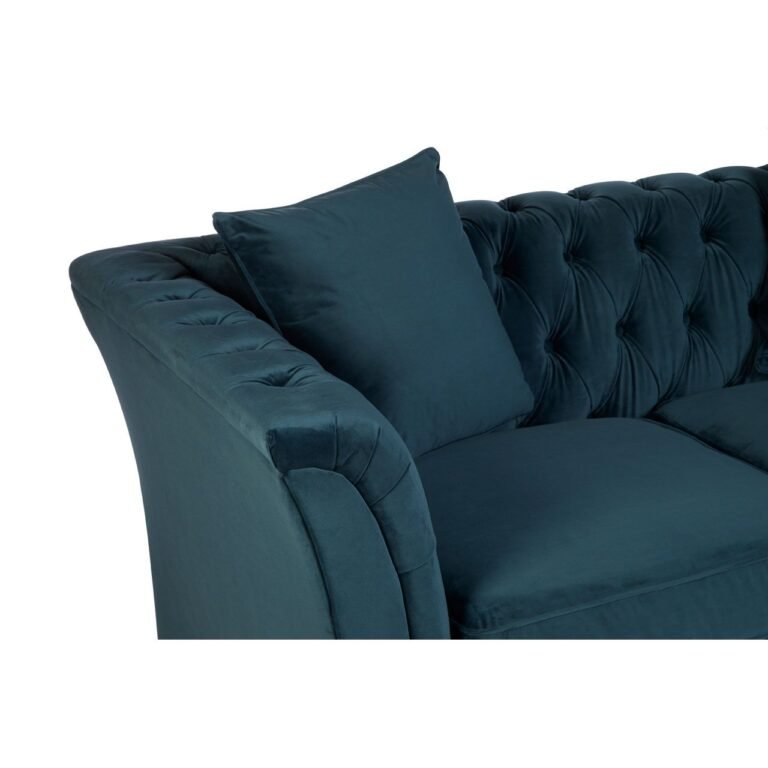
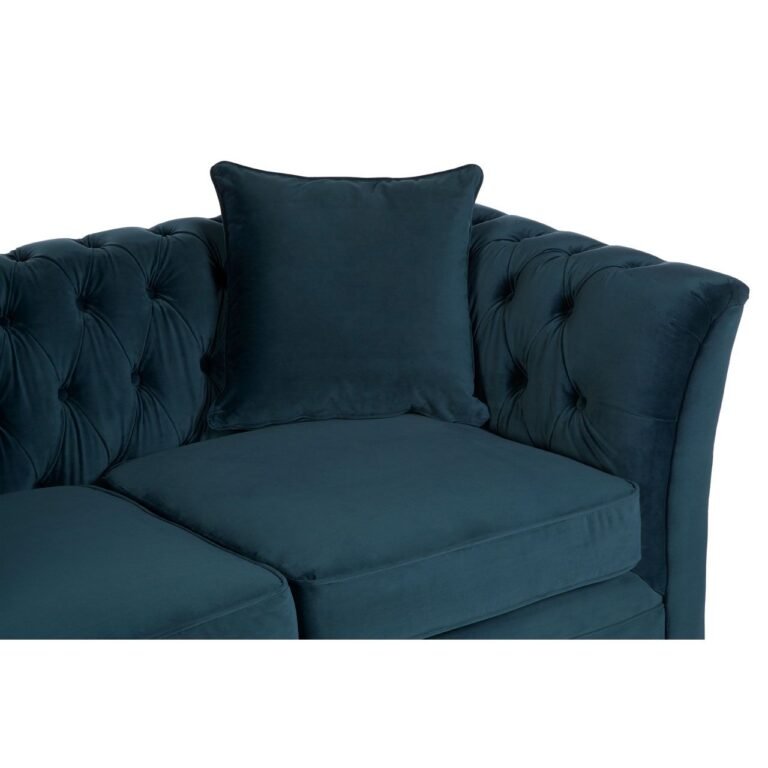
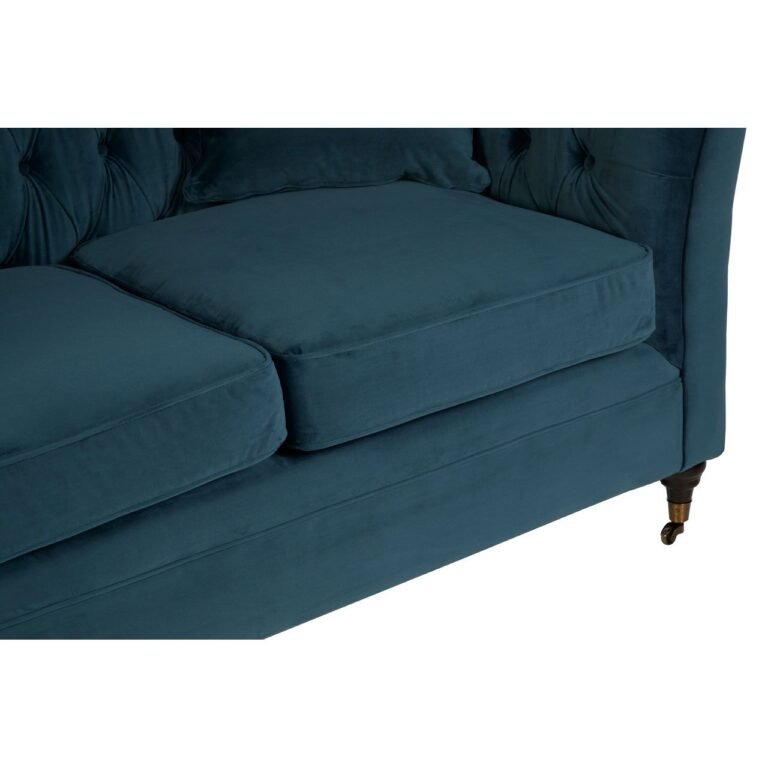
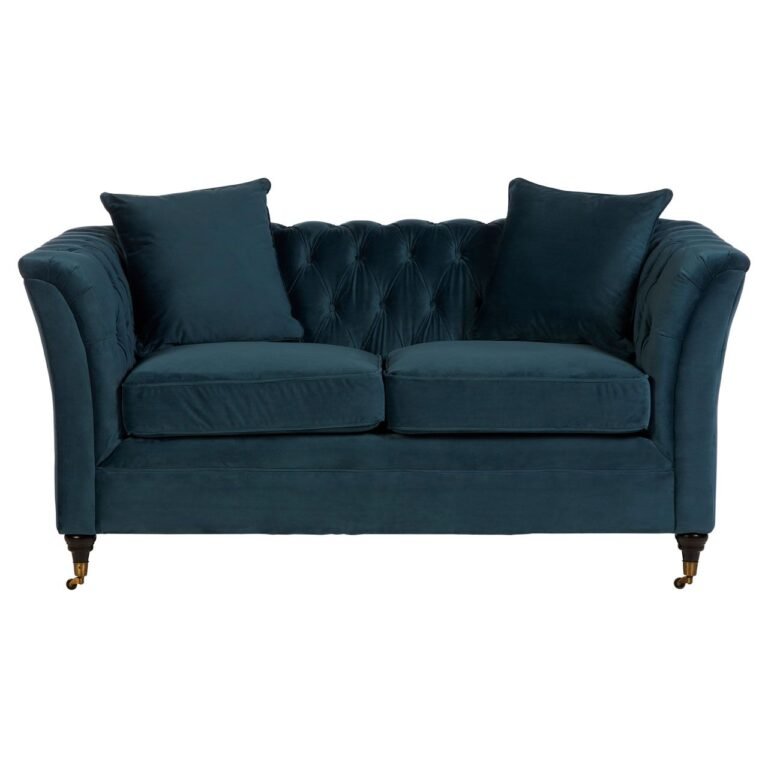
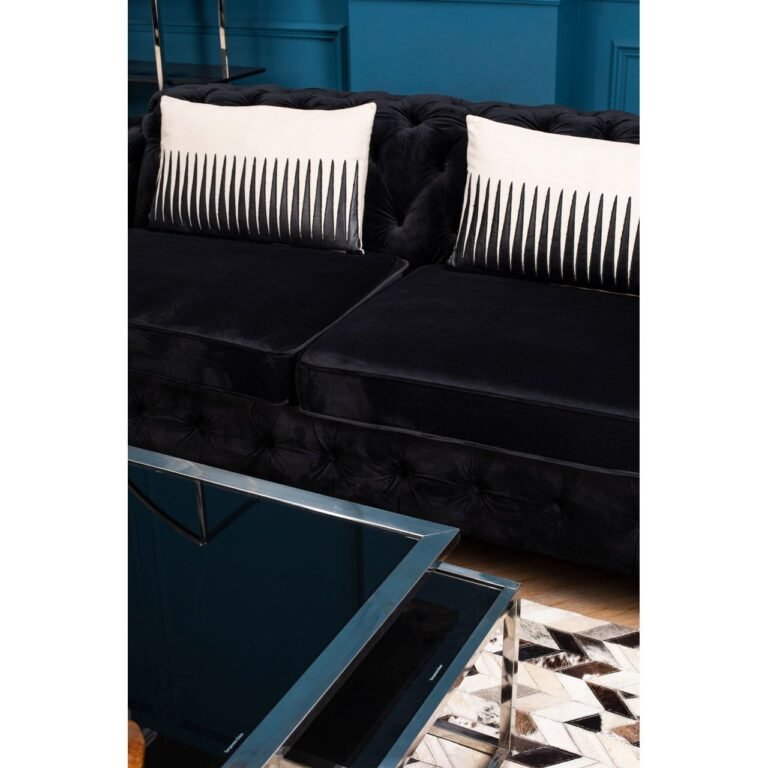
Color repetition: Pulling a specific hue through the space in unexpected ways. Perhaps navy appears in the velvet sofa, a ceramic vase, artwork matting, and book spines. The navy doesn’t dominate, but its repetition creates visual cohesion.

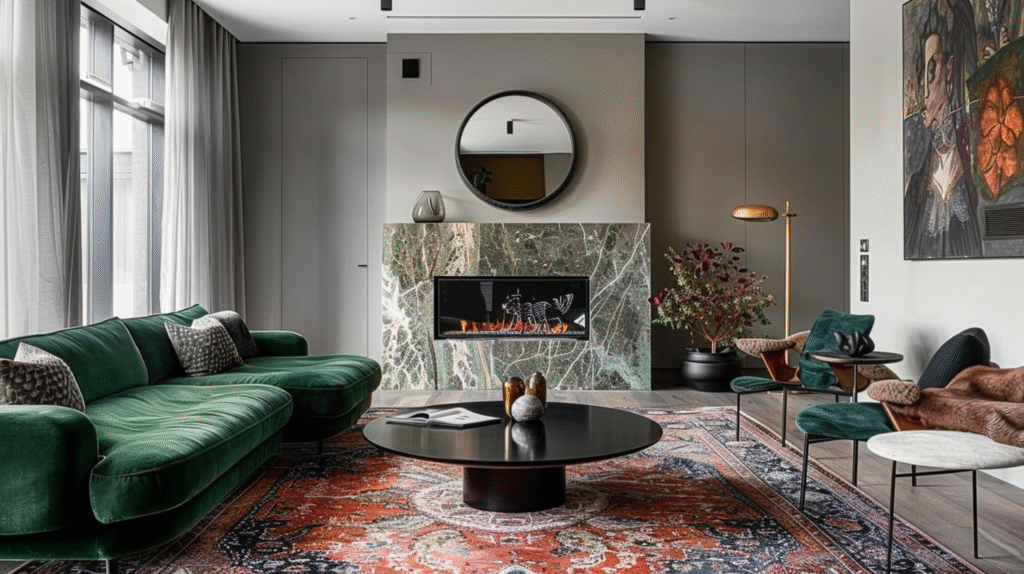
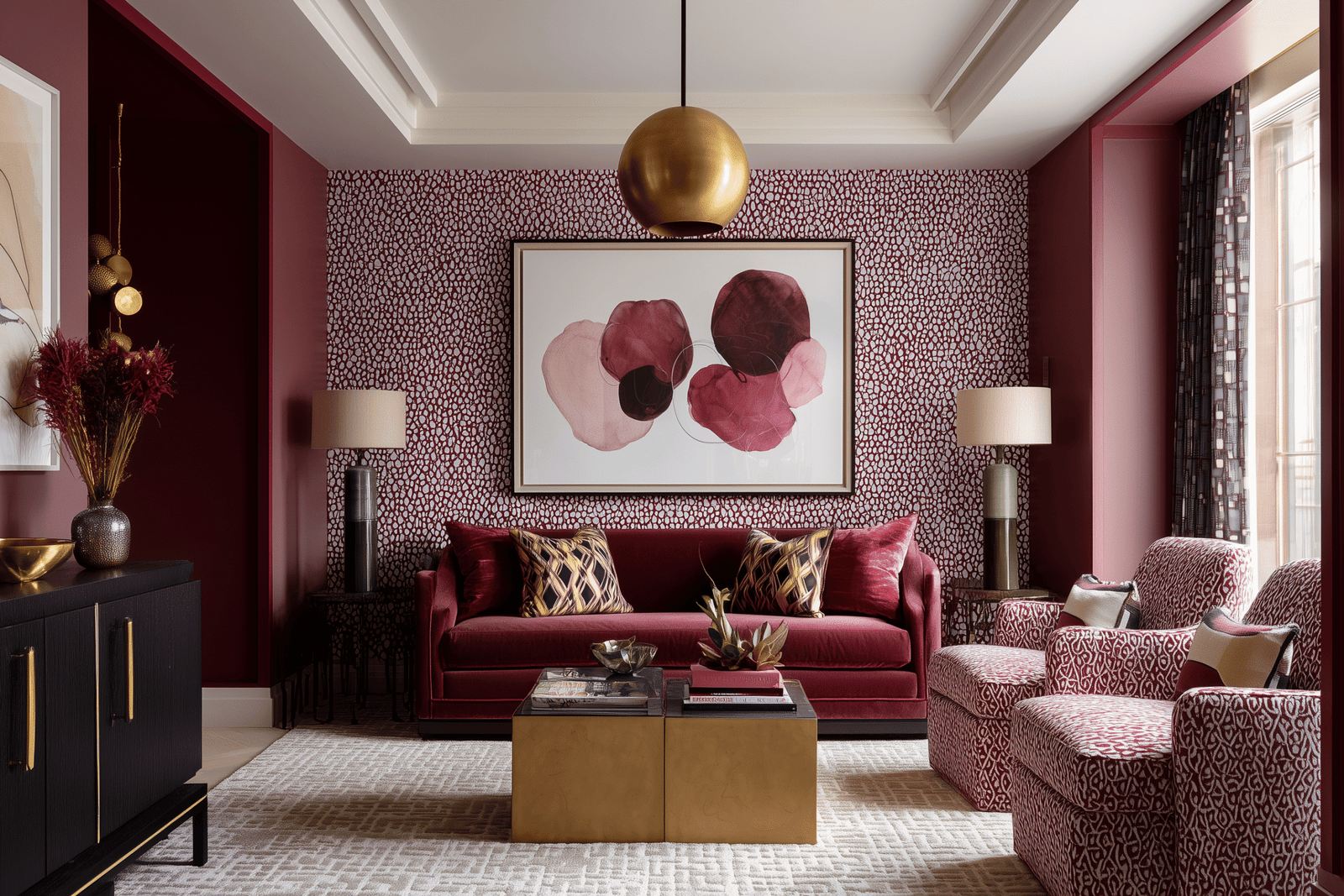
Tonal harmony: Sticking to a particular color temperature or saturation level even when using different hues. A room of jewel tones (emerald, sapphire, ruby, amethyst) will feel more cohesive than one mixing pastels with neons, even though both contain color variety.

Material and Texture Repetition

Another anchoring strategy involves repeating specific materials or textures. Maybe every room features at least one piece with cane or rattan detailing. Perhaps you consistently incorporate velvet somewhere—pillows, upholstery, curtains. These material echoes create subliminal connections between otherwise disparate pieces.

Mood and Attitude

Sometimes the anchor is emotional rather than visual. Is your space playful? Moody? Serene? Intellectual? When every piece—regardless of style—contributes to the same overall feeling, the room coheres. A playful eclectic room might mix a whimsical contemporary sculpture with a vintage carnival poster and colorful postmodern chairs. They’re different styles, but they share an attitude.

Scale and Proportion

Understanding visual weight helps create balance in eclectic interior design. If you have one substantial, heavy-looking antique armoire, balance it with other pieces of visual heft rather than surrounding it exclusively with delicate items. This doesn’t mean everything must be the same size, but the distribution of visual weight should feel intentional.

The key is choosing one or two anchoring strategies and committing to them. You don’t need all of these operating simultaneously—that itself becomes restrictive. But you need enough connective tissue that the room feels curated rather than accidental.

Stop Decorating Like Everyone Else: The Rules of Eclectic Interior Design

The heart of eclectic interior design lives in the furniture mix. This is where you prove you’re not bound by matching sets or single-era devotion. But successful mixing requires understanding what you’re combining and why.

The Power of the Unexpected Pairing

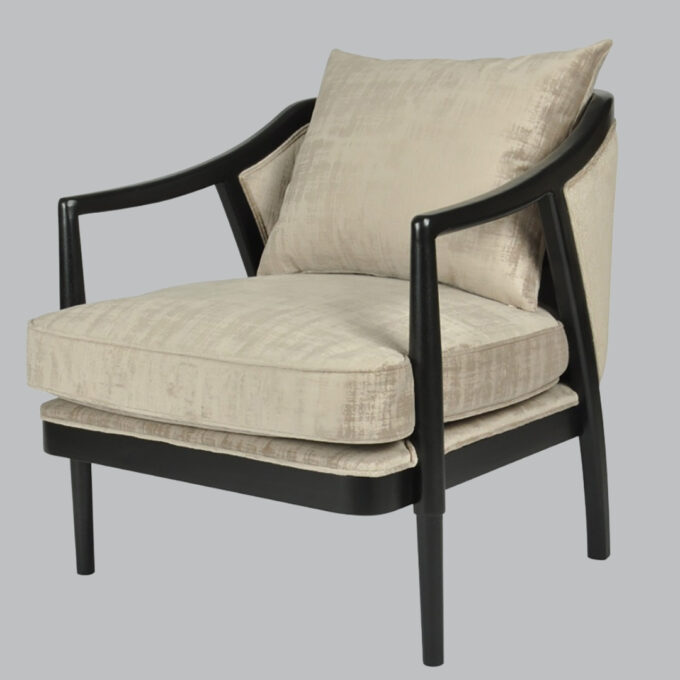
The most magnetic eclectic rooms feature at least one truly unexpected pairing—something that shouldn’t work on paper but absolutely sings in practice. The Louis XVI bergère chair upholstered in bold contemporary fabric. The industrial steel-and-glass coffee table grounding a room of traditional furnishings. The ultra-modern acrylic chair pulled up to a rustic farmhouse table.

These pairings work because of contrast, not in spite of it. The modern highlights how beautiful the traditional piece is. The traditional gives the modern piece warmth and context. Each makes the other more interesting.

The Three-Era Rule

A practical guideline for eclectic interior design newcomers: aim to represent at least three different eras or styles in any major room, but no more than five. Fewer than three and you’re not quite eclectic—you’re transitional or modern-traditional. More than five and you risk visual fragmentation unless you’re exceptionally skilled at finding those anchoring elements.

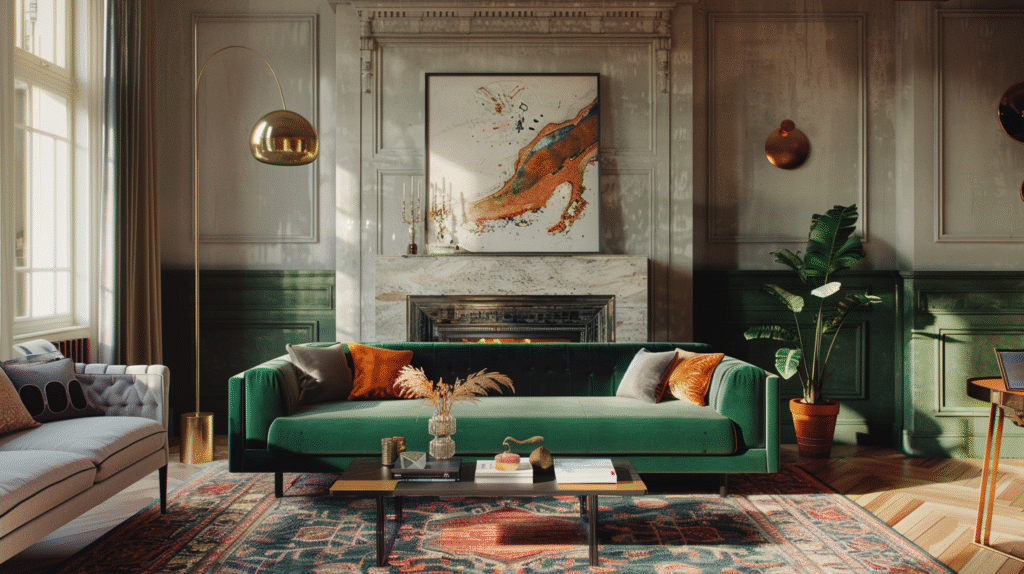
For example: mid-century modern sofa (1950s-60s), contemporary abstract art (current), vintage Persian rug (antique), industrial metal shelving (early 20th century), traditional turned-wood lamp (classic). Five elements, spanning decades, but unified by a sophisticated neutral palette with rust and navy accents.

Quality Over Consistency

In matching furniture sets, mediocre quality can hide behind uniformity. In eclectic spaces, each piece needs to hold its own. This doesn’t mean everything must be expensive—vintage shops and estate sales often yield better-quality pieces than contemporary big-box retailers—but it does mean every item should be something you genuinely love and that’s well-made enough to deserve its place in the composition.

One spectacular antique desk will always outperform five mediocre pieces that “match.” Eclectic interior design allows you to build your space gradually, investing in pieces that matter rather than buying complete room packages that provide instant coordination but zero soul.

The Unifying Effect of Reupholstery

Don’t underestimate the power of fabric choice to bring disparate furniture into conversation. A Victorian settee, a mid-century armchair, and a contemporary ottoman become a cohesive seating arrangement when upholstered in complementary fabrics—perhaps a shared color family or pattern scale. This is where professional reupholstery or custom cushions earn their keep in eclectic spaces.

Color intimidates many people attempting eclectic interior design, but it’s actually one of your greatest tools for creating cohesion amid diversity. The trick is understanding that eclectic color schemes operate differently than traditional ones.

Moving Beyond Safe Neutrals

Yes, you can build an eclectic space on a neutral foundation. But the beauty of eclecticism is that it gives you permission to be bolder. When you’re mixing styles and eras, color becomes the element that declares this is all intentional—this is a choice, not a collection of orphaned furniture.

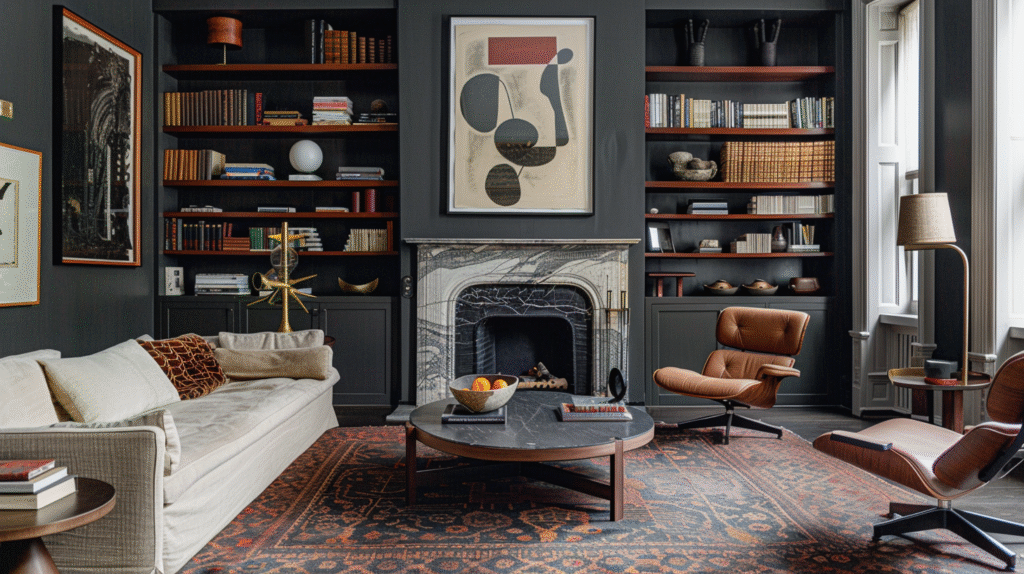
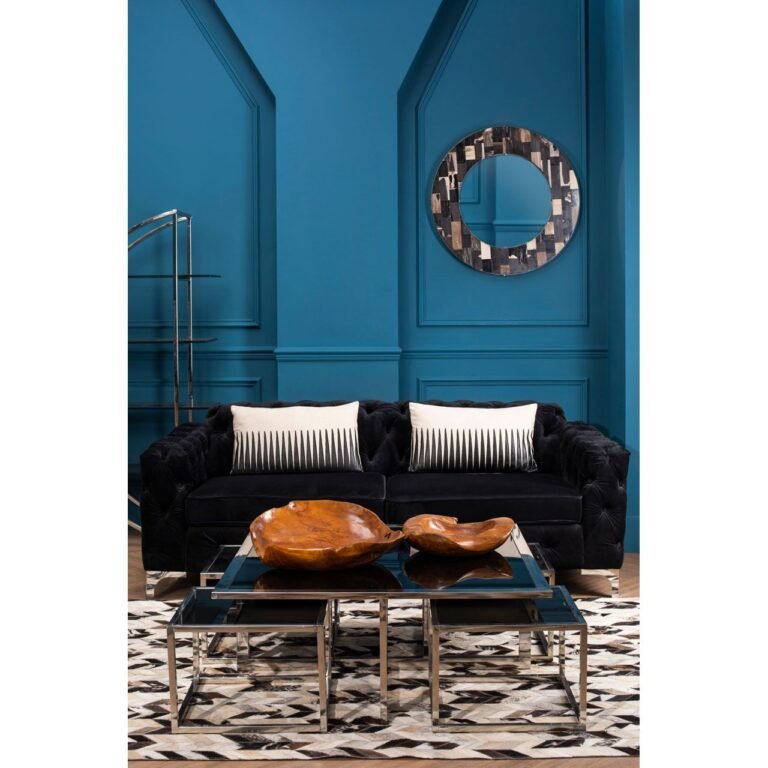
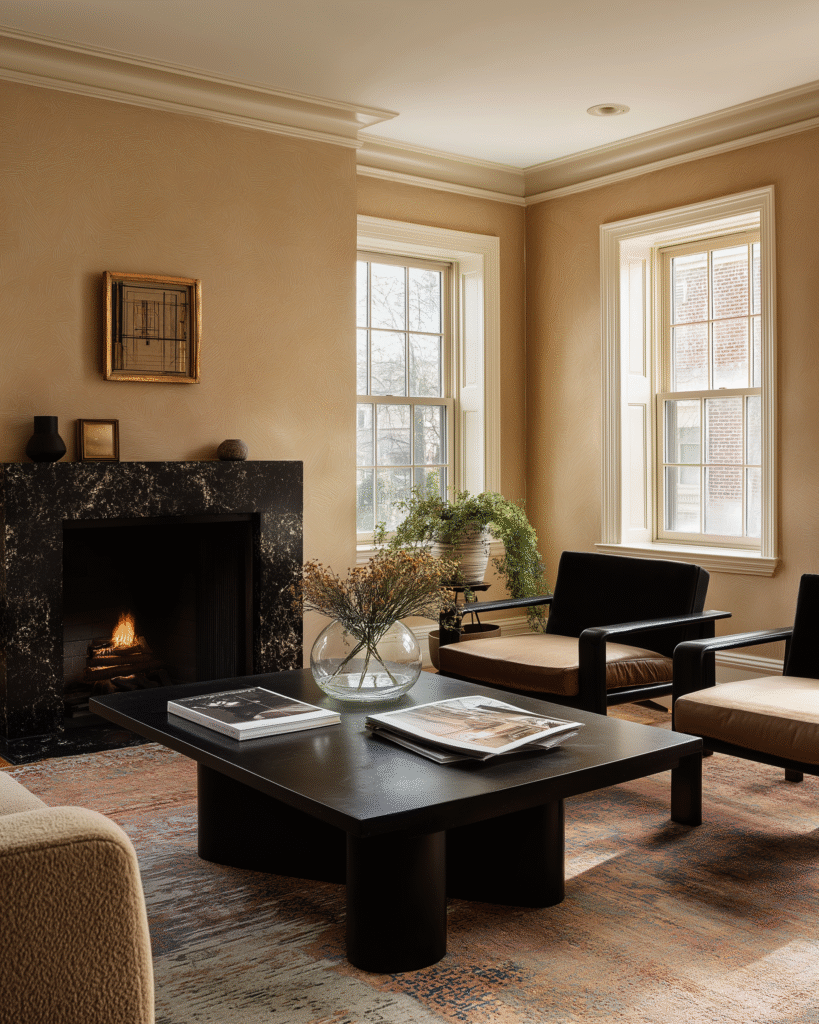
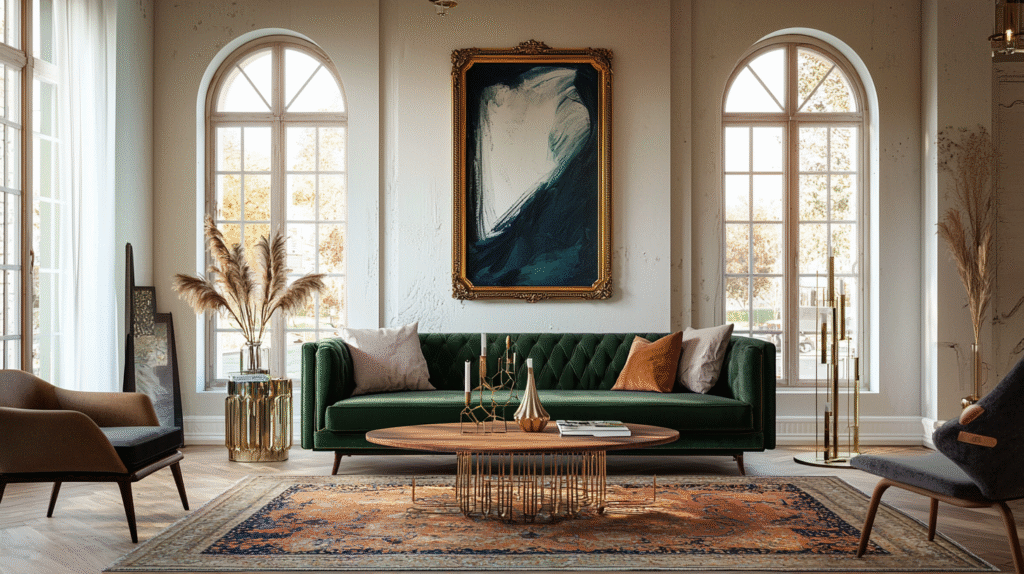
Consider jewel-tone maximalism: deep emerald walls, a cognac leather sofa, a navy velvet chair, ruby red accents, and brass fixtures. These colors are rich and saturated, but they share a tonal depth that creates harmony. The furniture styles could span a century, but the color cohesion makes it feel deliberate.

Or embrace unexpected combinations that trend cycles haven’t sanctioned: terracotta and lavender, forest green and blush pink, mustard yellow and deep plum. Eclectic interior design thrives in these less-traveled color territories because they immediately signal individuality.

The 60-30-10 Rule, Reimagined

The classic design rule suggests 60% dominant color, 30% secondary color, and 10% accent color. In eclectic spaces, this still applies, but with more flexibility. Your 60% might be a neutral backdrop (walls, large furniture), your 30% could be your color story distributed across various pieces, and your 10% might be those bold accent moments that surprise and delight.

The difference is that your 30% doesn’t have to be one color—it could be a family of related hues or complementary colors that appear in different materials and locations. Maybe it’s various blues: navy velvet, powder blue ceramics, denim throw pillows. The color unifies; the variations add interest.

Undertones: The Secret Weapon

This cannot be overstated: matching undertones creates cohesion even when hues vary wildly. All warm-toned wood furniture (oak, teak, walnut) will feel more related than mixing warm oak with cool-toned ash, even if they’re from the same era.

Similarly, if your neutrals lean warm (cream, beige, warm gray), introducing a cool-toned element (pure white, cool gray, icy blue) creates instant visual discord. In eclectic interior design, you’re already asking viewers to process diverse styles—make their job easier by keeping undertones harmonious.

Pattern Play Without Overwhelm

Eclectic rooms can absolutely layer multiple patterns—florals, geometrics, stripes, abstracts—but successful pattern mixing follows guidelines:

  • Vary the scale: Pair large-scale patterns with medium and small-scale ones rather than competing patterns of similar size.
  • Share a color: Patterns feel related when they pull from the same color palette.
  • Limit the number: Three to four patterns in a room is generous. More than that requires exceptional skill.
  • Ground with solids: For every patterned element, include solid-colored pieces that give the eye resting places.
Stop Decorating Like Everyone Else: The Rules of Eclectic Interior Design

While color and style mixing get most of the attention in discussions of eclectic interior design, texture and material diversity might be even more crucial to creating rooms that feel layered, sophisticated, and inviting.

Why Texture Matters

Texture adds dimension that transcends visual style. A room could be perfectly color-coordinated and stylistically mixed, but if everything is the same material—all smooth, all matte, all hard surfaces—it will feel flat and unwelcoming. Texture creates depth, interest, and that ineffable quality of richness that makes spaces feel expensive and considered even on modest budgets.

The Material Palette

Successful eclectic spaces typically incorporate at least five different materials. Consider this mix:

  • Natural wood: Warm, organic, grounding
  • Metal: Sleek, reflective, modern or industrial depending on finish
  • Textile variety: Velvet, linen, wool, cotton, silk—each contributes different visual and tactile qualities
  • Stone or ceramic: Weight, permanence, artisanal quality
  • Glass: Lightness, transparency, contemporary edge
  • Natural fibers: Rattan, jute, bamboo, seagrass for textural warmth
  • Leather: Richness, patina, lived-in comfort

The key is distribution. Don’t cluster all your metal in one corner and all your wood in another. Distribute materials throughout the space so the textural variety creates overall richness rather than distinct zones.

The Matte and Shine Balance

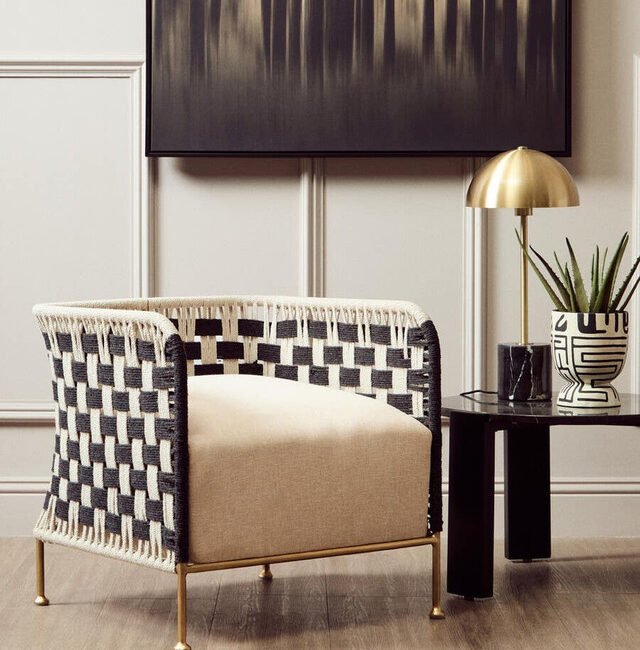
Visual texture comes from surface finish as much as material. Eclectic rooms benefit from mixing matte and reflective surfaces—perhaps matte-painted walls with lacquered furniture, brushed metal fixtures with glossy ceramic accessories, matte velvet upholstery with a glass coffee table.

This interplay of matte and shine adds sophistication and prevents the room from feeling either too flat (all matte) or too slick (all shine). It’s another way eclectic interior design creates visual interest through controlled contrast.

Handmade and Artisanal Elements

Incorporating handmade pieces—ceramics, textiles, woodwork—adds textural variation that mass-produced items simply cannot achieve. The slight irregularities of hand-thrown pottery, the visible weave in handwoven textiles, the tool marks on carved wood—these imperfections create visual and tactile richness that elevates eclectic spaces from “collected” to “curated.”

This is also where global influences naturally enter eclectic interior design. A Moroccan boucherouite rug, Japanese ceramics, Mexican talavera tiles, Indian block-printed textiles—these items bring both cultural richness and textural diversity that enrich your material palette.

Stop Decorating Like Everyone Else: The Rules of Eclectic Interior Design

In eclectic interior design, art and décor aren’t afterthoughts—they’re integral to the room’s narrative and often provide the conceptual glue that makes diverse furniture elements cohere.

Art as the Great Unifier

Here’s a powerful strategy: let your art collection dictate your color palette and aesthetic direction. When you pull colors from a beloved painting into your upholstery, pillows, and accessories, everything immediately relates. The art gives you permission to be bold because you can always point to it as your color inspiration.

This works especially well in eclectic spaces because art is already a medium of diverse expression. Your gallery wall might include contemporary photography, vintage botanical prints, abstract expressionist paintings, and folk art—different styles and eras united by the gallery wall format and perhaps by complementary framing or matting choices.

The Gallery Wall as Eclectic Showcase

Gallery walls are natural homes for eclecticism. They allow you to display:

  • Different artistic media (paintings, photographs, prints, textile art)
  • Various frame styles (though usually unified in finish—all brass, all black, all natural wood)
  • Multiple eras and influences
  • Personal photographs alongside fine art
  • Three-dimensional objects on ledges or integrated into the arrangement

The key to successful eclectic gallery walls: maintain consistent spacing between pieces and ensure the overall shape of the arrangement feels intentional, whether that’s a structured grid or an organic salon-style hang.

Sculptural Objects and Collectibles

Eclectic interior design celebrates objects with stories. This is where your travel finds, inherited pieces, flea market treasures, and artist discoveries shine. But curation remains essential—too many small objects create visual clutter.

Apply the “edit by half” rule: gather everything you want to display, then remove half. What remains will have more impact because each piece has breathing room and can be truly seen.

Group objects in odd numbers (three or five items together read better than two or four). Vary heights within groupings. And ensure objects relate to each other through color, material, theme, or aesthetic—the same anchoring principles that guide your larger furniture choices.

Mirrors as Both Art and Amplifiers

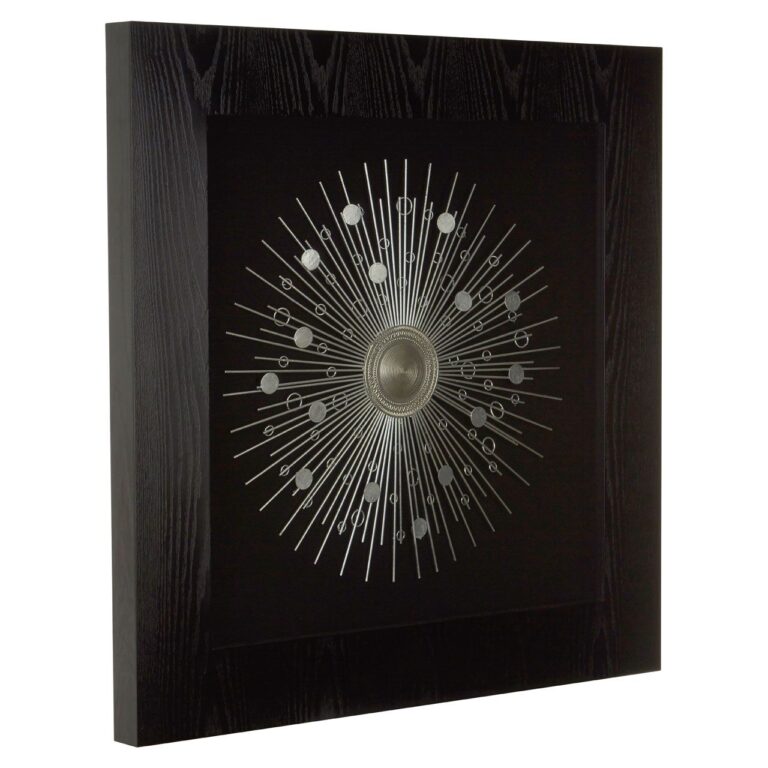
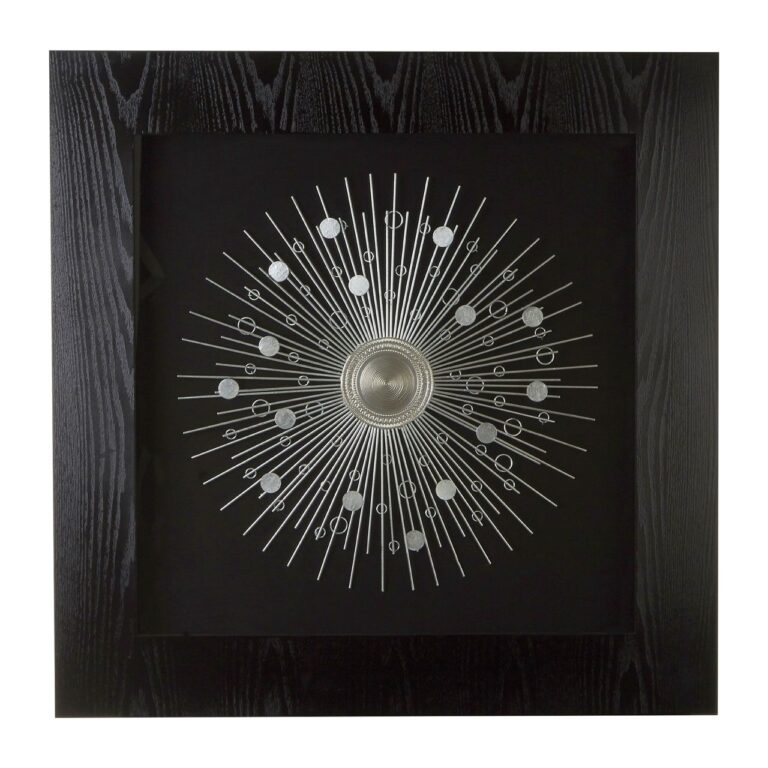
Mirrors in eclectic spaces do double duty: they’re decorative objects in their own right (especially vintage mirrors with ornate frames or interesting shapes) and they amplify the room by reflecting light and other elements. A statement mirror can be the focal point of an entire wall, or multiple smaller mirrors can create a collected, gallery-wall effect.

Stop Decorating Like Everyone Else: The Rules of Eclectic Interior Design

This is perhaps the most important principle of eclectic interior design: your space should be a genuine reflection of who you are—your history, your interests, your travels, your values, your aesthetic evolution. Not who Instagram says you should be. Not what’s trending in shelter magazines. You.

The Anti-Algorithm Approach

We’ve become accustomed to algorithmic curation in nearly every aspect of our lives—what we watch, read, buy, even who we date. The algorithm learns our patterns and serves us more of the same, creating echo chambers of taste. Eclectic interior design is the antidote to this homogenization.

It requires you to pay attention to what genuinely moves you rather than what gets the most likes. That might mean falling in love with a paint color that’s “out” right now. Keeping furniture that design purists would dismiss. Mixing high and low in ways that defy conventional wisdom. The result is a space that couldn’t belong to anyone else—not because you’re trying to be different, but because you’re being specific.

Honoring Your Actual Life

Design magazines and Instagram rarely show homes as they’re actually lived in. Eclectic interior design embraces functionality and real life. If you’re a reader, your books aren’t hidden—they’re celebrated, stacked on tables, lining shelves, part of the visual landscape. If you cook, your beautiful kitchen tools might be displayed rather than concealed. If you collect vintage cameras, they become sculptural objects.

This doesn’t mean sacrificing beauty for function. It means finding the overlap—choosing functional items that also delight you aesthetically, and arranging them in ways that honor both their utility and their beauty.

The Confidence Factor

Here’s what truly distinguishes successful eclectic interior design: confidence. Not arrogance, but the quiet confidence that comes from knowing what you like and trusting your own aesthetic judgment. This confidence develops over time, through experimentation, through making mistakes and learning from them, through gradually refining your eye.

Eclectic spaces require more confidence than single-style rooms because you can’t hide behind a designer’s pre-coordinated vision. You’re making active choices, and those choices will be visible. But this vulnerability is also empowering. You’re declaring that your taste matters, that your preferences are valid, that your home is worth the risk of being truly yourself.

Building Your Space Over Time

Unlike catalog-perfect rooms that arrive complete in a single shopping trip, eclectic spaces are built gradually. This is actually a strength. It means you can:

  • Wait for the perfect piece rather than settling
  • Shop vintage, secondhand, and estate sales
  • Invest in quality items one at a time
  • Allow your taste to evolve and your space to grow with you
  • Incorporate meaningful gifts and inherited pieces
  • Support artists and artisans directly

Your space becomes a timeline of your life—the rug you bought on that trip to Morocco, the chair you found at a flea market during your first apartment, the art you commissioned from an emerging artist, the sideboard you inherited from your grandmother. Each piece has a story, and together, they tell your story.

9. Common Mistakes in Eclectic Interior Design and How to Avoid Them

Even with the best intentions, eclectic interior design can go wrong. Understanding common pitfalls helps you navigate toward successful eclecticism rather than chaotic confusion.

Mistake #1: Too Many Focal Points

Every room needs a focal point—a place where the eye naturally lands first. In eclectic spaces, the temptation is to have multiple statement pieces competing for attention. A bold wallpaper, a dramatic chandelier, a colorful rug, a striking piece of art, a sculptural chair—individually stunning, but together overwhelming.

The fix: Choose one or two focal points per room. Everything else should support these stars rather than competing with them. If your sofa is a showstopper, keep the art above it more subdued. If you have spectacular wallpaper, let your furniture play a supporting role.

Mistake #2: Ignoring Scale and Proportion

Mixing styles doesn’t mean ignoring spatial relationships. A tiny room crammed with oversized furniture feels claustrophobic regardless of how beautifully those pieces mix stylistically. Conversely, a large room with exclusively small-scale furniture feels untethered.

The fix: Ensure your furniture is appropriately scaled for your space. In eclectic interior design, you can absolutely mix a large traditional sofa with delicate mid-century side tables, but the overall distribution of visual weight should feel balanced. Use larger pieces to anchor the room and smaller pieces to add variety without floating away.

Mistake #3: Clashing Undertones

We covered this earlier, but it bears repeating because it’s such a common issue: mixing warm and cool undertones creates visual discord that no amount of stylistic harmony can overcome. Cool gray walls make warm oak furniture look yellow and wrong. Warm beige sofas clash with cool-toned blue-gray accents.

The fix: Commit to either warm or cool undertones throughout your space. This doesn’t limit your color palette—you can still use the full rainbow—but it ensures everything feels related. If you must mix, do so very deliberately and sparingly, perhaps using one cool element as an intentional accent in an otherwise warm space.

Mistake #4: No Breathing Room

Eclectic spaces need negative space—visual rest areas where the eye can pause. When every surface is covered, every wall filled, every corner occupied, the result is exhausting rather than energizing.

The fix: Embrace empty space. Leave some wall area bare. Don’t fill every shelf. Allow open floor space. This editing makes the pieces you do display more impactful because they’re not competing for attention. The rule of thirds applies: if you have a shelf or surface, aim to leave about a third of it empty.

Mistake #5: Trend Accumulation

Eclecticism isn’t about collecting every trend you’ve ever liked. Just because you loved industrial style in 2015, then mid-century modern in 2017, then maximalist jungle in 2019, then grandmillennial in 2021 doesn’t mean all these influences should coexist in your space.

The fix: Develop a cohesive vision that might draw from multiple influences but creates a unified statement. This vision becomes your filter. Before adding something new, ask: “Does this fit my overall aesthetic direction, or am I just chasing a trend?” Eclectic interior design should feel timeless and personal, not like a timeline of Pinterest boards.

Stop Decorating Like Everyone Else: The Rules of Eclectic Interior Design

One of the most democratic aspects of eclectic interior design is its accessibility across budgets. Unlike rooms that require complete furniture suites or designer pieces, eclectic spaces actively celebrate the mix of sources, prices, and provenances.
The Thrift Store Strategy

Vintage shops, thrift stores, estate sales, and flea markets are treasure troves for eclectic enthusiasts. This is where you find unique pieces with character, history, and quality craftsmanship—often for less than mass-produced contemporary furniture costs.
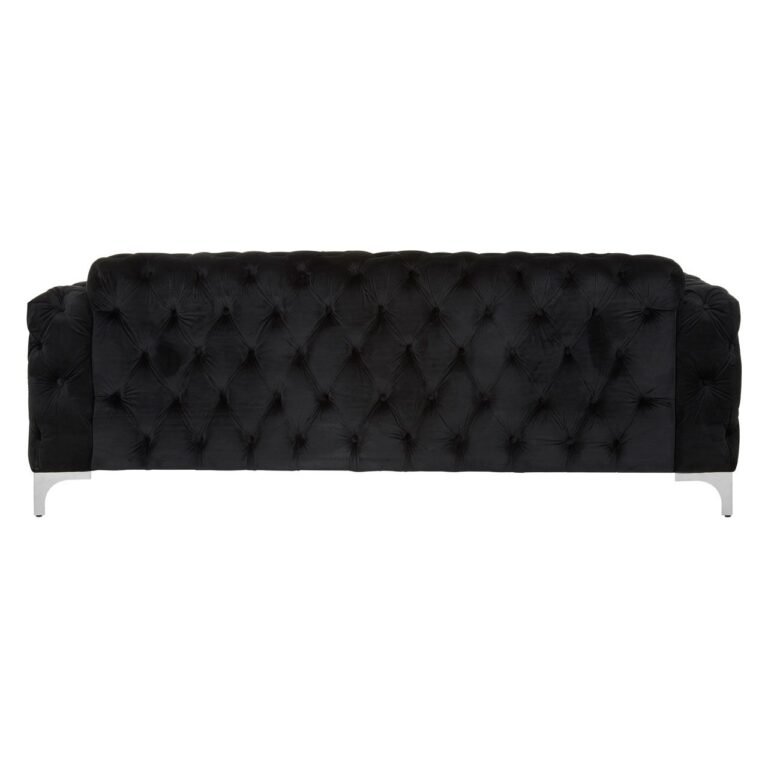
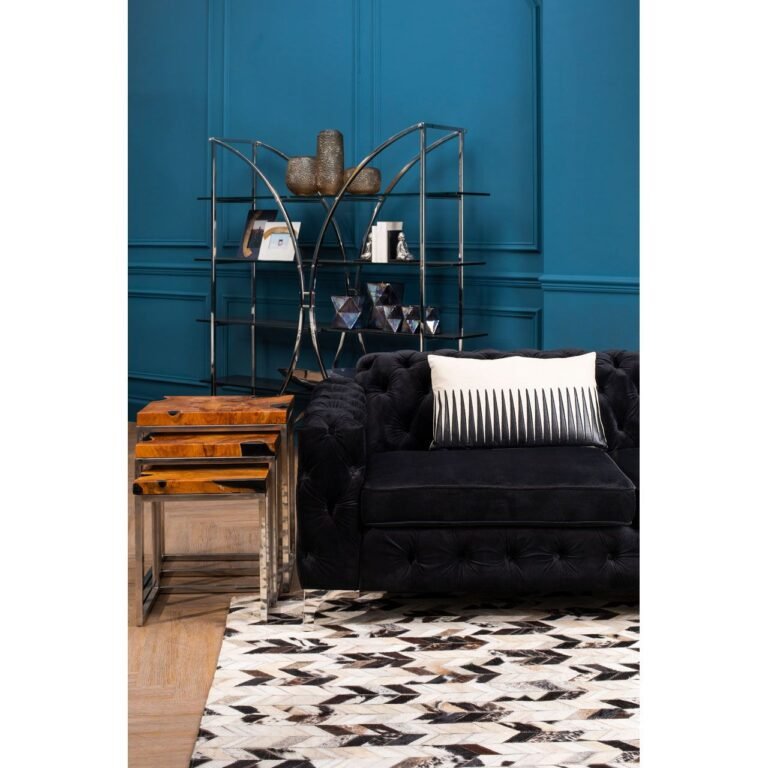
What to look for:

  • Solid wood furniture that can be refinished or painted
  • Interesting shapes and silhouettes, even if the current finish or fabric is wrong
  • Quality construction and materials
  • Pieces with personality that you won’t find anywhere else

What to avoid:

  • Particleboard or laminate furniture that’s too damaged to salvage
  • Pieces that need such extensive repair they’ll cost more than replacement
  • Items you’re buying just because they’re cheap rather than because you love them

The Investment Piece Philosophy

While eclectic spaces welcome affordable finds, they also benefit from strategic investments. Consider allocating your budget toward:

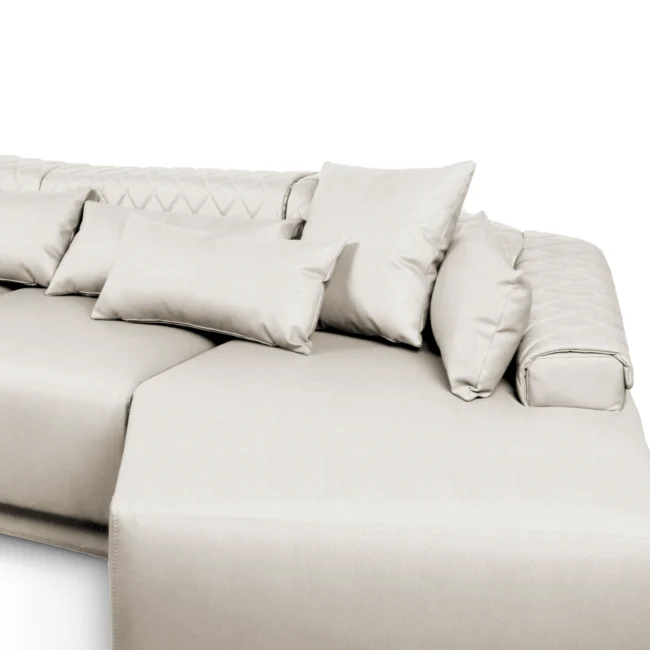
  • One quality sofa that will anchor your living room for years
  • A beautiful rug that ties everything together
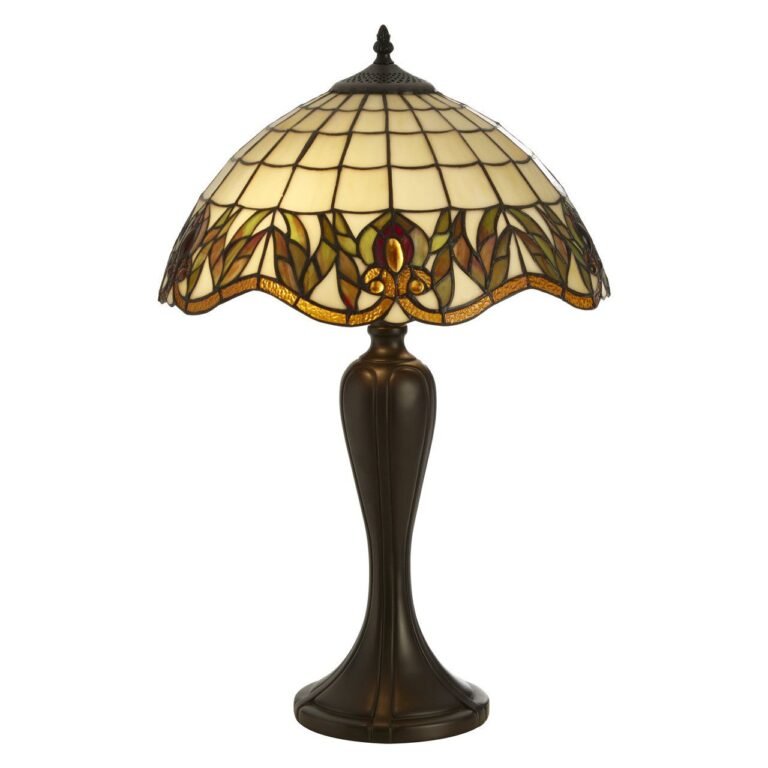
  • Statement lighting that elevates the entire space
  • Original art that reflects your taste

These investment pieces provide the foundation. Everything else can be more budget-friendly, more experimental, more easily changed as your taste evolves.

DIY and Customization

Eclectic interior design particularly rewards DIY efforts because customization makes pieces uniquely yours:

  • Reupholster thrifted furniture in fabrics that fit your palette
  • Paint furniture to unify disparate pieces
  • Create your own art or frame affordable prints in quality frames
  • Refinish wood furniture to bring out its natural beauty
  • Sew custom pillows and curtains

These efforts not only save money but also deepen your connection to your space. There’s profound satisfaction in transforming something discarded into something beautiful.

The Slow Decorating Movement

Resist the pressure to complete your space immediately. Eclectic interior design actually improves when built gradually because it allows you to:

  • Really live in your space and understand what you need
  • Wait for the perfect pieces rather than settling
  • Spread costs over time
  • Allow your aesthetic to evolve naturally
  • Avoid buyer’s remorse from hasty purchases

A room that takes years to complete often has more soul than one decorated in a weekend shopping spree.

Soft Maximalism

Eclectic interior design represents something radical in our current moment: the assertion that your home should reflect you rather than trends, algorithms, or other people’s aesthetic dictates. It’s design freedom—but freedom anchored in intention, knowledge, and care rather than randomness.

The rules we’ve explored aren’t restrictions; they’re guardrails that prevent creative freedom from devolving into chaos. Understanding color theory, scale, proportion, and visual weight doesn’t limit your eclecticism—it empowers it. These principles give you the confidence to make bold choices because you understand why they work.

What makes eclectic interior design so powerful is its fundamental generosity. It makes room for your entire aesthetic self—your love of mid-century modern and your grandmother’s antique sideboard, your contemporary art collection and your vintage rug finds, your minimalist tendencies and your maximalist moments. It acknowledges that taste isn’t static, that you contain multitudes, and that your space can too.

This approach also resists the planned obsolescence of trend cycles. When your room is built on genuine personal expression rather than what’s currently “in,” it doesn’t become dated when trends shift. It remains timelessly yours. You might add new pieces, edit out others, or evolve the composition, but the core—your aesthetic voice—endures.

Perhaps most importantly, eclectic interior design is learnable. You don’t need innate “good taste” or formal design education. You need curiosity, patience, and willingness to experiment. You need to pay attention to what moves you, to study spaces you love and understand why they work, to make mistakes and learn from them. Your eye will develop. Your confidence will grow. Your space will evolve into an authentic reflection of who you are.

So stop decorating like everyone else. Not because you’re trying to be different for difference’s sake, but because you’re trying to be specific—specifically you. Let your space tell your story through the furniture you’ve collected, the art that speaks to you, the colors that make you happy, the textures that invite touch, the objects that carry meaning.

The beauty of eclectic interior design is that no two eclectic homes should look alike. Your version will be uniquely yours, and that’s exactly the point. In a world pushing conformity, your home can be your resistance. In a culture of mass-produced sameness, your space can be your self-portrait. And in the freedom to mix, match, and make it your own, you might discover that the most important design rule is this: trust yourself.

For inspiration on blending diverse styles while maintaining harmony, Beau Monde offers expert tips and stunning examples of eclectic interior design done right

What do you think?
Leave a Reply

Blog

Get fresh home inspiration and helpful tips from our interior designers

top
2
    2
    Your Cart
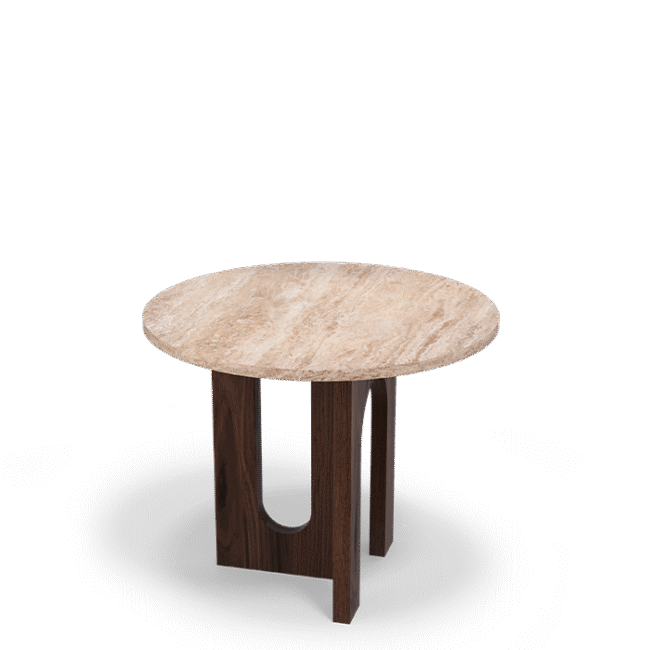
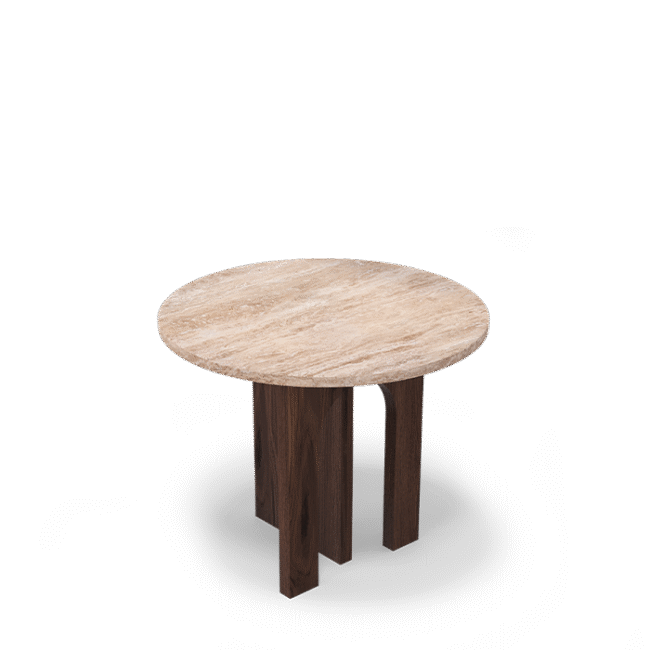
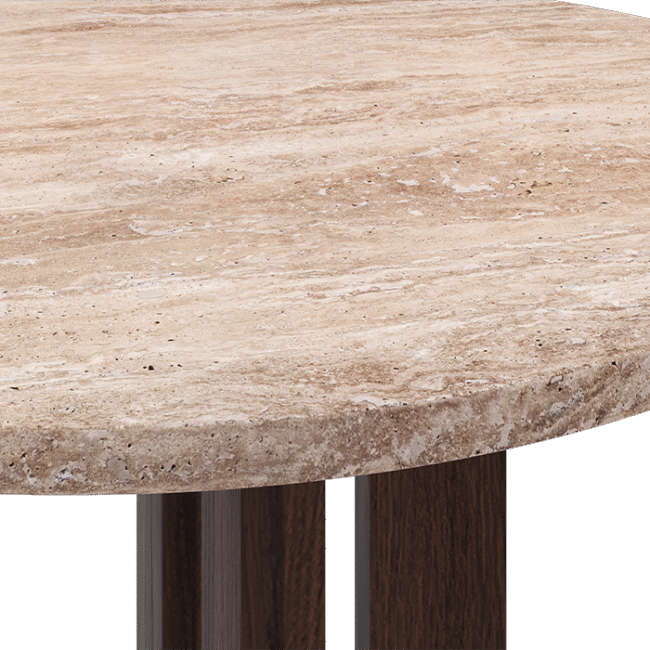
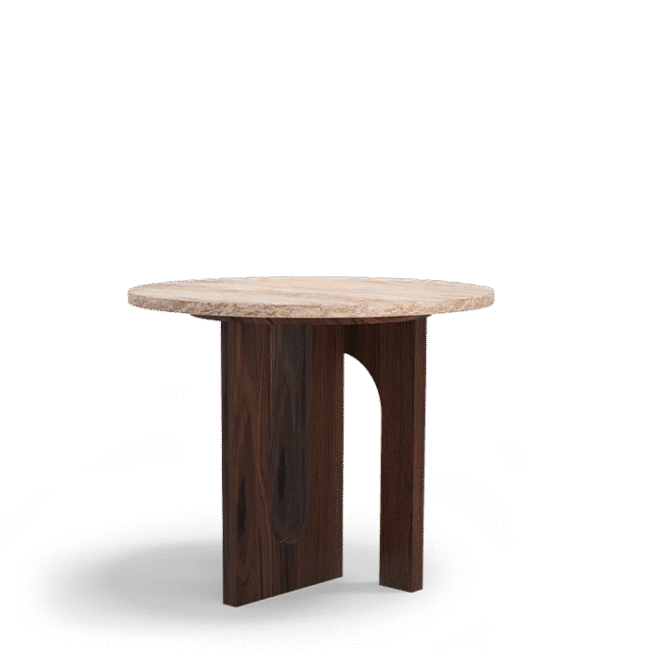
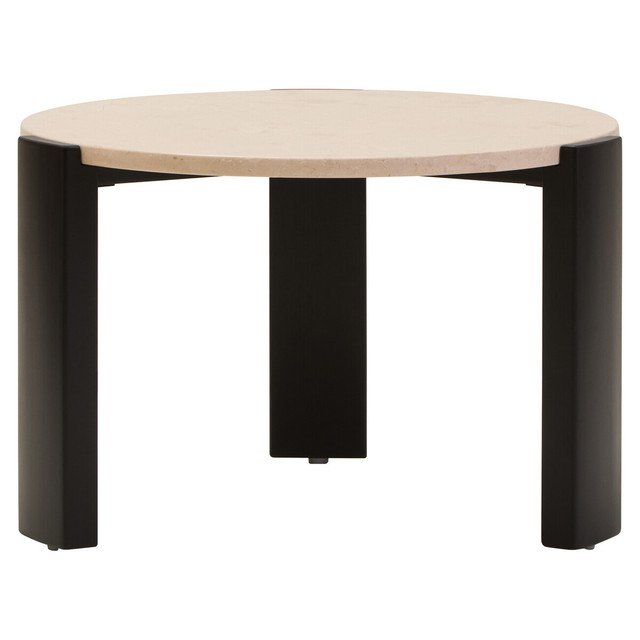
    Alero Round Travertine Top Small Coffee Table Remove
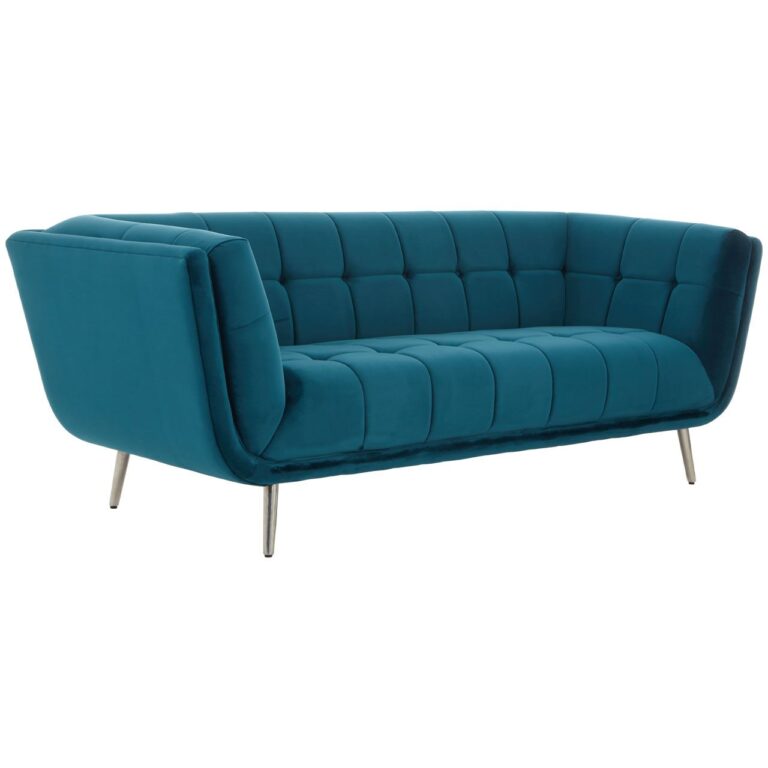
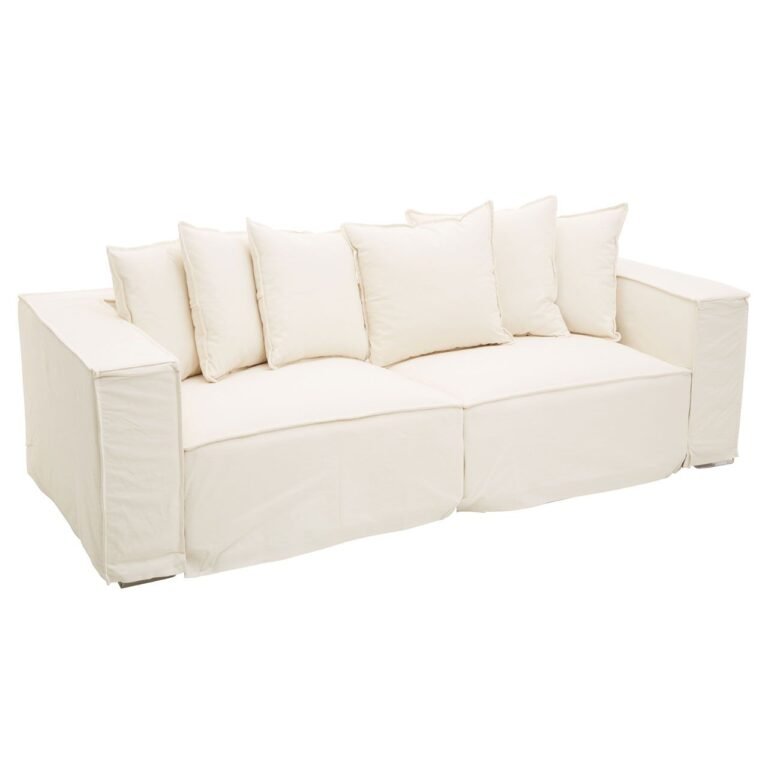
    Abiate 3 Seat Sofa Remove
    Abiate 3 Seat Sofa
    Qty: 1
    Price: £1,980
    £1,980

    Inactive

    Privacy Overview

    This website uses cookies so that we can provide you with the best user experience possible. Cookie information is stored in your browser and performs functions such as recognising you when you return to our website and helping our team to understand which sections of the website you find most interesting and useful.