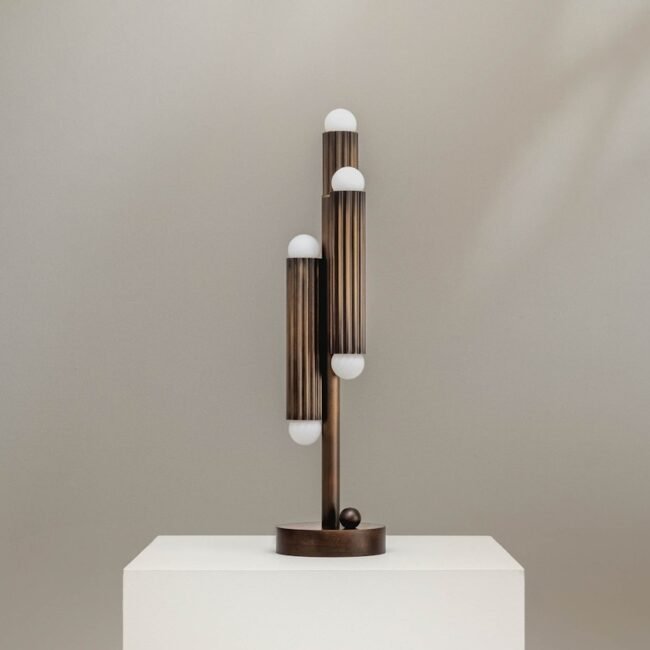
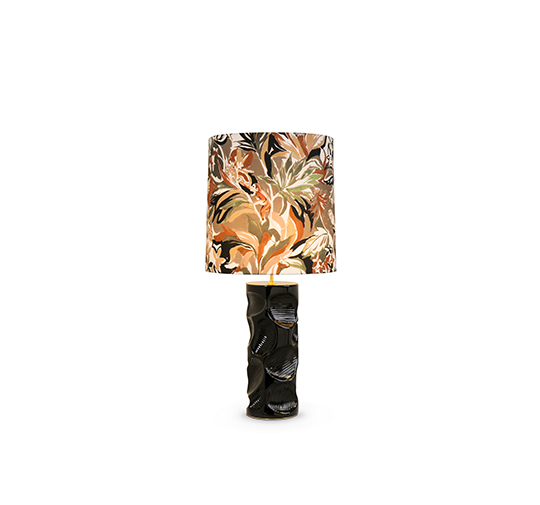
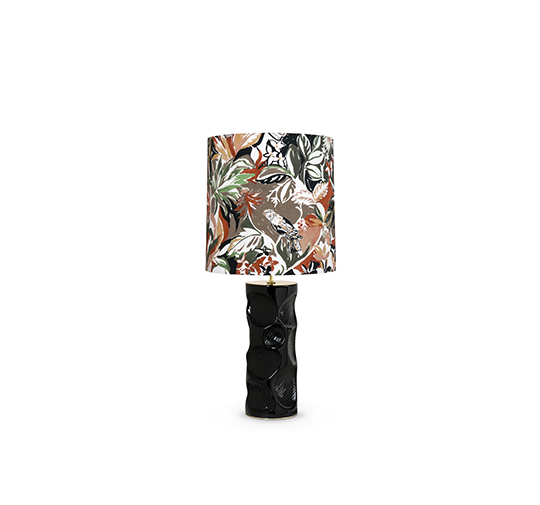
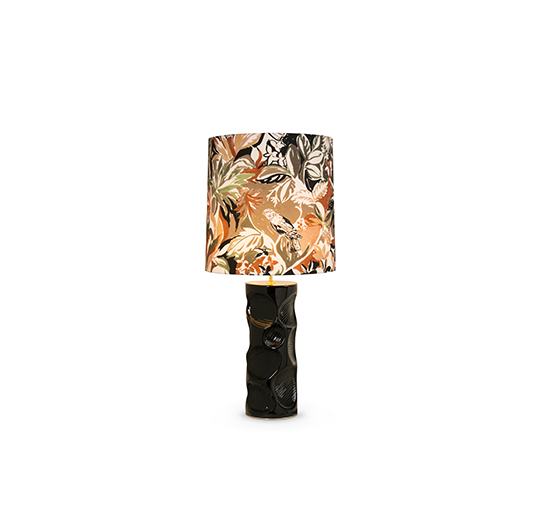
Designer Table Lamps That Double as Sculptural Art

Designer Table Lamps

There’s a particular kind of frustration that every design-conscious person knows intimately. You’ve spent months curating a room. The sofa is perfect — a deep, slouchy velvet in a shade you agonised over for weeks. The art is hung at the right height. The rug anchors everything beautifully. And yet.

Something is off. The room looks decorated, but it doesn’t feel designed. It has furniture, but it lacks presence. It has objects, but no atmosphere. You stand in the doorway and wait for the room to pull you in — and it doesn’t.

Nine times out of ten, the culprit is lighting.

More specifically: the absence of designer table lamps that do more than just emit light. Because the most transformative rooms aren’t just lit — they’re sculpted by light. And the objects doing that sculpting are often sitting quietly on a console, a bedside table, or a sideboard, doing double duty as both luminaire and artwork.

Designer table lamps occupy a singular position in the hierarchy of interior objects. Unlike a sofa, they don’t define spatial function. Unlike a rug, they don’t anchor a floor plan. What they do is something far more elusive: they create presence. They introduce silhouette, material, scale, and glow into a room simultaneously. They’re the element that transforms a well-furnished space into one that feels genuinely considered.

This article is for anyone who has ever sensed that their room is almost there — and wants to understand exactly what “there” looks like. We’ll explore the design theory behind sculptural lighting, the psychology of warm layered light, how to choose and place statement table lamps for maximum visual impact, and why the best designer table lamps are, first and foremost, works of art.

Designer Table Lamps That Double as Sculptural Art

Not every lamp is sculptural. Most aren’t, actually.

A lamp becomes sculptural when its visual interest exists independently of its function. Switch it off, remove the shade, place it in a room with no electricity — and it should still command attention. That’s the test.

Form as the primary event

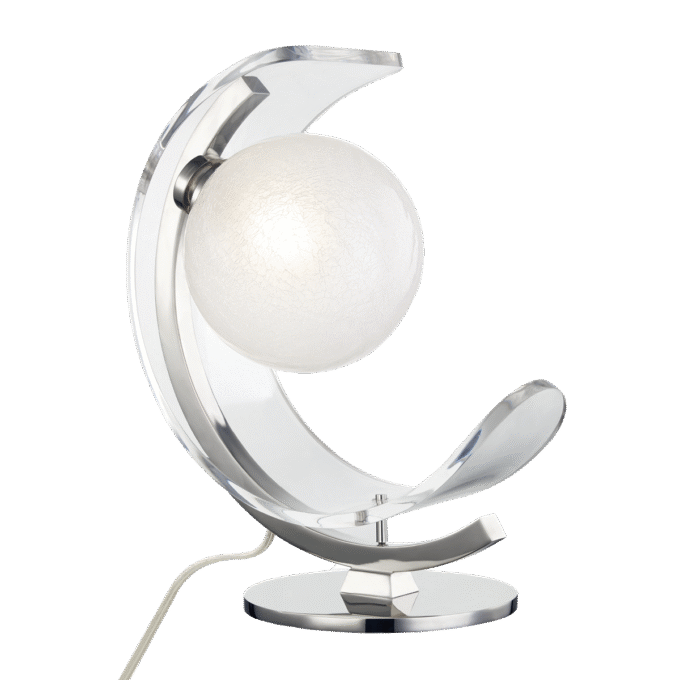
In conventional lighting design, the shade does most of the aesthetic work. The base is merely a delivery mechanism. In sculptural lighting, this hierarchy inverts entirely. The base — whether thrown ceramic, cast brass, hand-sculpted resin, or carved stone — is the visual anchor. The shade, if there is one at all, is secondary: a quiet frame for the object beneath it.

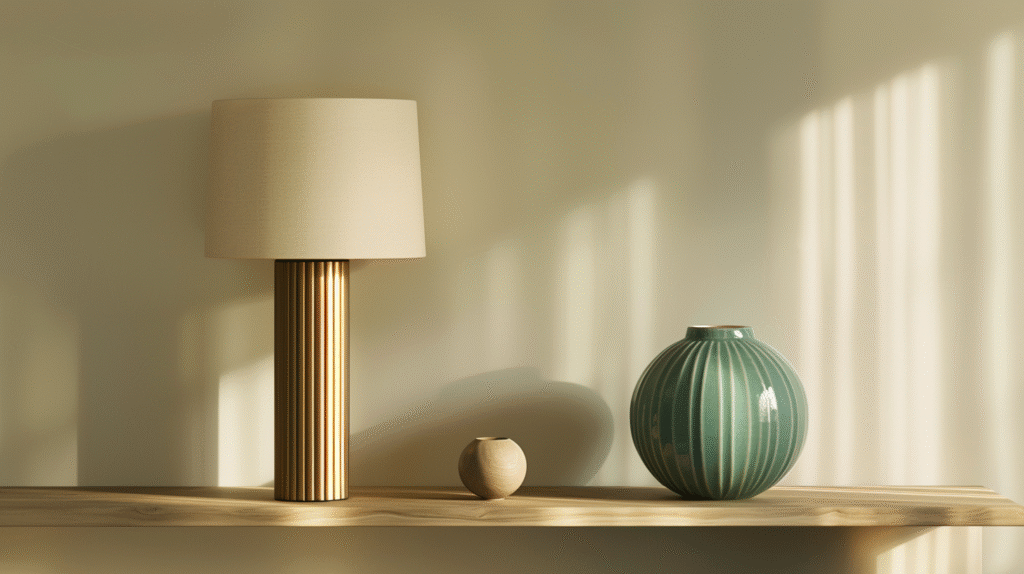
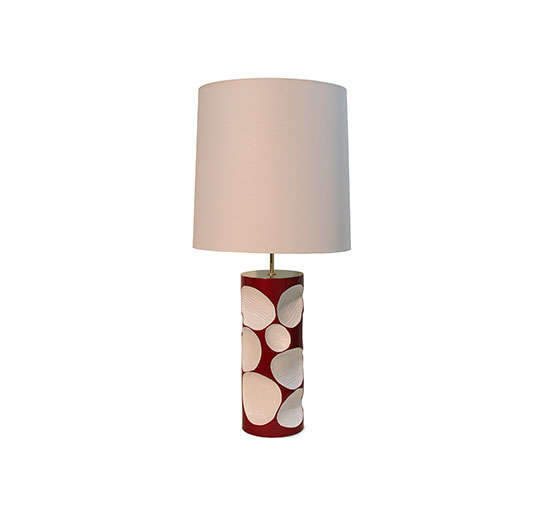
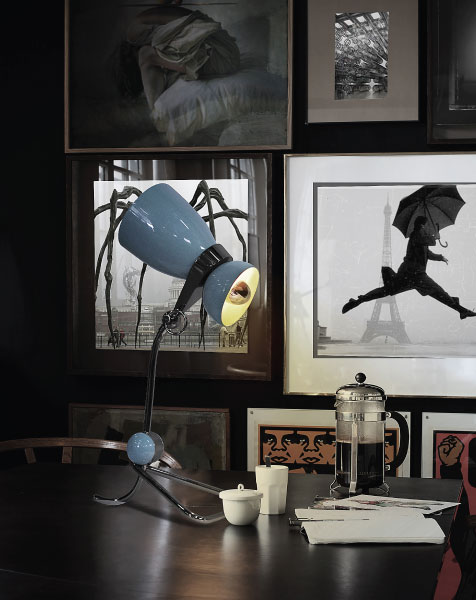
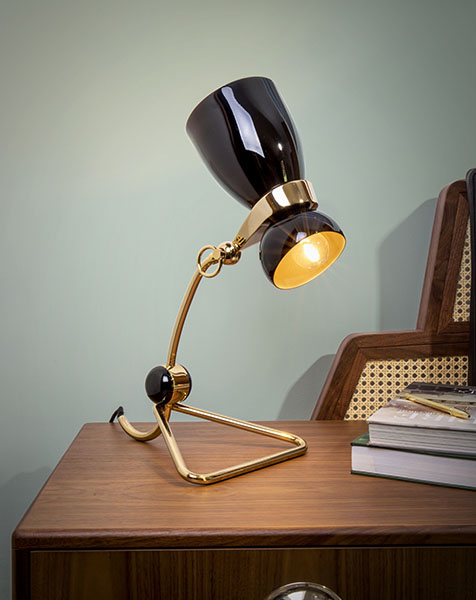
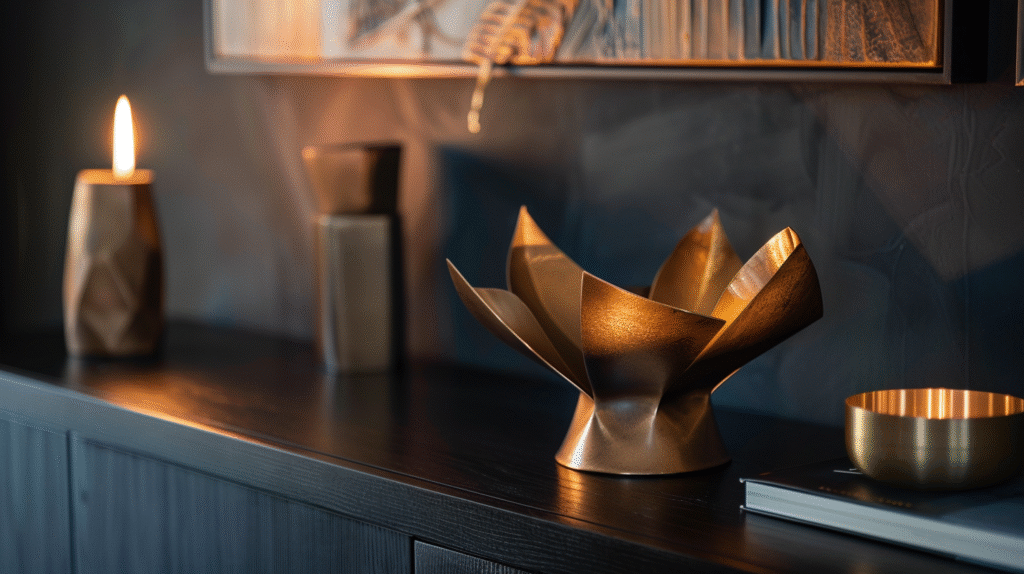
Think of a sculptural brass table lamp with an organically folded body that catches light differently depending on the angle. Or a luxury ceramic table lamp with a hand-thrown silhouette that holds its own against a gallery wall. These are objects you’d display even in the dark.

The three hallmarks of a sculptural table lamp

There are three qualities that separate a designer table lamp from its mass-market cousins:

— Intentional form: every curve, angle, or asymmetry has been considered, not defaulted to — Material integrity: the material isn’t decorative coating — it is the design — Visual weight: the lamp occupies space with confidence, not apology

When all three converge, you don’t have a lamp. You have a sculpture that happens to illuminate.

Why this matters for your room

Most rooms suffer from what designers call “visual flatness” — everything is equally weighted, equally interesting, equally forgettable. Statement table lamps disrupt this. They introduce a focal point that isn’t a sofa or a television. They give the eye somewhere to land, linger, and return to.

Designer Table Lamps That Double as Sculptural Art

Great designer table lamps deserve great placement. Not every surface will do them justice — and choosing the wrong position is one of the most common ways to undercut an otherwise extraordinary piece.

The console table: the most underused stage in the home

Entryway and hallway console tables are the first thing guests see and the last thing you notice before you leave the house. A single designer table lamp placed here — particularly a tall, architecturally striking one — sets a tone for the entire interior. It says: this home has been thought about.

The ideal lamp for a console is one with vertical presence and enough visual drama to be interesting at a glance. An artisan table lamp in a textured, organic form works especially well here, playing against the harder lines of the console itself.

The living room: layering over ambience

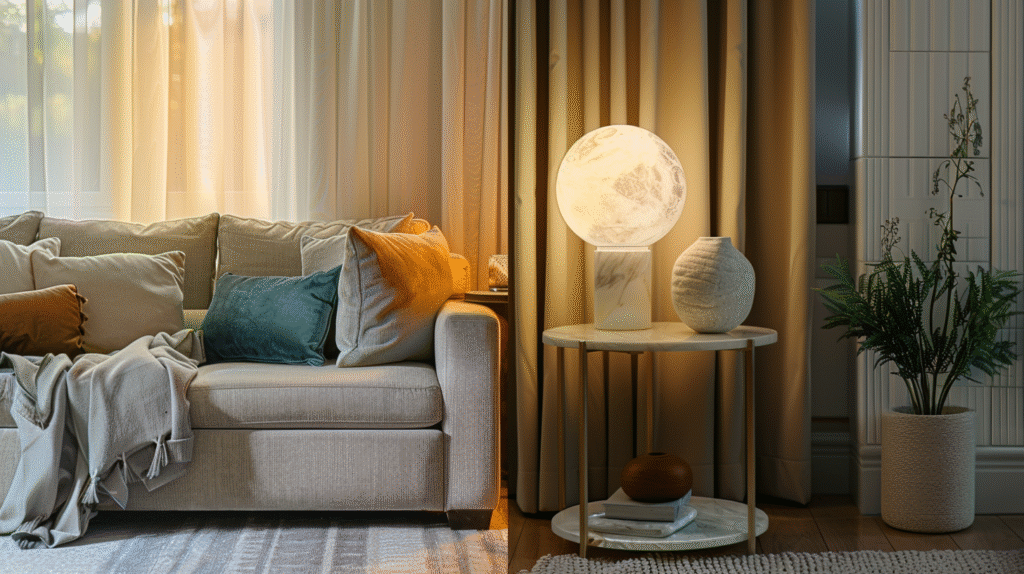
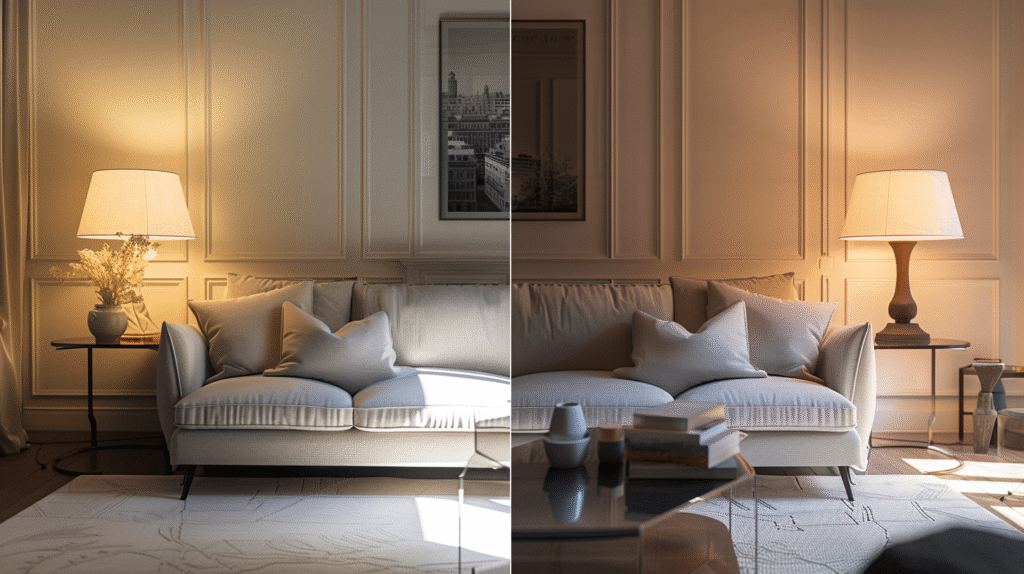
In a living room context, designer table lamps work best as layers — positioned at the periphery of a seating arrangement to create what lighting designers call “pools of light.” These pools warm a room in a way that overhead lighting simply cannot.

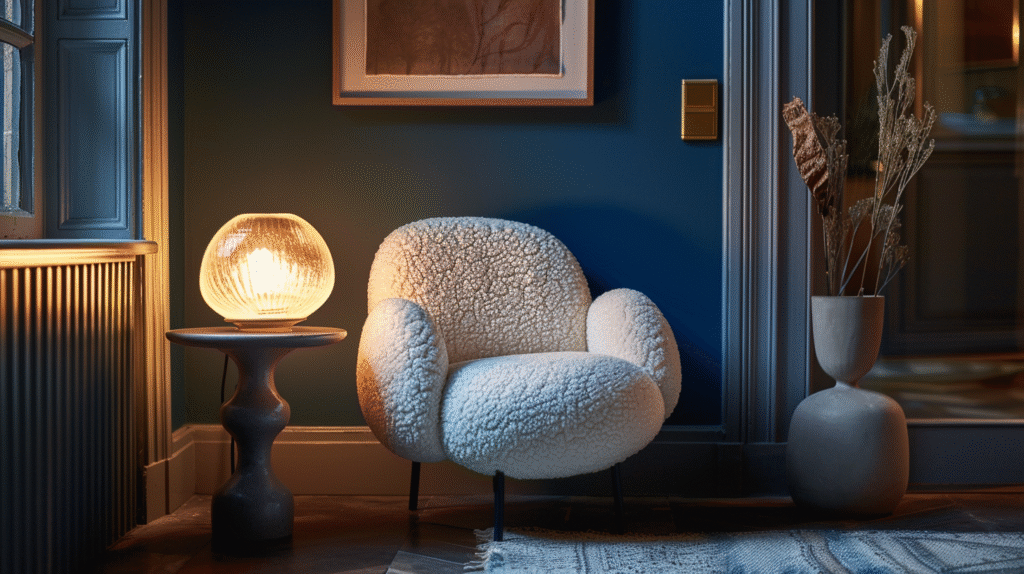
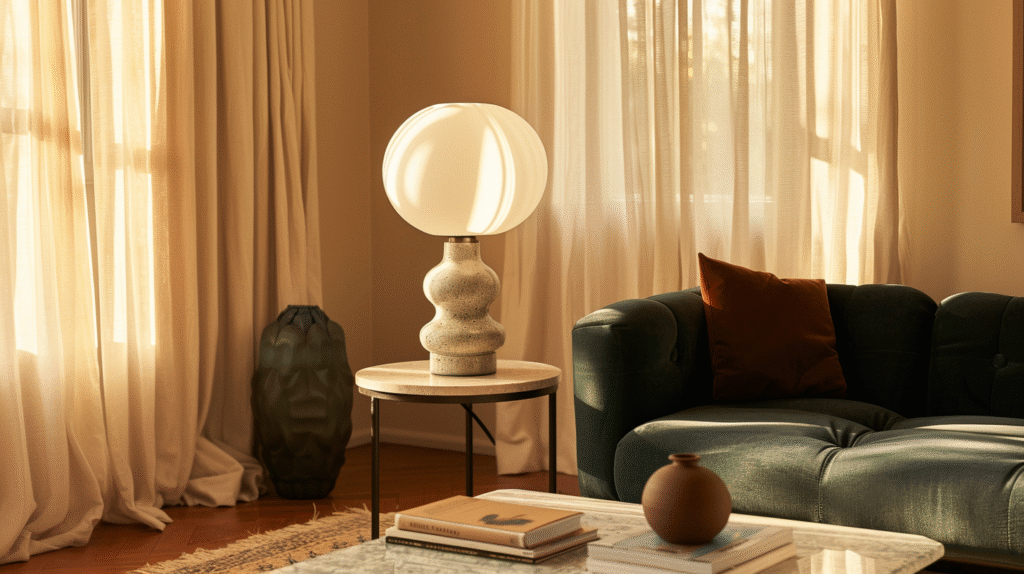
Place a statement table lamp on a side table beside a sofa, at roughly seated eye-level. This positions the light where it’s most flattering and most effective for the human face — an underappreciated consideration that makes rooms feel inexplicably more comfortable.

Perfect for: Luxury living rooms, maximalist and eclectic interiors, transitional spaces that blend contemporary and classic

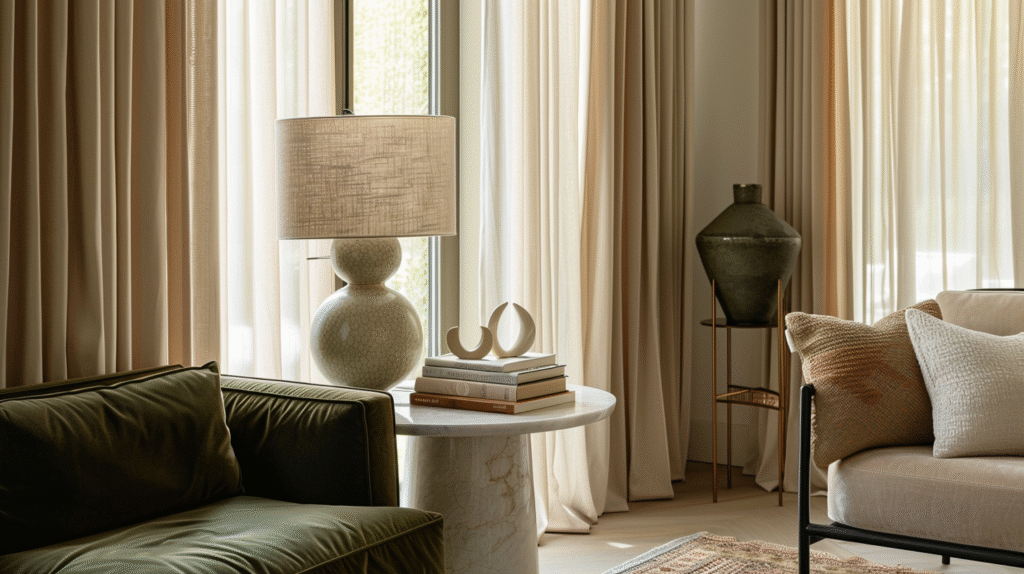
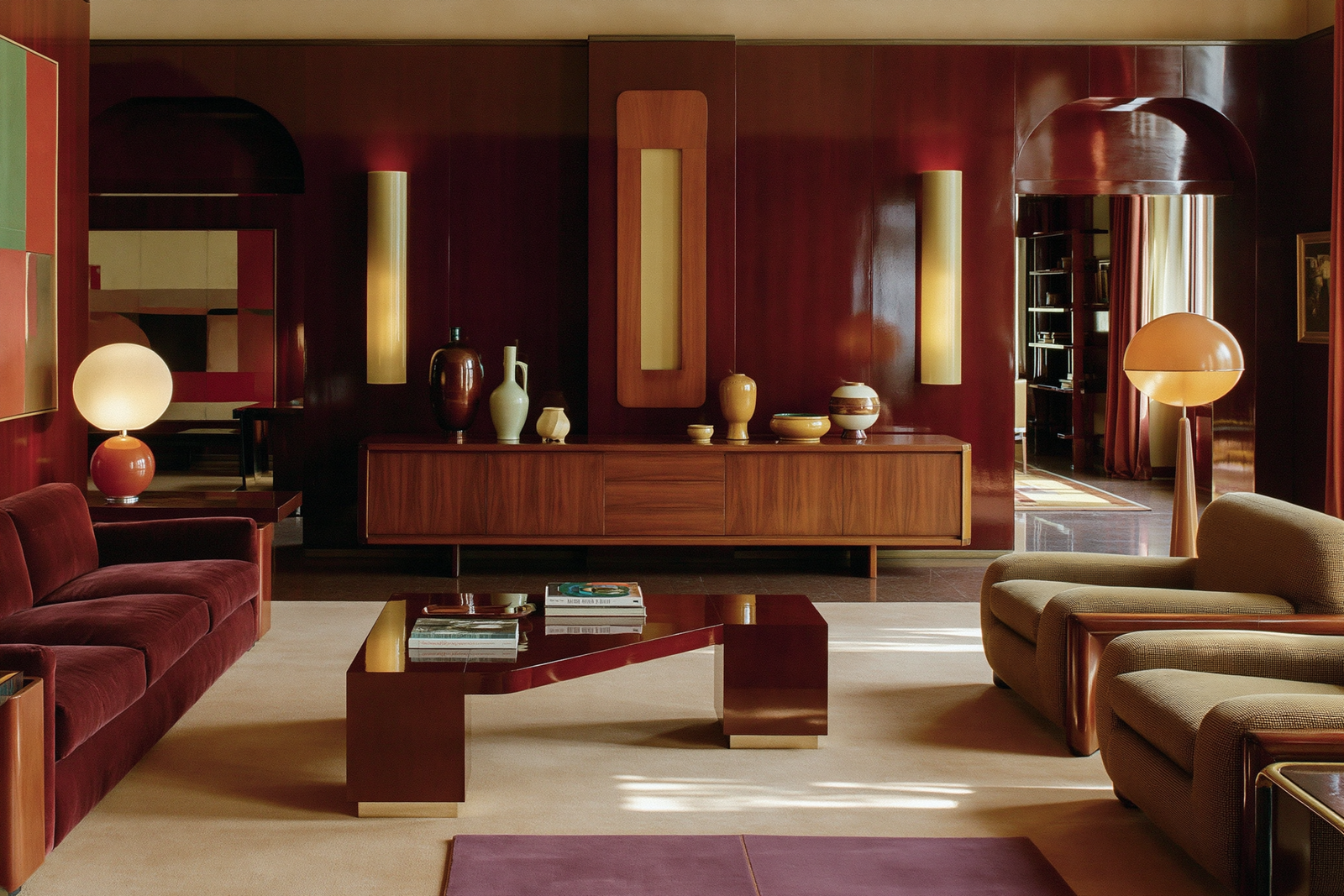
Pairs beautifully with: Velvet sofas in jewel tones, marble side tables, layered rugs, oversized art, floor lamps in complementary finishes

The bedside table: intimacy as art

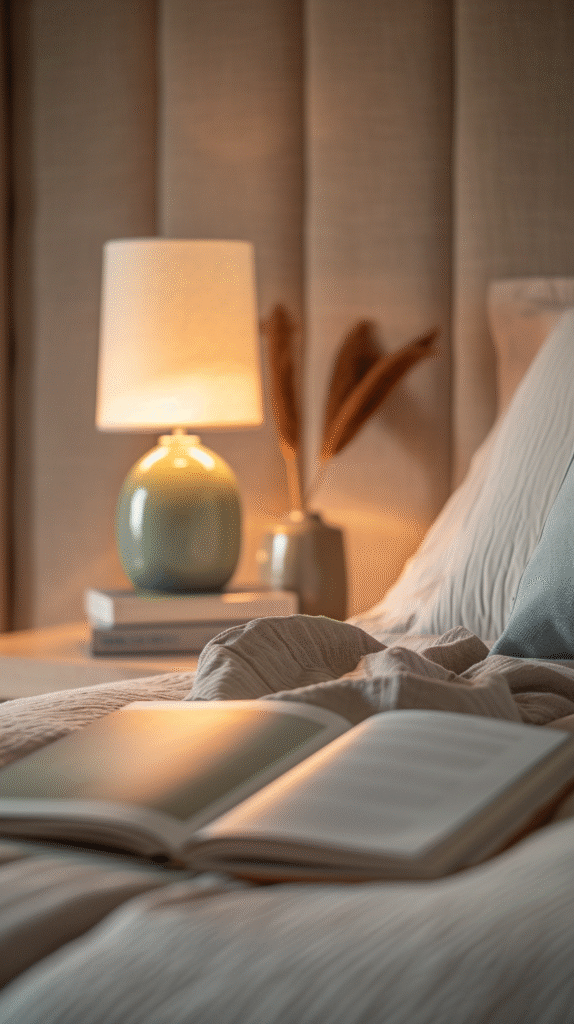
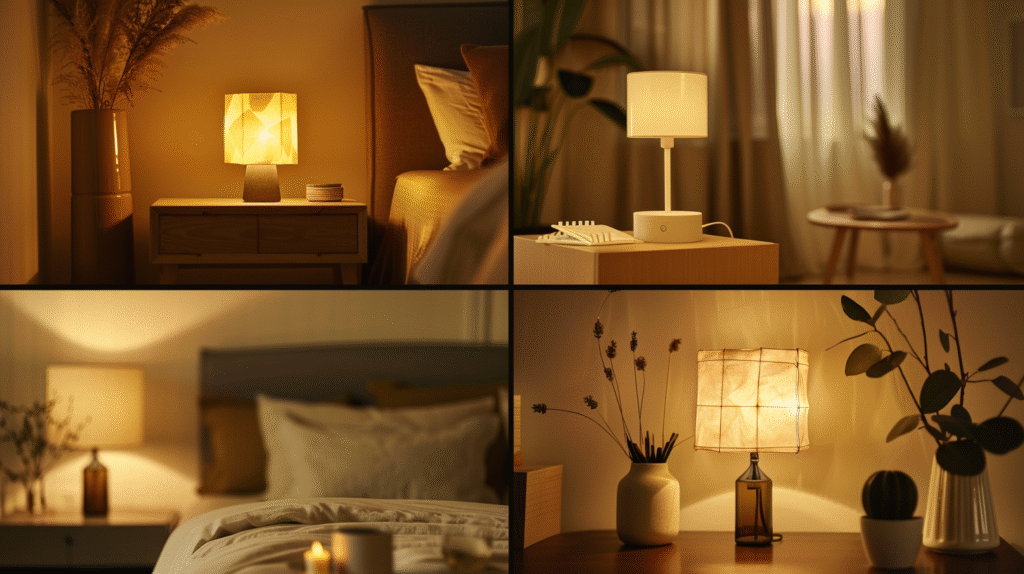
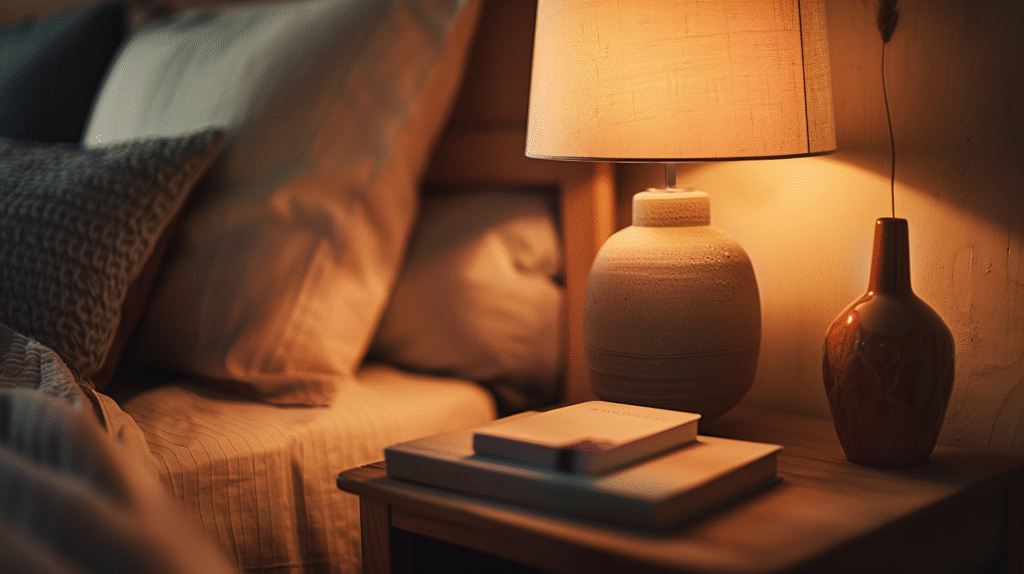
Bedrooms are where designer table lamps perhaps earn their keep most fully. The bedside table is one of the most visually examined surfaces in any home — you look at it every morning and every evening. An artistic bedside lamp positioned here is the last thing you see before sleep and the first thing your eyes find in the morning.

The scale consideration here is particularly important. A lamp that overwhelms a bedside table creates anxiety; one that’s too small reads as an afterthought. Aim for a lamp whose base height falls between 45–60cm, leaving enough room for a book, a glass of water, and a small decorative object without the lamp dominating the functional surface.

Best designer table lamps for bedside styling: Look for ceramic or stone-based lamps with warm, diffused shades — forms that are visually interesting but not so demanding that they disturb rest.

Pairs beautifully with: Linen or bouclé bedding, natural wood bedside tables, a sculptural vase, aged brass hardware, soft wall colours in warm putty or deep slate

Designer Table Lamps That Double as Sculptural Art

Material is where the story of a designer table lamp truly begins. The material doesn’t just determine how a lamp looks — it determines how it ages, how it interacts with light, and what emotional register it occupies in a room.

Ceramic

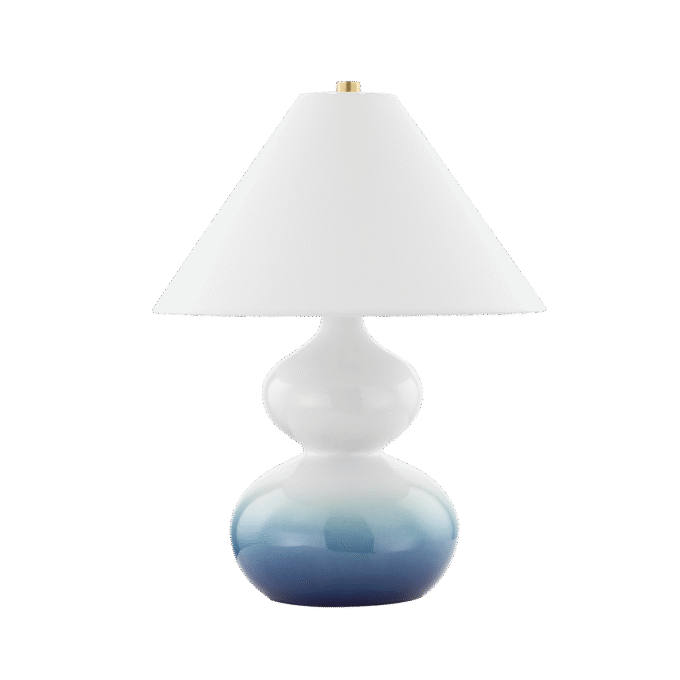
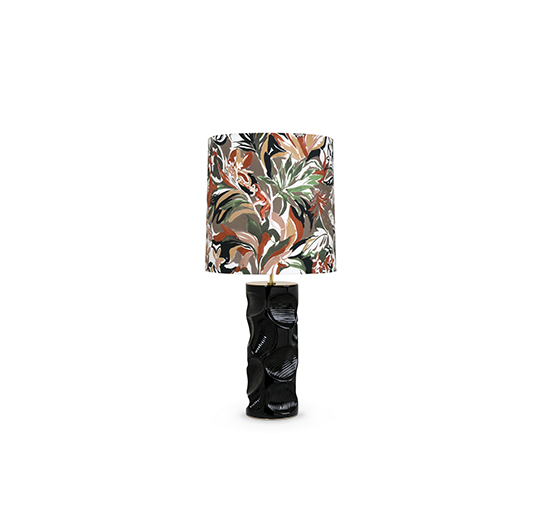
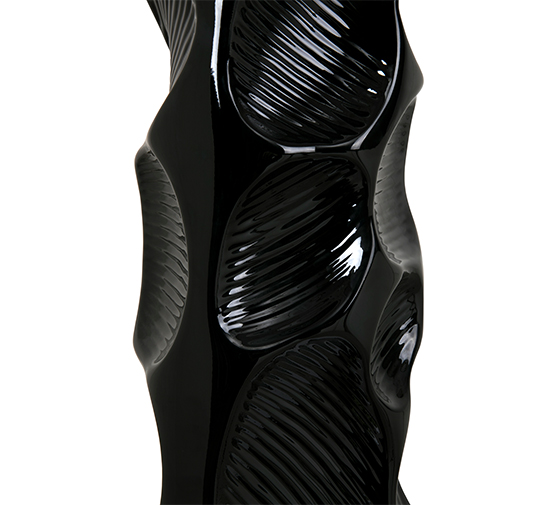
Ceramic is perhaps the most versatile material in sculptural lighting. Hand-thrown ceramics carry the fingerprints of their maker — subtle variations in surface, form, and glaze that mass production cannot replicate. A luxury ceramic table lamp in a deep, reactive glaze will catch the light differently each hour of the day, shifting from matte to luminous as the sun moves.

Ceramic also spans a remarkable range of aesthetic registers: raw, organic forms for earthy, textural interiors; smooth, architectural cylinders for minimalist rooms; voluptuous, curved silhouettes for more sensual, maximalist spaces.

Brass

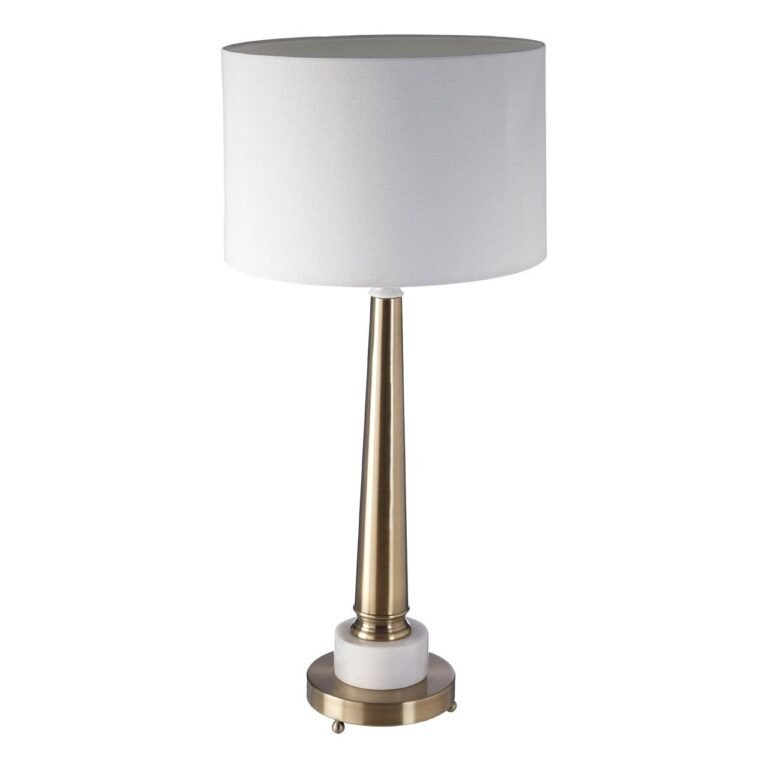
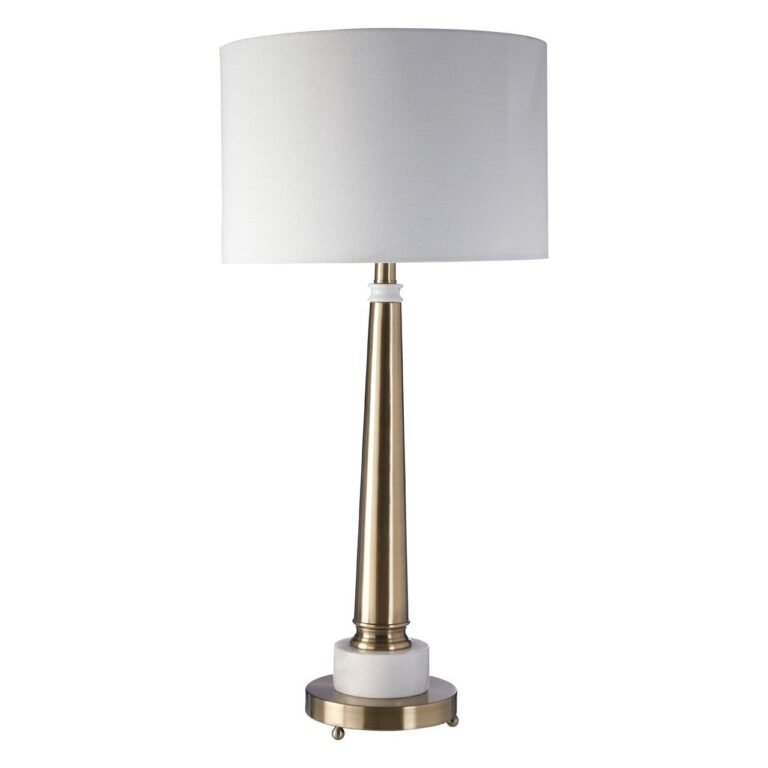
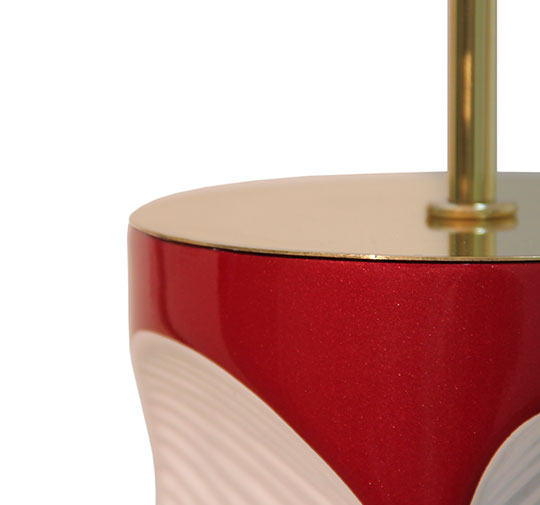
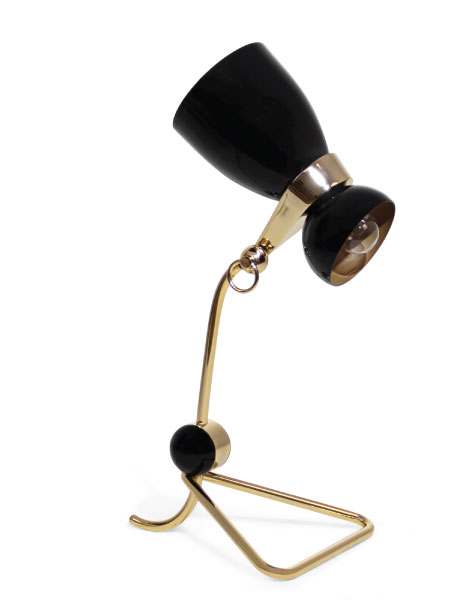
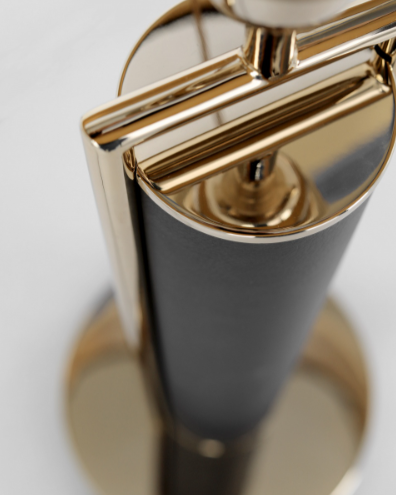
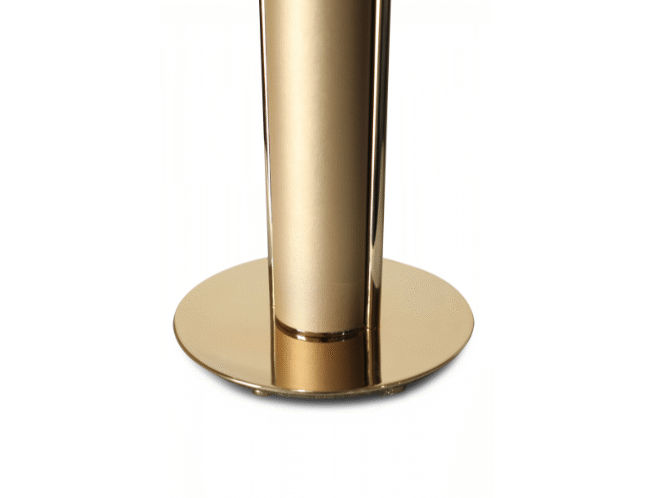
Brass has enjoyed a well-documented renaissance in interior design, and its durability in the form of table lamps is easy to understand. A sculptural brass table lamp ages in ways that only deepen its beauty — developing a patina that becomes part of the piece’s character over time.

Brass also has a unique relationship with light. It absorbs warm tones and reflects them back into a room, creating a glow that feels genuinely golden. Paired with a warm-white bulb, a brass lamp transforms a corner of a room into something almost romantic.

Resin

Resin is the material of contemporary artisan table lamps — infinitely mouldable, translucent when desired, capable of encasing objects within it. Some of the most adventurous designer lamps currently being produced use resin to suspend flowers, sand, or abstract pigment clouds within the body of the lamp itself. When lit, these pieces become something almost otherworldly.

Stone and marble

A stone-based lamp introduces geological timescale into a domestic interior — there is something quietly extraordinary about an object that took millions of years to form. Stone lamps tend to be heavy, both physically and visually, which makes them exceptional anchoring pieces on low sideboards or large console tables.

Mouth-blown glass

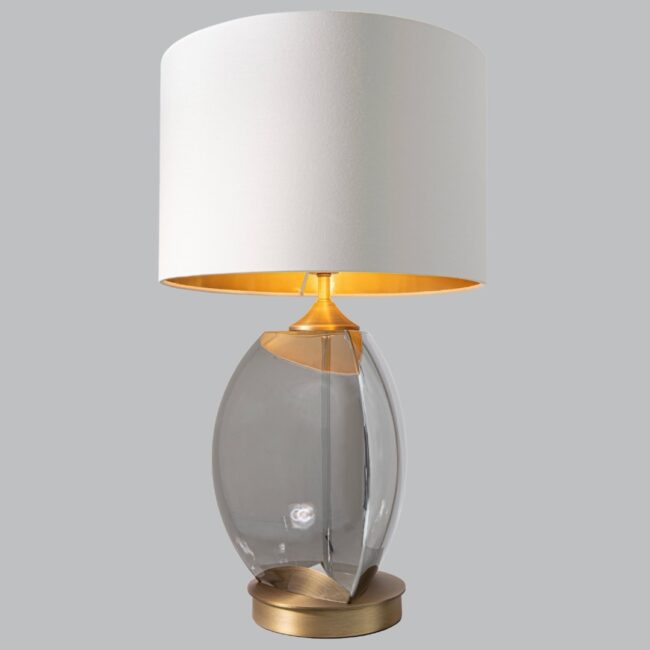
Glass-blown lamp bases — particularly those made using traditional mouth-blown techniques — belong in the same conversation as fine studio glass. The irregularities inherent in the process are features, not flaws. Light passing through hand-blown glass creates something entirely unpredictable and entirely beautiful.

Designer Table Lamps That Double as Sculptural Art

Scale is where most people go wrong with designer table lamps — and it’s usually in one direction: too small.

There’s a persistent tendency to choose lamps that are “safe” in scale — compact, inoffensive, unlikely to feel like too much. The result is lamps that vanish into their surroundings rather than commanding them. A designer table lamp chosen purely for safety is a wasted opportunity.

The proportional formula

A lamp’s visual weight should be roughly proportional to the surface it sits on and the furniture it accompanies. On a large sideboard or a wide console, a lamp that reaches 70–80cm in total height (base plus shade) is not oversized — it’s right.

In a room with high ceilings, scaling up is not just acceptable, it’s necessary. A lamp that reads as dramatic at 2.4m ceiling height will simply look correct at 3m and above.

Oversized as a design choice

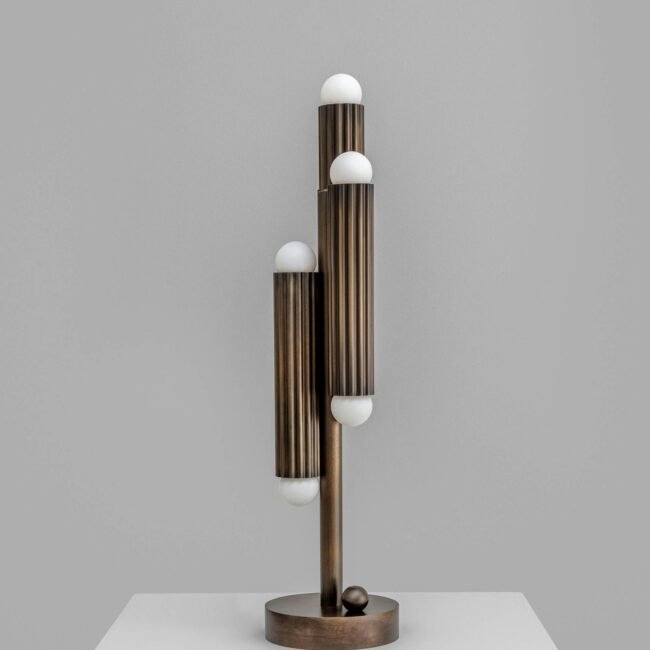
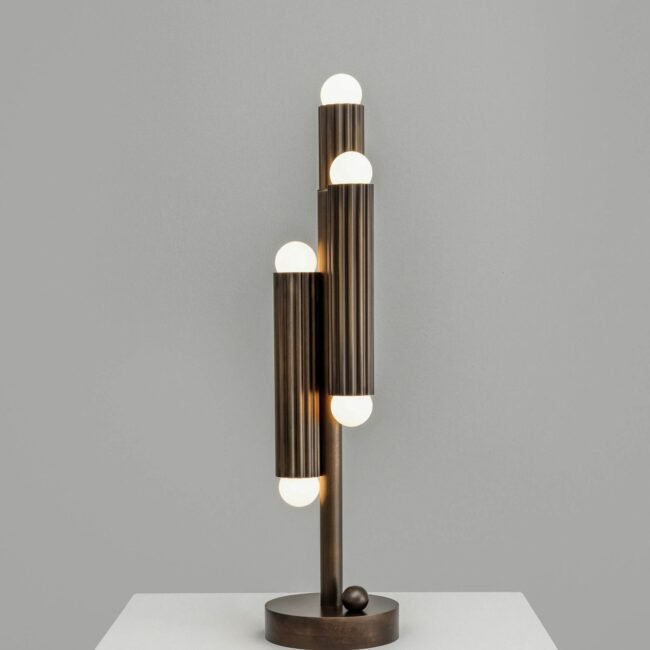
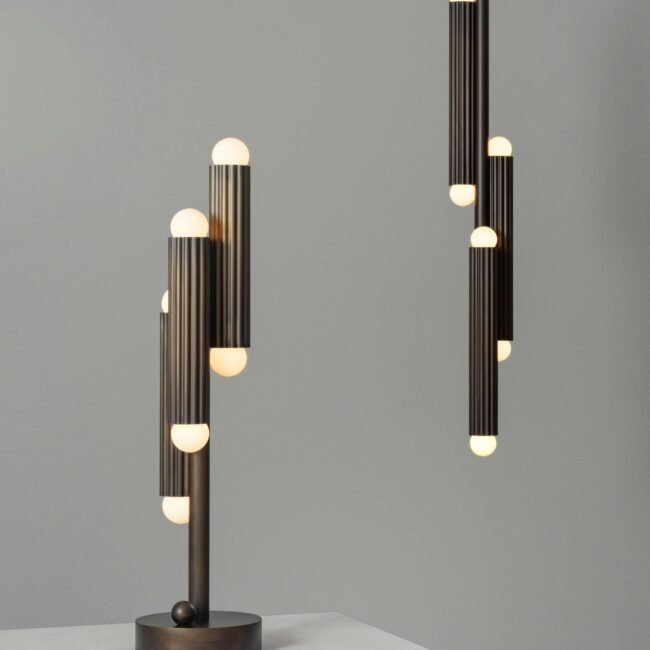
Some of the most memorable interiors use designer table lamps that are deliberately, provocatively large. An oversized sculptural base — think a dramatic, bulbous ceramic in matte black, or a towering ribbed brass column — becomes the room’s art object. The lamp doesn’t compete with artwork; it is the artwork.

This works particularly well in rooms that are otherwise restrained. In a pared-back, neutral interior, one oversized designer table lamp does more for the space than a gallery wall ever could.

Scale for small spaces

Counterintuitively, small rooms often benefit from one larger lamp rather than several small ones. Multiple small lamps create visual clutter; a single well-scaled piece creates a focal point that actually expands the sense of space by giving the eye a clear hierarchy to follow
Designer Table Lamps That Double as Sculptural Art

There is a reason why the most beautiful hotel rooms and restaurant interiors are never lit from above. Overhead lighting — the default in most homes — flattens everything it touches. It’s the fluorescent office, the supermarket aisle, the hospital corridor.

Table lamps work differently. They position light at human height, casting upward and outward in ways that create shadow, depth, and warmth simultaneously.

The psychology of warm light
Research in environmental psychology consistently shows that warm, diffused light reduces cortisol and encourages the nervous system to shift from alertness to relaxation. In practical terms: a room lit primarily by designer table lamps will feel more comfortable, more intimate, and more emotionally welcoming than the same room lit from the ceiling.

This is the hidden value proposition of luxury table lamps UK buyers are increasingly recognising — not just aesthetic, but physiological. Good lighting literally makes you feel better.

Layering light like a designer

Professional interior designers talk about light in layers: ambient (overall light level), task (focused functional light), and accent (light used to highlight specific objects or surfaces). Designer table lamps occupy all three layers simultaneously. A sculptural lamp on a console provides ambient glow, highlights the console surface, and draws attention to itself as an accent object — all at once.

The rule of thumb: no room should be lit from a single source. Two to three carefully positioned designer table lamps, combined with a floor lamp or wall sconce, creates the layered light environment that makes a room feel genuinely designed.

How lamp shades affect mood

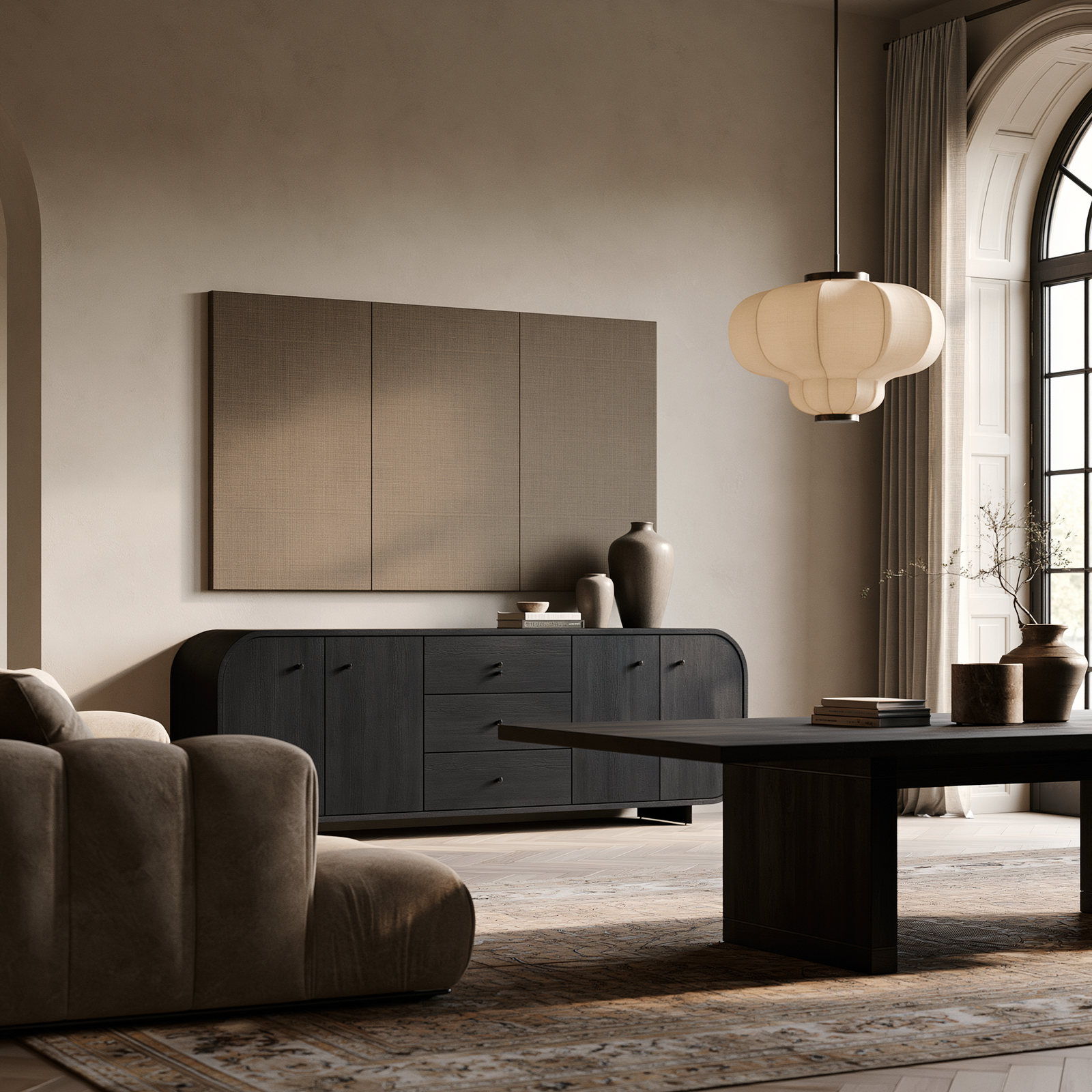
The shade material is the final, often neglected element of mood architecture. A tight, opaque shade directs light downward and creates an intimate, focused pool. A translucent linen or paper shade diffuses light throughout its surface, creating a warm glow visible from across the room. An open-topped shade washes the ceiling with light, raising the perceived ceiling height and adding drama.

Match the shade to the mood you want the room to carry.

Common Mistakes to Avoid When Buying Designer Table Lamps

Designer Table Lamps That Double as Sculptural Art

Even design-literate buyers make avoidable mistakes when purchasing table lamps. Here are the most common — and how to sidestep them.

Choosing purely for function

A lamp chosen only because it provides adequate reading light is a lamp that does its minimum and nothing more. The best designer table lamps are chosen first for their visual character, then for their light output. If you need task lighting, add a directional reading lamp separately — don’t let functionality override your sculptural choice.

Ignoring the shade

The base gets all the attention, but the shade is doing half the work. A magnificent sculptural base paired with a cheap, poorly proportioned shade undermines the entire investment. Take the shade as seriously as the base — consider its diameter relative to the base width, its height relative to the base, and its material in the context of the room.

Matching everything

Two identical lamps on either side of a sofa, or twin bedside lamps, can work beautifully — but the instinct to match everything in a room is one that produces safe, forgettable interiors. Consider pairing a sculptural ceramic lamp with a taller, more architectural brass piece on the opposite side of a room. The contrast creates conversation.

Buying before measuring

This seems obvious, but it isn’t — particularly when buying online. Measure the surface the lamp will sit on. Measure the height of adjacent furniture. Consider the lamp in the context of ceiling height. A lamp that looks perfect on a screen can look entirely wrong at three-dimensional scale in a room.

Treating the lamp as an afterthought

The single most expensive mistake in interior design is treating lighting as the last purchase, made with the budget that remains after everything else. Designer table lamps should be one of the first considerations — chosen alongside, not after, the furniture and art.

Designer Table Lamps by Room: From Living Rooms to Bedside Tables

Designer Table Lamps That Double as Sculptural Art

Living room

The living room is where designer table lamps earn their keep most visibly. In this space, they perform three roles: ambient light source, focal point, and art object. The ideal arrangement involves at least two designer table lamps positioned asymmetrically — one higher, one lower — to create visual rhythm without rigidity.

How to choose designer table lamps for your living room: Prioritise sculptural presence over raw light output. In the living room, lamps are atmosphere-makers first. Choose forms with visual weight — rounded ceramics, hand-cast metals, or blown glass — that hold their own against the scale of sofas and shelving.

Designer table lamp ideas UK: For a quintessentially British interior aesthetic — think layered texture, muted colour, restrained maximalism — look for artisan table lamps in warm-toned ceramics or aged brass with natural linen shades. This combination is timeless without being conservative.

Bedroom

The bedroom demands a different sensibility. Here, designer table lamps should be visually interesting but tonally calm — forms that are beautiful to look at but don’t create visual noise in a space meant for rest.

Best designer table lamps for bedside styling: Ceramic forms in muted, earthy glazes — sage, sand, clay, storm grey — work exceptionally well. These colours integrate seamlessly into most bedroom palettes while still reading as considered, designed objects. Pair with a warm-white bulb at low wattage for maximum atmosphere.

Entryway and hallway

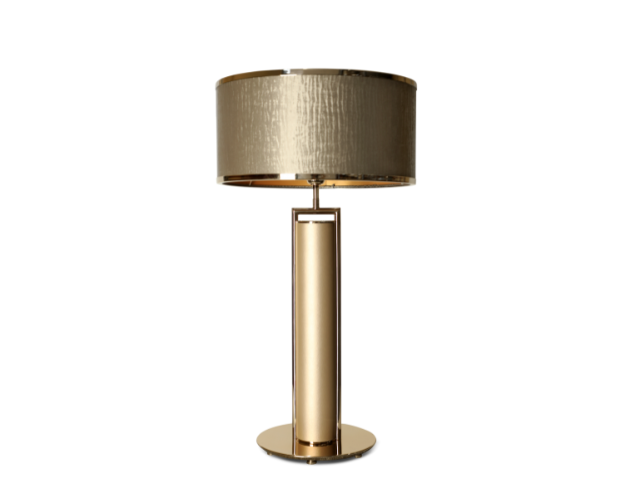
The entryway is the room’s opening sentence — it sets expectation for everything that follows. A single, architectural designer table lamp on a console creates immediate impact with minimal effort. Choose height over width here: a tall, slender form with strong vertical presence commands the space without overwhelming it.

Home office

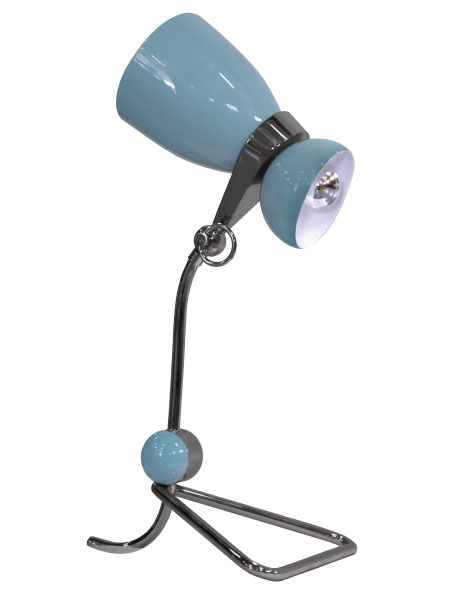
The home office is perhaps the room where the “lamp as sculpture” argument is most frequently ignored — and most needed. A beautiful sculptural lamp on a desk or shelf introduces humanity and warmth into a space that can easily feel purely functional. Consider an adjustable artisan table lamp that can pivot between task lighting and ambient glow depending on the time of day.

Small apartments and rental spaces

For renters and small-space dwellers, designer table lamps are arguably the single highest-impact decorating tool available. They require no installation, leave no marks, and move with you. A single investment-grade lamp can transform a rental living room from impersonal to deeply personal.

Perfect for: Small apartments where furniture doubles as art, rental spaces needing personality without permanent changes, minimalist spaces that need one bold statement piece

Designer Table Lamps FAQ

Designer Table Lamps That Double as Sculptural Art

What makes a table lamp a designer piece?

A designer table lamp is distinguished by intentionality of form, quality of material and construction, and the involvement of a named designer or artisan in its creation. The form is considered as an aesthetic object, not merely a functional one. Materials are chosen for how they age, how they interact with light, and what they contribute to the visual narrative of a space.

How do you style a sculptural table lamp without overwhelming a space?

The key is restraint in everything else. If the lamp is the hero — and it should be — let it be. Clear the surface it sits on so the lamp has room to breathe. Choose a shade that softens without competing. Let the lamp be the room’s focal point rather than one of many competing objects.

Are designer table lamps worth the investment?

Yes — and for reasons that go beyond the aesthetic. Quality designer table lamps are made to last decades, not years. They’re typically constructed with materials that age beautifully rather than degrading. They hold, and sometimes increase, their value over time. And perhaps most importantly: a single well-chosen lamp can transform the entire atmosphere of a room in a way that a much more expensive furniture purchase cannot.

What’s the difference between a designer table lamp and a luxury table lamp?

The terms are often used interchangeably, but there’s a meaningful distinction. A luxury table lamp emphasises quality of materials and finish — exceptional craftsmanship, premium components, high-end materials. A designer table lamp emphasises the primacy of design intent — the concept, the form, the artistic vision behind the piece. The very best lamps are both: luxury table lamps UK makers and European studios are producing with genuine artistic ambition.

Can you use designer table lamps in a small room or rental?

Not only can you — you should. Designer table lamps are among the most renter-friendly of all interior investments: portable, installation-free, and capable of transforming a space entirely. In a small room, the sculptural quality of the lamp matters even more, because every object in a limited space is seen clearly and often.

Conclusion: Light Is the Last Luxury

Designer Table Lamps That Double as Sculptural Art

There is a version of interior design that treats lighting as utility — as the practical necessity you address after you’ve dealt with everything that matters. This is an expensive misconception. Not in the financial sense, but in terms of what it costs you in atmosphere, in presence, in the feeling of coming home to a room that is genuinely, unmistakably yours.

The best rooms are not merely furnished. They are orchestrated — and light is what conducts them. Designer table lamps are not decorative extras. They are the elements that give a room its soul.

What separates a decorated room from a designed one is rarely the furniture. It’s almost always the light. The warm amber glow from a sculptural brass table lamp on a side table. The singular beauty of a hand-thrown ceramic base catching afternoon sun. The intimacy created by an artistic bedside lamp that’s the last thing you see before you sleep. These are not small details. They are the details that make a room feel like it was made for you specifically.

The good news is that you don’t need to redesign your entire interior to access this transformation. One lamp, chosen with intention, placed with consideration, is enough to shift the emotional register of a room entirely.

Explore our curated collection of designer table lamps, sculptural lighting, and luxury home accessories at Eclectic Niche to begin your lighting transformation.

What do you think?
Leave a Reply

Blog

Get fresh home inspiration and helpful tips from our interior designers

top
1
    1
    Your Cart
    AMY TABLE Remove
    AMY TABLE
    Qty: 1
    Price: £1,538
    £1,538

    Inactive

    Privacy Overview

    This website uses cookies so that we can provide you with the best user experience possible. Cookie information is stored in your browser and performs functions such as recognising you when you return to our website and helping our team to understand which sections of the website you find most interesting and useful.