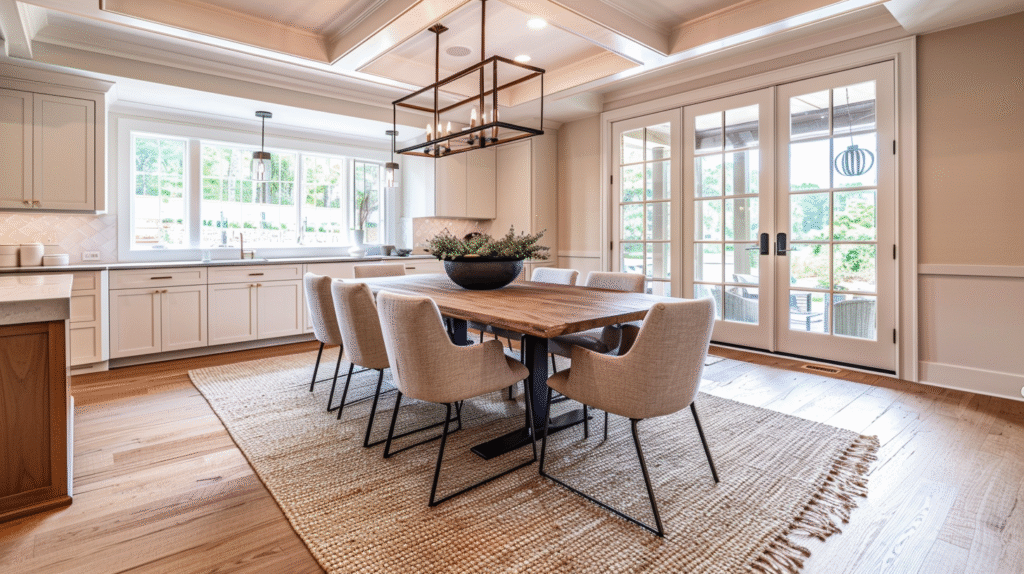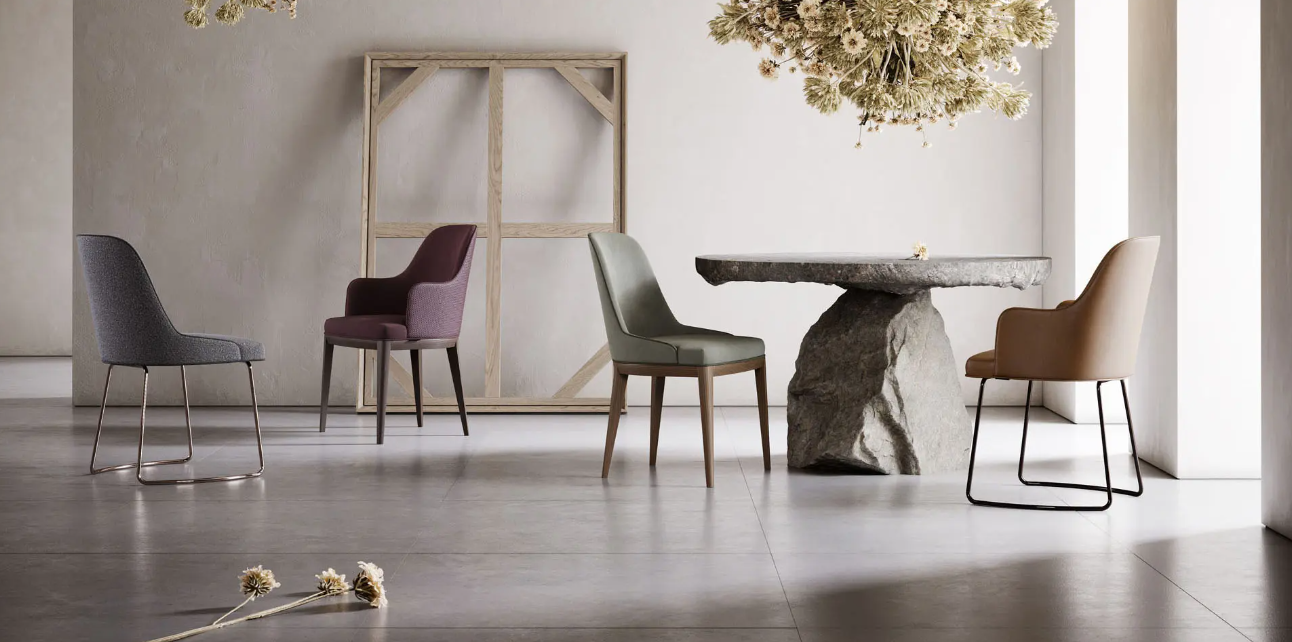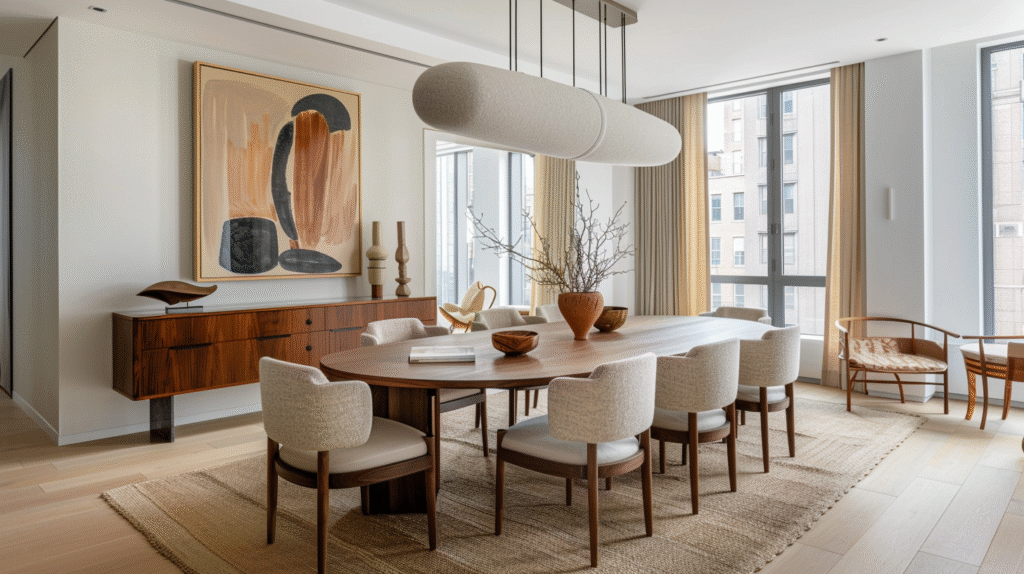
There’s a particular kind of dining room disappointment that most homeowners know but rarely name. You’ve chosen a beautiful table, invested in chairs that photograph well, maybe even splurged on a statement pendant light. The room looks composed in photos. But every time you sit down to eat—every time a guest pushes back their chair, every time you squeeze past someone to reach the kitchen—something feels off. The space works against you. The room you designed for gathering makes you feel, inexplicably, cramped.
The culprit, almost without exception, is dining room clearance.
Dining room clearance is the discipline of spatial breathing—the art and science of the distances between your furniture, your walls, your walkways, and the people who move through your room. It is, in the most literal sense, the space between things. And it is the single most misunderstood principle in residential dining room design. Most people focus on what goes into a room: the table, the chairs, the rug, the light. Almost no one gives equal attention to what must remain empty—the negative space, the clearance zones, the invisible corridors of movement that determine whether a dining room truly functions or merely exists.
This guide is about reclaiming those distances. Whether you’re furnishing a new home, rethinking a room that has never quite worked, or simply trying to understand why the dining rooms you love in magazines feel so different from your own, understanding dining room clearance will change how you see every room you ever design. It is learnable, measurable, and—once you internalize it—deeply liberating.
The word “clearance” has a physical, mechanical ring to it—something you’d associate with loading docks or parking garages, not the intimate warmth of a dinner party. But in interior design, dining room clearance is exactly that: the measured, intentional gap between one surface and another that allows people to exist comfortably in space.
The most common mistake? Confusing fitting furniture into a room with designing a room. These are fundamentally different activities with fundamentally different outcomes.
Fitting furniture into a room is what happens when you measure your table, check it against the room’s square footage, confirm it isn’t larger than the floor plan, and declare success. It’s a strategy based on the object, not the people using it. It ignores the body in motion—the guest pushing back their chair to stand, the host carrying a heavy casserole from the kitchen, the child darting around the perimeter of the table to find their seat. Dining room clearance accounts for all of this. It starts not with the furniture but with the human body, working outward from the experience of the person sitting, standing, moving, and living in the space.
The result of poor dining room clearance is always the same, even if the specific manifestation varies: a room that looks right but feels wrong. Chairs that scrape the wall when pulled out. A sideboard that forces guests to turn sideways as they pass. A walkway so narrow that the host holds their breath every time they carry a dish to the table. These are clearance failures, and they are entirely preventable.
Every measurement in dining room design should begin with one baseline number: 36 inches. This is the minimum clearance from the edge of your dining table to any wall or fixed obstruction, and it is the foundation on which all other dining room clearance decisions rest.
Why 36 inches? Because it accommodates two essential actions simultaneously: a chair being pulled out far enough for a person to sit down or stand up comfortably (which requires approximately 16 to 18 inches of pull-out space), plus the passage of another person behind that chair (which requires roughly 18 inches of body width for comfortable movement). Add those together, and you arrive at 36 inches of required dining room clearance.
Here’s where most people go wrong: they measure only for the seated position. They push the chairs in, note that the room looks fine, and move on. But a dining room is not designed for people who are already seated and perfectly still. It’s designed for the constant choreography of entering, exiting, serving, and passing—and that choreography demands clearance for bodies in motion.
The practical implications are significant. If you have a table that is 36 inches wide and a room that is 10 feet (120 inches) wide, your usable “table zone” is only 120 minus 72 inches (36 inches of clearance on each side) = 48 inches maximum table width. If your table is wider than that, you don’t have adequate dining room clearance on both sides simultaneously.
Common mistake: Placing furniture first and measuring clearance second—which means clearance becomes whatever space is left over, rather than a deliberate allocation.
The Traffic Lane Upgrade
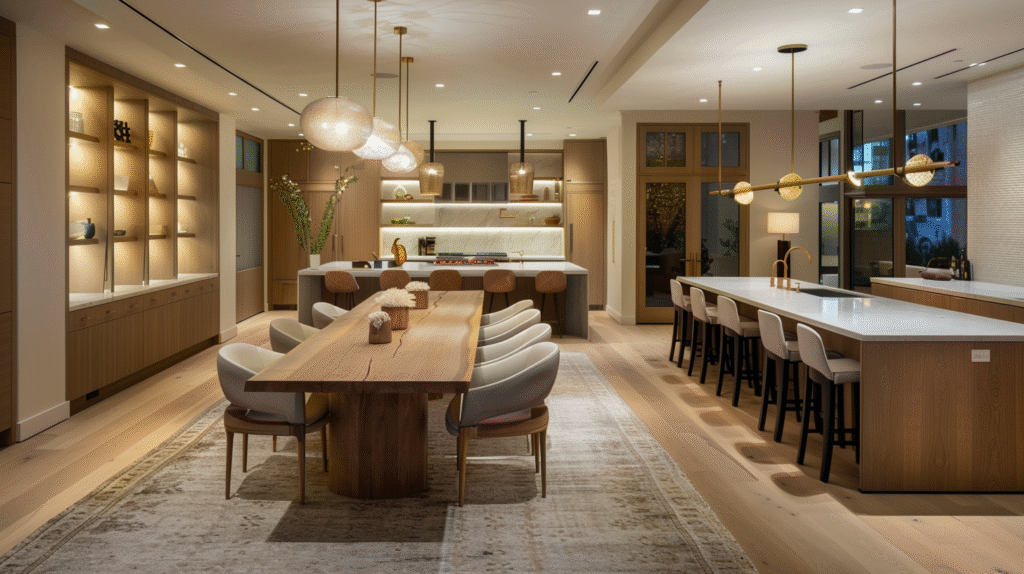
If your dining room is adjacent to or integrated with a kitchen—as is the case in most modern open-plan homes—one side of the table will serve as a traffic lane rather than simply a seating zone. This changes the clearance requirement significantly. A primary traffic lane, defined as a pathway that is used repeatedly during meal preparation and serving, should have a minimum of 42 to 48 inches of clear space. This is the dining room clearance standard for routes that people actively walk through, not just squeeze past.
If your room cannot accommodate 42 to 48 inches on the traffic side and 36 inches on the seating side, you have a table scaling problem—and the solution is almost always a smaller table, not a tighter clearance.
-

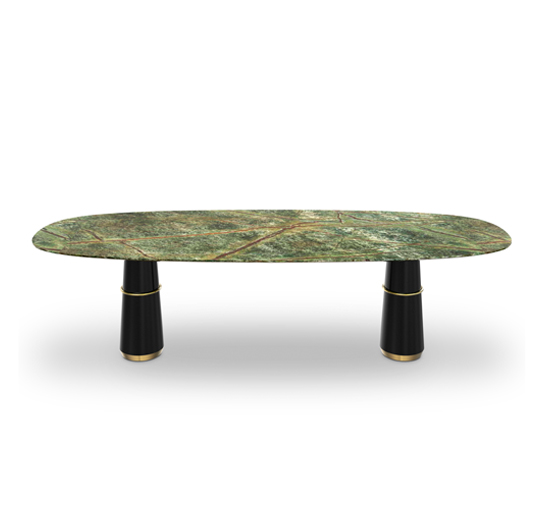
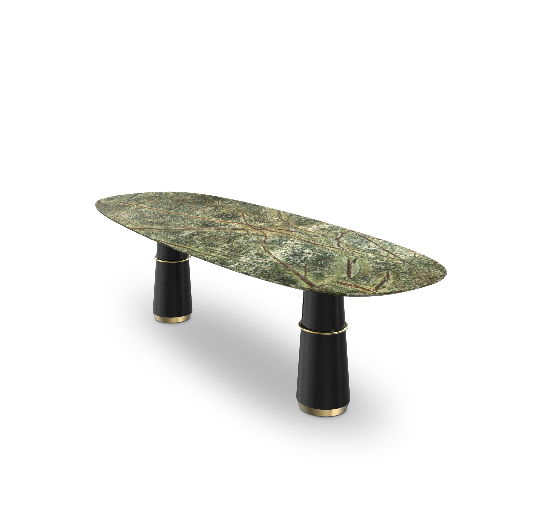
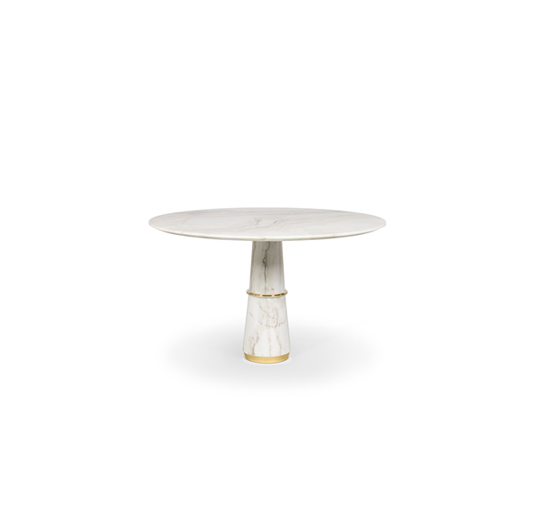
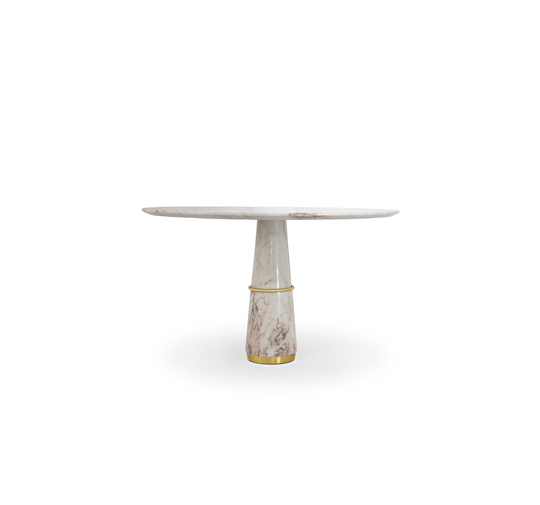
AGRA DINING TABLE
£10,730 Add to cart -
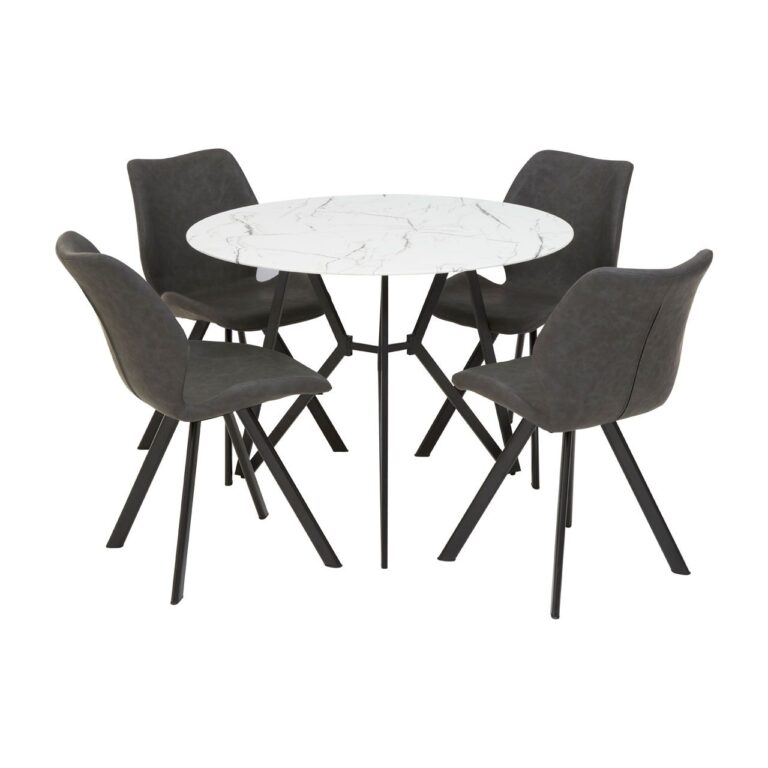
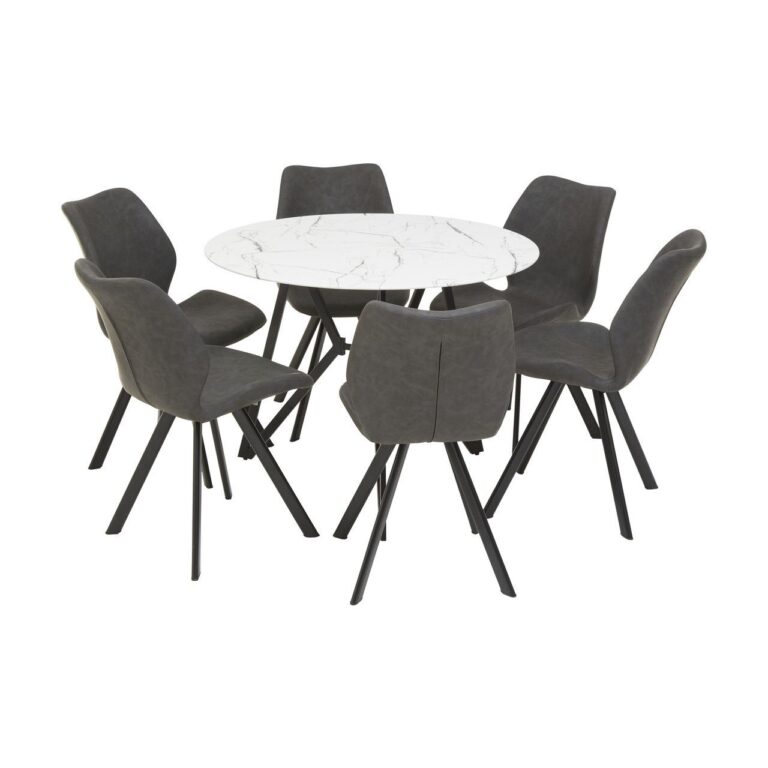
Eston Round Grey Dining Set
£1,100 Add to cart -

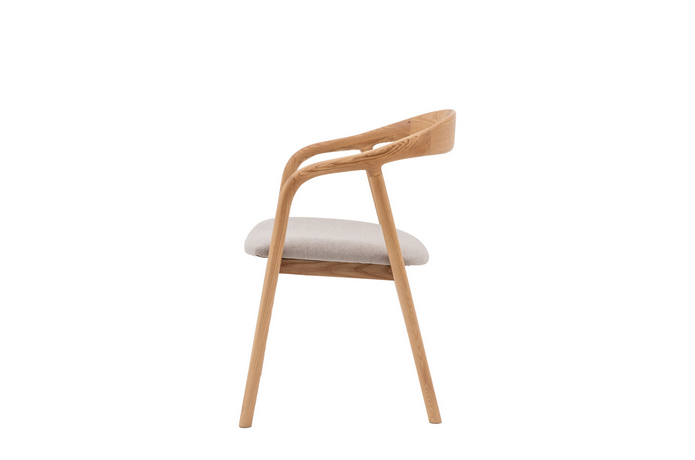
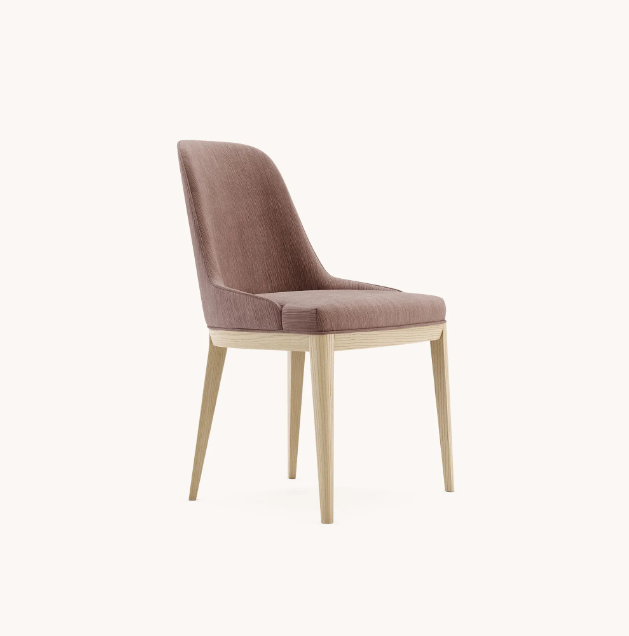
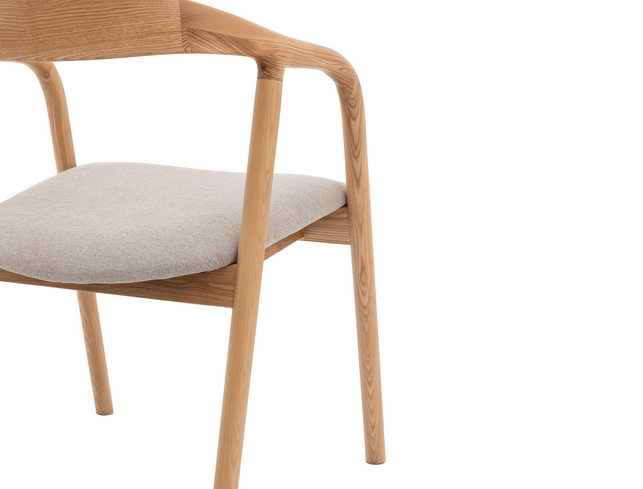
Petal Dining Chair
£150 Select options This product has multiple variants. The options may be chosen on the product page
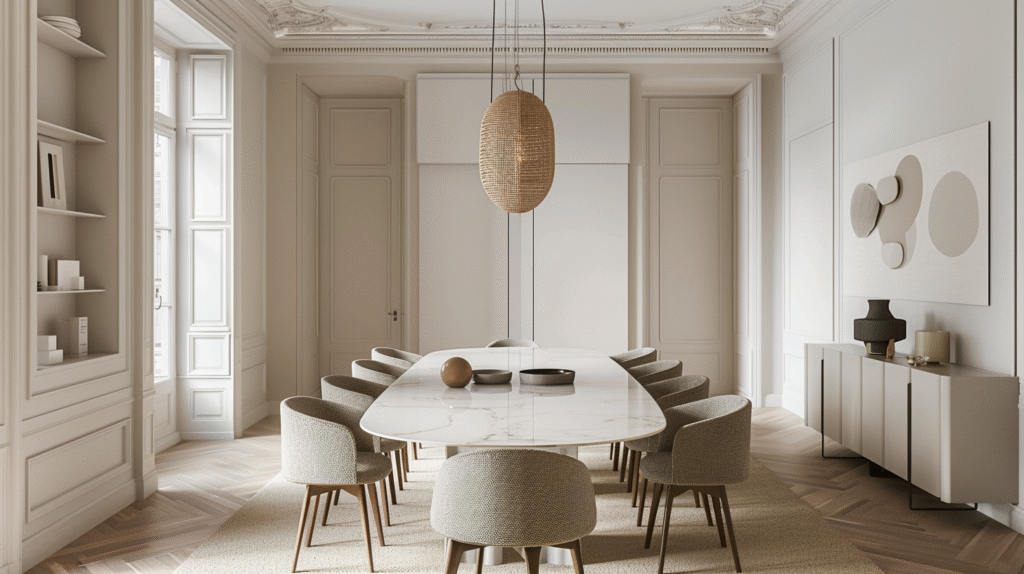
Understanding dining room clearance as an abstract principle is useful. Having the actual numbers at your fingertips is transformative. Here is the complete spatial vocabulary you need:
Chair Pull-Out Clearance: 16 to 20 inches from table edge to allow a person to sit and stand without obstruction. This is embedded within the 36-inch wall clearance but is worth measuring independently if you have chairs with unusually deep seats.
Minimum Perimeter Clearance (Seated Side): 36 inches from table edge to wall or furniture. This is the non-negotiable floor of dining room clearance for any side of a table used for seating.
Comfortable Perimeter Clearance: 42 to 48 inches. This is the clearance that makes a dining room feel generous and unencumbered rather than merely functional. If your room allows it, prioritize this measurement over the minimum.
Traffic Lane Width (Primary Path): 42 to 48 inches minimum for a well-used route. 36 inches is workable for occasional use only.
Traffic Lane Width (Secondary Path): 36 inches minimum for low-traffic circulation routes.
Sideboard/Buffet Clearance: 42 to 48 inches in front of any storage furniture that will be accessed during meals (for doors to open and people to crouch or stand while serving). Minimum usable clearance is 36 inches, but this creates a tight working environment.
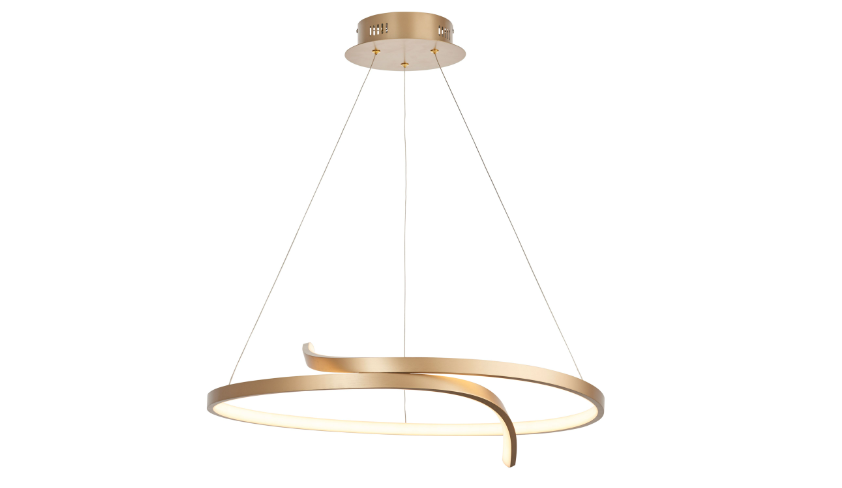
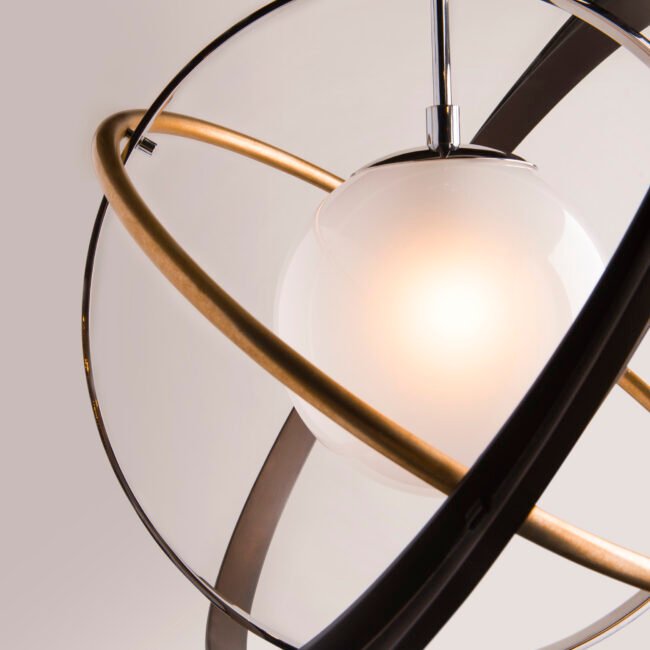
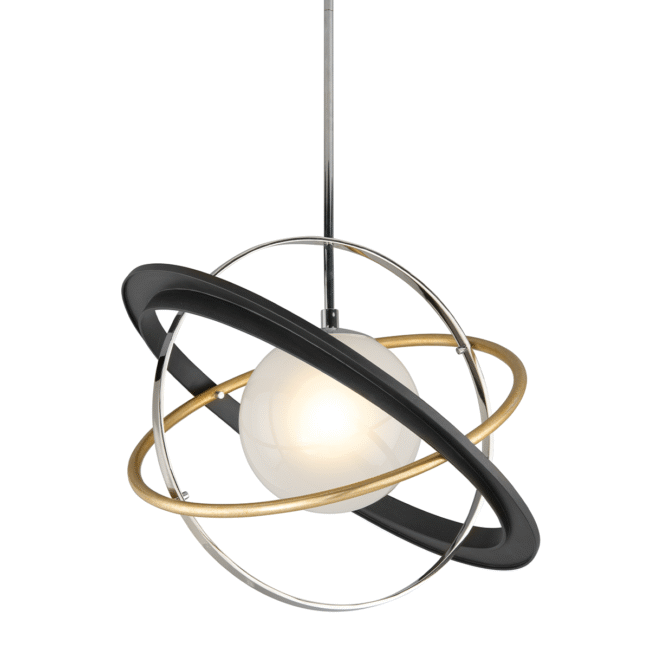
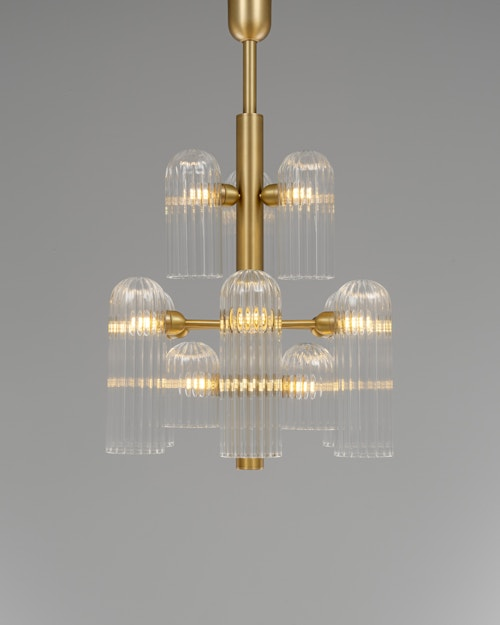
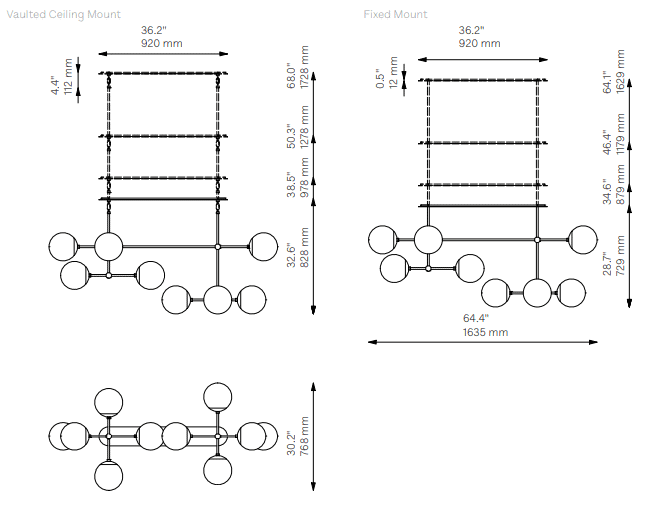
Table-to-Chandelier Clearance: The bottom of a pendant or chandelier should hang 30 to 36 inches above the table surface for optimal light distribution and visual proportion. Lower than 30 inches creates an oppressive atmosphere and potential head-height conflicts; higher than 36 inches sacrifices the focused intimacy that pendant lighting is designed to create.
These numbers are not arbitrary. Each is rooted in the ergonomics of the human body—the average reach of an arm, the width of a shoulder, the height of a person carrying a dish, the arc of a door swinging open. Dining room clearance is, at its core, human-centered design.
-

Adri Upholstered Dining Chair 2pk
£500 – £560Price range: £500 through £560 Select options This product has multiple variants. The options may be chosen on the product page -
Afe Pendant Light
£296 Select options This product has multiple variants. The options may be chosen on the product page -
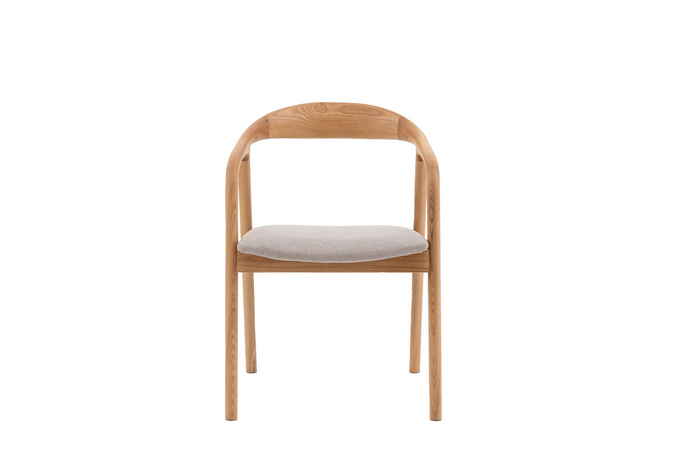
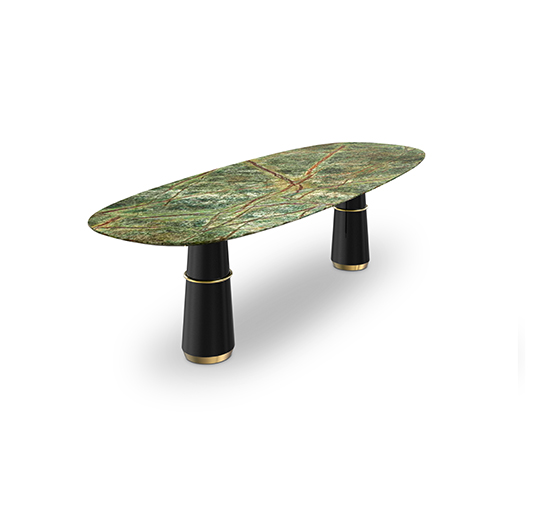
AGRA III DINING TABLE
£11,305 Add to cart
Round Tables: The Most Forgiving—With a Catch
Round tables are often recommended for small spaces because they eliminate corners, allow equal access from all sides, and create a democratic, convivial atmosphere. From a dining room clearance standpoint, they are also relatively efficient: their uniform radius means that clearance can be measured identically from every point on the table’s edge, simplifying spatial planning.
The catch is that round tables can create unexpected traffic challenges in rooms with asymmetrical layouts. Because no side of a round table naturally defines a “back” or “front,” hosts sometimes position them too centrally, forgetting that one side will always function as the traffic approach from the kitchen and needs that 42- to 48-inch clearance. Dining room clearance planning for round tables should include deliberately designating the traffic side before finalizing the table’s position.
Rectangular Tables: The Dominant Form, and the Most Commonly Miscalculated
Rectangular tables are the workhorses of dining room design—versatile, formal, capacity-efficient. But their elongated form creates a spatial imbalance that consistently leads to clearance problems. The long sides of a rectangular table demand seating clearance (36 inches minimum, ideally 42 to 48 inches) while the short ends are often positioned close to walls because seating there is secondary or occasional.
This is where the common mistake emerges: treating the short ends as non-critical zones and pushing the table toward one wall to increase clearance on the opposite side. The result is one side with generous dining room clearance and one side where end-seat guests feel as though they’re eating with the wall against their back. The correct solution is to center the table in the room and apply consistent clearance to all sides.
Oval Tables: The Elegant Compromise
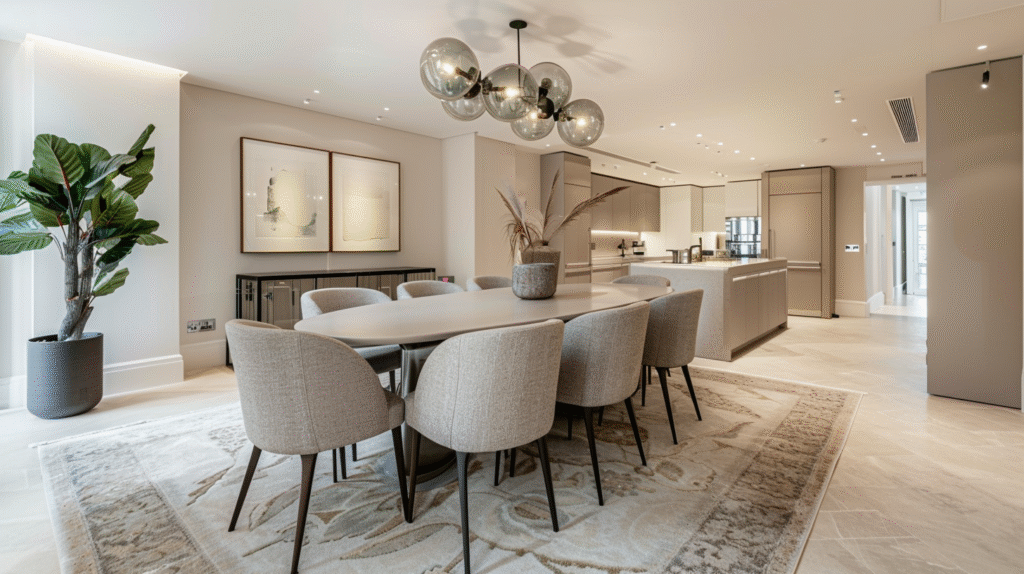
Oval tables combine the capacity efficiency of a rectangle with the soft, flowing quality of a round. Their elliptical form means the clearance calculation shifts slightly—the ends have less straight-edge seating, so dining room clearance at the ends can be slightly reduced (to 30 to 36 inches) while the long sides maintain the standard 36 to 48 inches. For rooms that are longer than they are wide, ovals are often the most spatially intelligent solution.
Extendable Tables: Planning for Two States
An extendable table presents a unique dining room clearance challenge because it exists in two configurations: contracted (everyday) and expanded (entertaining). Many homeowners plan clearance only for the table’s resting state, then find that when fully extended for a dinner party, the room becomes impossibly tight. Clearance planning for an extendable table must account for both states. The expanded configuration should maintain a minimum of 36 inches of clearance on all seated sides, which often means the table can be extended to one size smaller than its theoretical maximum.
One of the great misconceptions in dining room planning is that a table’s stated seating capacity is a target to hit rather than a ceiling to approach with caution. A table marketed as “seats eight” may technically accommodate eight people when all chairs are pushed in and no one has moved—but dining room clearance at that capacity may be completely inadequate.
The practical standard is this: allocate 24 inches of table length per person on the long sides for comfortable seating, and evaluate clearance at actual full capacity before committing to a table size. If seating eight people requires all eight to be simultaneously wedged against walls or unable to pull out their chairs without bumping the person behind them, you are eight people in a six-person space.
This doesn’t mean you should host fewer people. It means you should choose a table size that provides genuine dining room clearance at your typical hosting capacity—and accept that occasional overflow seating (a folding table, a bench pulled in from another room) is both practical and perfectly respectable.
The psychological dimension of this is worth pausing on. When dining room clearance is adequate, guests feel comfortable without understanding why. The room has a quality of generosity. People lean back. Conversations open up. The host moves freely and confidently, and that ease is contagious—it sets the tone for the meal. When clearance is inadequate, there’s a constant low-level friction. People apologize for bumping into each other. The host feels pressured. The meal is fine, but the room works against the gathering. Good dining room clearance creates psychological spaciousness that translates directly into better hospitality.
A dining rug is simultaneously a visual anchor, a sound-absorber, a zone-definer, and—when chosen correctly—a clearance aid. When chosen incorrectly, it becomes a clearance saboteur.
The most common rug mistake in dining rooms is undersizing. A rug that fits only beneath the table legs, or that accommodates chairs only when fully pushed in, creates a visual illusion of defined space without any of the functional benefit. Every time a chair is pulled back, its back legs come off the rug, creating a drag-and-catch experience that is both annoying and potentially damaging to flooring.
The correct standard: your dining rug should be large enough that all chair legs remain on the rug when chairs are pulled out to their full seating position. This typically means adding 24 to 30 inches to each side of your table’s dimensions when selecting a rug. For a 36 by 72-inch table, that translates to a rug of at least 8 by 10 feet, and often 9 by 12 feet for rooms that can accommodate it.
From a dining room clearance standpoint, the rug’s outer edge should ideally align with or slightly inside the clearance boundary—creating a visual cue that reinforces the functional boundary of the dining zone. This is particularly powerful in open-plan spaces, where the rug essentially draws the walls of a room that has no physical walls.
-

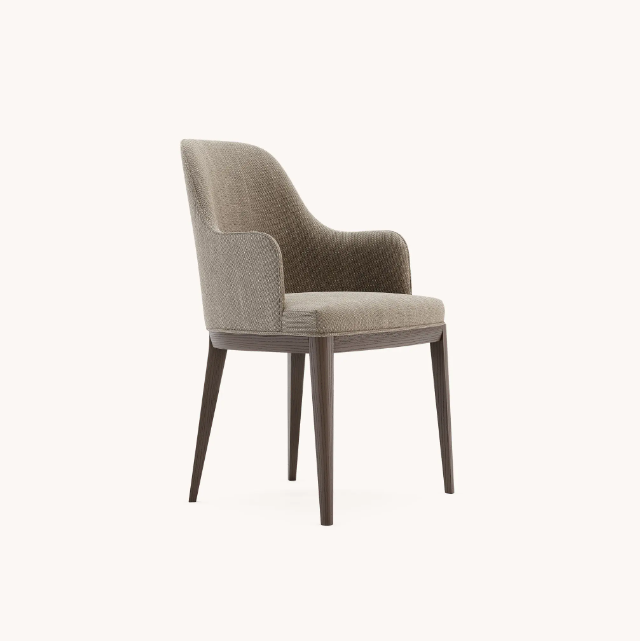
Anna Dining Chair (Wood Legs)
£896 – £1,900Price range: £896 through £1,900 Select options This product has multiple variants. The options may be chosen on the product page -
Apogee Pendant
£324 Add to cart -

Westwood Rectangular Dining Set
£1,644 Add to cart
Rule 6: Open-Plan Dining—Clearance as Room-Making
The open-plan dining room is both a liberation and a spatial puzzle. Without walls to define boundaries, the dining zone must create its own edges—and dining room clearance becomes the primary tool for doing so.
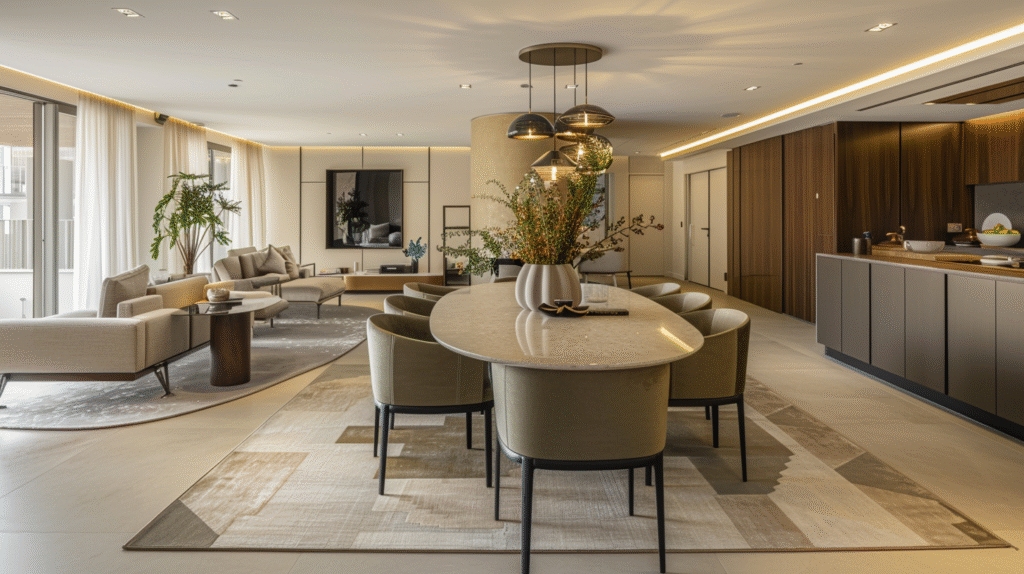
In an open-plan layout, the clearance zones around the dining table also function as the transitional buffers between the dining space and adjacent living or kitchen areas. This means that the 36 to 48 inches of clearance required around the table simultaneously serves as the corridor between zones—and it must be generous enough to feel like intentional passage rather than accidental gap.
Key principles for open-plan dining room clearance:
The table’s orientation relative to the kitchen should prioritize the traffic path. The side of the table closest to the cooking and serving area should have no less than 42 inches of clearance, and 48 inches is significantly more comfortable for the back-and-forth of active meal service.
The side of the table facing the living zone is often the most psychologically important. When guests are seated at the dining table, they should feel contained within the dining zone, not exposed to an undefined void. The clearance here should be calculated to create a comfortable sense of enclosure—which often means that 36 inches of clearance is enough, because any more and the dining zone begins to feel unmoored.
Lighting is the invisible wall in open-plan dining. A well-positioned pendant or chandelier, hung at the correct height, defines the dining zone from above. Dining room clearance in open-plan spaces should be planned in conjunction with lighting placement, treating the light fixture’s cone of illumination as a soft boundary marker.
The sideboard is one of the most useful pieces of furniture in a dining room: storage, display surface, serving station. It is also one of the most reliably problematic from a dining room clearance perspective, because it requires not just space in front of it but working space—room for drawers and cabinet doors to open fully, room for a person to crouch or stand while reaching into lower shelves, and room for another person to pass without collision.
The minimum clearance in front of a sideboard is 36 inches, but 42 to 48 inches is the range that allows genuine use without frustration. This clearance must be measured in the open state—with doors and drawers extended—not in the closed position. A sideboard with a 20-inch drawer requires 20 inches of open space beyond its face plus whatever room a person needs to stand and operate it. In practice, 42 to 48 inches of dining room clearance in front of storage furniture is the only number that reliably works.
The placement of a sideboard relative to the table also matters spatially. A sideboard positioned on the wall directly opposite the traffic path from the kitchen creates a natural serving circuit—kitchen to table, table to sideboard, sideboard back to kitchen—and should have clearance generous enough to enable that circuit comfortably. A sideboard on the same wall as the dining room entry should have enough clearance to allow guests to enter without squeezing past someone who is serving.
Rule 8: Lighting Height and Clearance Are Inseparable
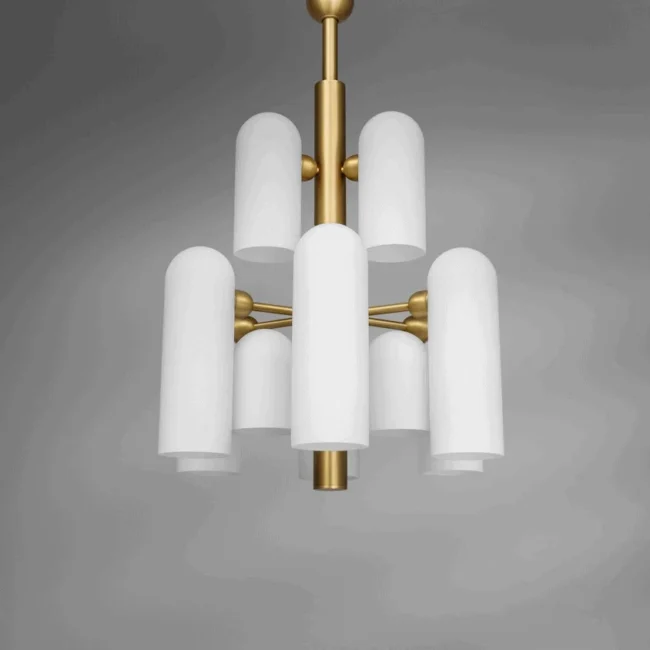
Pendant lighting and chandeliers are the most architecturally significant accessory in a dining room—they define scale, create atmosphere, and provide the visual focal point that gives the space its character. They are also part of the dining room clearance equation in ways that most people don’t consider until installation day.
The standard guidance—30 to 36 inches from the bottom of the fixture to the table surface—exists for both aesthetic and practical reasons. Aesthetically, this range creates the intimate “halo effect” that makes pendant lighting so effective over dining tables: the light is close enough to feel warm and focused without being so close that it obstructs sightlines or creates glare. Practically, 30 to 36 inches is the clearance zone in which light is most efficiently distributed across the table surface.
But the clearance calculation doesn’t stop at the table. In rooms with lower ceilings (under 9 feet), a pendant hung 30 to 36 inches above the table may be only 5 to 5.5 feet from the floor—which creates a head-height clearance problem for anyone who stands at or near the table. For lower ceiling rooms, choose fixtures with a more compact vertical profile, or opt for semi-flush designs that maintain the visual drama of a statement piece without the pendant drop depth.
For rooms with dramatically high ceilings (12 feet or more), the temptation is to hang lighting at the standard drop and let the fixture “float” in the space. The result is usually a disconnected, ineffectual installation. In these rooms, consider extending the drop (via a longer cord or chain) to maintain the 30-to-36-inch clearance from the table, even if this means the fixture hangs significantly lower than it would in a standard room
Rule 9: Clearance in Small Dining Rooms—The Art of Strategic Reduction
Not every dining room has the luxury of comfortable margins. For smaller spaces—apartments, compact dining nooks, rooms that double as other spaces—dining room clearance must be approached as strategic reduction rather than ideal application. The goal is to preserve the most critical clearances while making intelligent sacrifices on the rest.
The hierarchy for small-room dining room clearance:
First, protect the traffic lane. If your dining room connects to your kitchen, the path between them must have at least 36 inches—42 if at all possible. This is the artery of the space, and constricting it makes daily life genuinely difficult.
Second, protect pull-out clearance on at least one seating side. Even if the table is against a wall, the primary seating side should have 36 inches of clearance for chair pull-out and human passage.
Third, be honest about capacity. A small room with a table pushed to one wall and 36 inches of clearance on the other side seats fewer people comfortably than the table’s theoretical maximum. Accept this and set the table accordingly—four chairs at a six-person table feels generous; six chairs at a six-person table in a small room feels like a design failure.
Budget-conscious and renter-friendly strategies for improving dining room clearance without structural change: replace solid chairs with open-back or slimmer profiles to visually reduce mass without sacrificing seating; choose tables with pedestal bases rather than four corner legs, which dramatically improves chair pull-out clearance; use bench seating on one side to allow more people per linear foot of table without individual chair pull-out requirements; and choose a lighter rug color and tone to make the clearance zone feel more spacious than it is.
-

Algerone Dining Table
£11,820 – £13,788Price range: £11,820 through £13,788 Select options This product has multiple variants. The options may be chosen on the product page -
Bali Chair
£859 – £1,076Price range: £859 through £1,076 Select options This product has multiple variants. The options may be chosen on the product page -
Bathurst Large Black Dining Table
£330 Add to cart
We have spent most of this guide talking about dining room clearance in terms of numbers and measurements, which is appropriate: clearance is ultimately quantifiable. But there is a qualitative dimension to well-planned clearance that deserves acknowledgment, because it is the reason any of this matters beyond the merely functional.
When dining room clearance is right, the room has a quality that designers often call “breathing room”—a sense that the space is neither too tight nor too empty, that every piece of furniture has arrived at its correct position and no piece is forcing another into an awkward compromise. Guests feel this without being able to articulate it. They settle into their chairs with ease. They reach for the bread basket without bumping their neighbor. They stand to leave without the minor choreography of apologetic repositioning. The room does what it was always meant to do: it makes gathering feel effortless.
This is the deeper promise of dining room clearance. It is not about rules for the sake of rules, or measurements for the sake of compliance. It is about designing spaces that honor the social experience they are meant to host—that recognize the dining room as a place of genuine human importance, where meals become memories and tables become the backdrop for the conversations that matter most.
The numbers give you the framework. The framework gives you freedom. And that freedom—the freedom to move, to serve, to linger, to celebrate without the low-level friction of a room working against you—is what good design, at every scale, is always ultimately about.
Practical Checklist: Assess Your Dining Room Clearance Today
Before you move a single piece of furniture, walk through this diagnostic:
Measure your current clearances:
- Table edge to nearest wall on each side. Is any side under 36 inches?
- Table edge to sideboard or buffet face (in the open/serving position). Is there at least 42 inches?
- The primary traffic path from kitchen to table. Is there 42 to 48 inches of clear walking space?
Evaluate your rug:
- Pull all chairs out to full seating position. Are all four legs on the rug? If not, your rug is undersized.
Check your lighting:
- Measure from the bottom of your pendant or chandelier to the table surface. Is it between 30 and 36 inches? In a room with tall ceilings, has the drop been adjusted to maintain this range?
Audit your seating capacity:
- At your typical full hosting capacity, do all guests have adequate chair pull-out clearance? Is the traffic path still functional when the room is full?
Identify your traffic lane:
- Which side of the table serves as the primary path from the kitchen? Is that the side with the most clearance?
If any of these checks reveals a deficit, you now have the language and the framework to understand why the room has felt the way it has—and what to do about it. Dining room clearance is not a mystery. It is a discipline, and it is available to everyone willing to measure twice and place furniture once.
Conclusion: The Space Between Things
Great dining rooms are not defined by the furniture in them. They are defined by the space around that furniture—the carefully maintained distances that allow a room to breathe, to function, and to feel genuinely welcoming rather than merely assembled.
Dining room clearance is that space. It is the invisible backbone of every dining room that feels right without the observer being able to say exactly why. It is the reason some rooms draw people in and make them want to linger, while others—identically furnished, perhaps even more expensively decorated—feel somehow resistant to the very gatherings they were built to host.
The golden rules in this guide are not arbitrary. Every measurement, every principle, every spatial hierarchy is rooted in the human body, in the social dynamics of shared meals, and in decades of design practice that have distilled intuition into learnable, repeatable knowledge. Understanding dining room clearance does not require a design degree or a renovation budget. It requires a tape measure, an honest assessment of your space, and a willingness to prioritize how a room feels over how it looks when no one is in it.
Plan your dining room clearance with discipline, and the room will reward you in ways that extend far beyond aesthetics: with meals that feel easy, evenings that flow, and a table that becomes, in the fullest sense, the center of your home.
Don’t crowd the table. Give the room room to breathe. The space between things is where life actually happens.