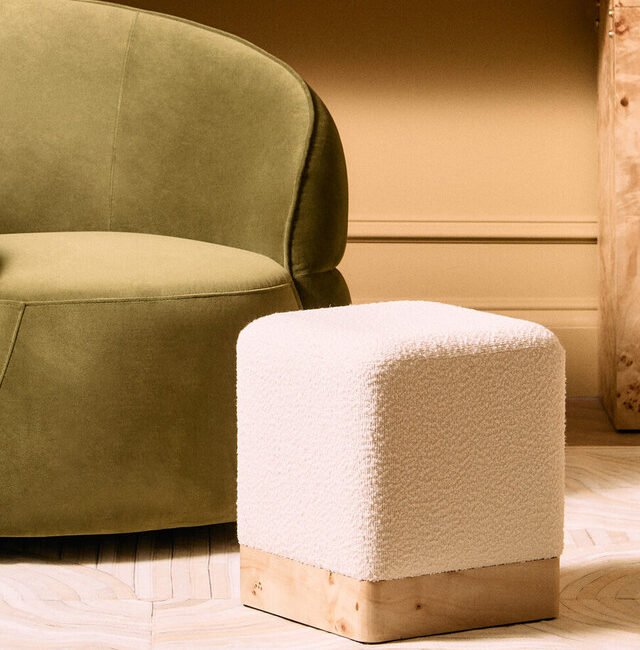
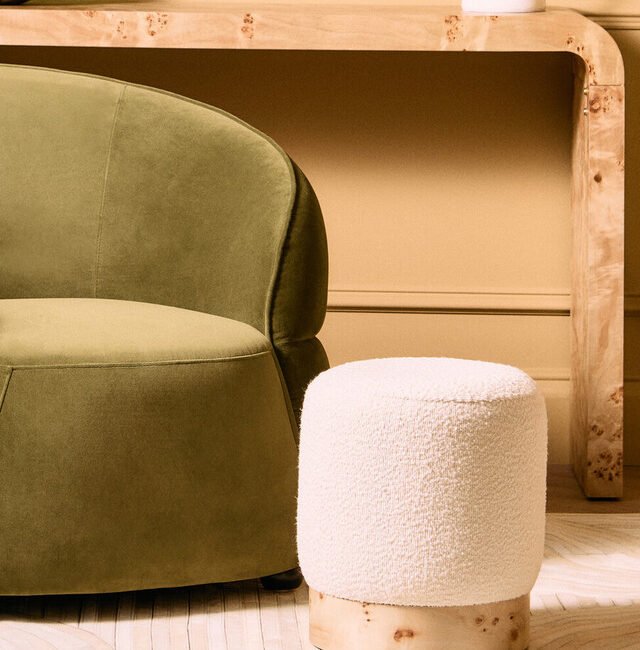
Transitional vs. Contemporary: The One Difference That Changes Everything

Transitional vs. Contemporary

You’ve scrolled through thousands of Pinterest boards. You’ve saved Instagram posts from design accounts you can’t even remember following. You’ve stood in furniture showrooms, paralyzed between a curved linen sofa and a sleek leather sectional, wondering which one is actually you—and which one you’ll regret in three years.

Here’s the truth nobody tells you: most design confusion doesn’t stem from bad taste or lack of vision. It comes from not understanding the fundamental philosophical difference between the two dominant residential design languages of our time—transitional and contemporary.

And that difference? It’s not about whether you prefer beige or white, traditional or modern, soft or sharp. The core distinction between transitional vs contemporary design runs deeper than aesthetics. It’s about how each style relates to time itself—one style bridges past and present, while the other exists firmly in the now. Understanding this single philosophical divergence changes every subsequent design decision you’ll make, from paint colors to cabinet hardware to whether that vintage rug works in your space.

This isn’t about choosing sides or declaring allegiance to one camp. It’s about understanding the DNA of transitional vs contemporary approaches so completely that you can make confident, strategic choices that result in spaces feeling intentional rather than accidental, cohesive rather than chaotic, and genuinely reflective of how you actually live.

Let’s unpack the one difference that changes everything—and how mastering it transforms you from a confused Pinterest scroller into someone who walks into any space and immediately knows what works, what doesn’t, and exactly why.

Before we dive into the defining difference, let’s clear up the most persistent misconceptions clouding the transitional vs contemporary conversation.

What Transitional Design Is NOT

Transitional is not “playing it safe.” It’s not the design equivalent of beige wallpaper and hotel lobby furniture. It’s not what happens when you’re too afraid to commit to a real style, and it’s certainly not “traditional lite” for people who can’t let go of their grandmother’s aesthetic.

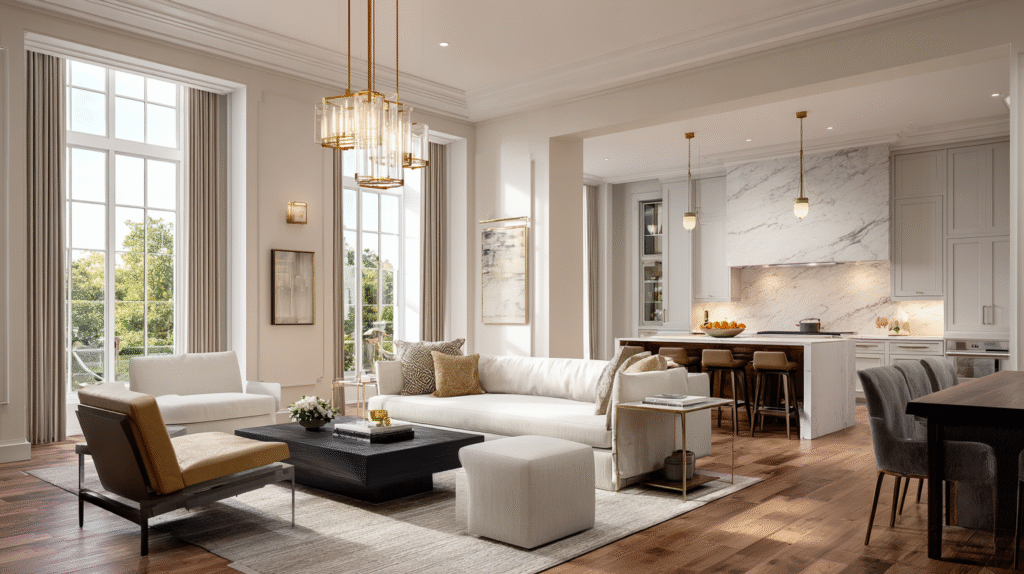
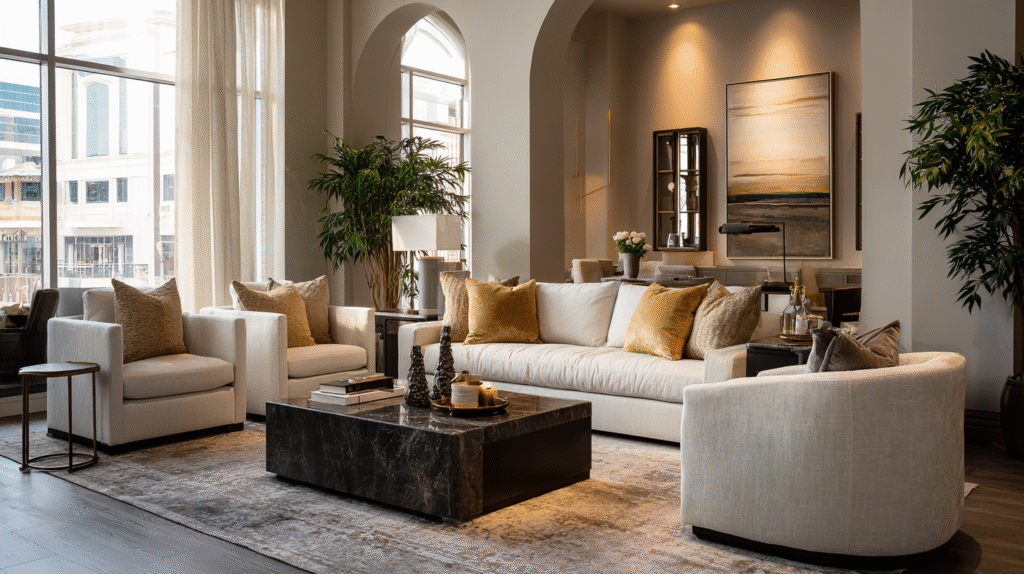
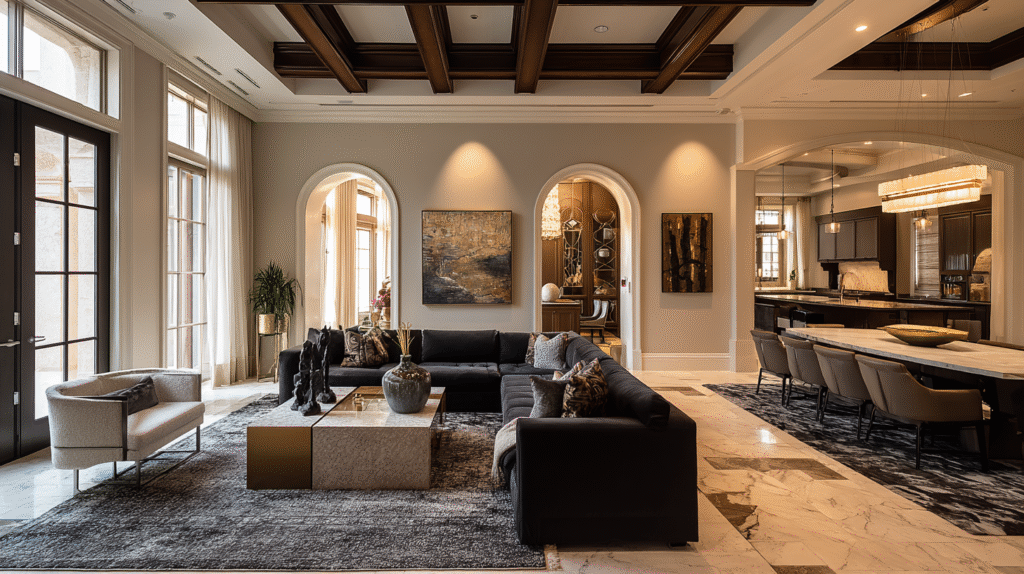
Transitional design is the intentional synthesis of classical proportions and contemporary restraint. It’s what happens when you respect historical design principles—symmetry, balance, quality craftsmanship, timeless silhouettes—but strip away the ornamental excess. Think of it as honoring design history while refusing to be imprisoned by it.

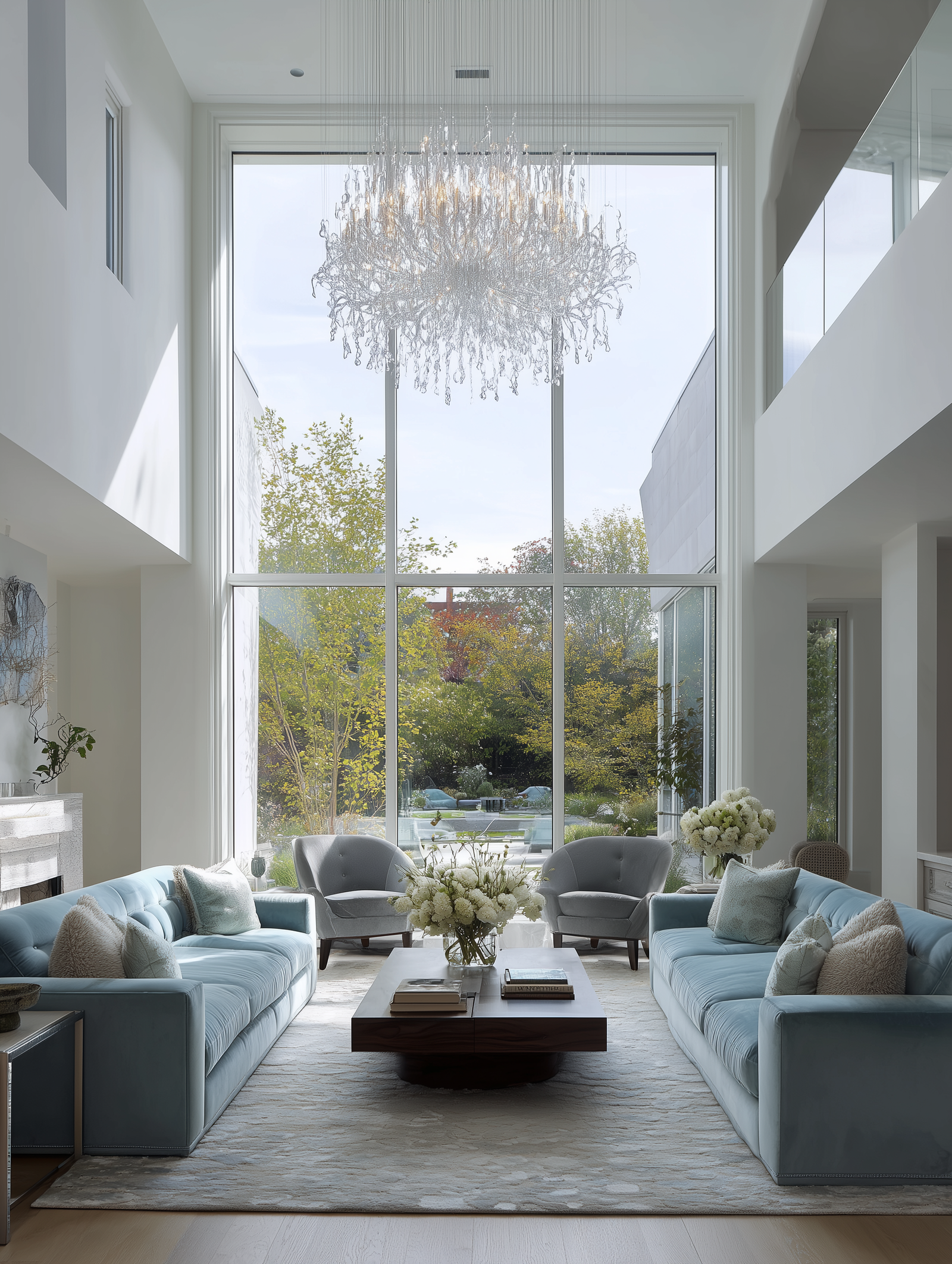
A transitional living room might feature a Chesterfield-inspired sofa, but upholstered in performance linen rather than tufted leather. The architectural bones might include simplified crown molding and wainscoting, but painted in a single cohesive neutral rather than historically accurate layered trim colors. The overall effect is grounded, familiar, and quietly elegant—but never stuffy, dated, or decoratively cluttered.

Transitional vs. Contemporary: The One Difference That Changes Everything

What Contemporary Design Is NOT

Contemporary is not minimalism. It’s not cold, sterile, or unwelcoming. It’s not “modern” (that’s a specific historical design movement from the early-to-mid 20th century), and it’s not just “whatever’s trendy right now.”

Contemporary design is architecture-first thinking applied to interiors. It prioritizes form, function, material innovation, and spatial clarity. It’s what happens when you strip a room down to its essential elements and then make intentional choices about what earns the right to exist in the space.

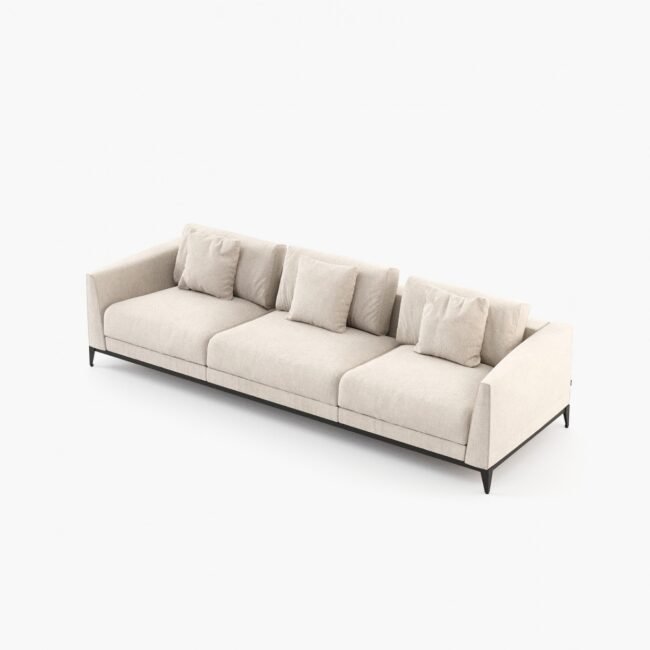
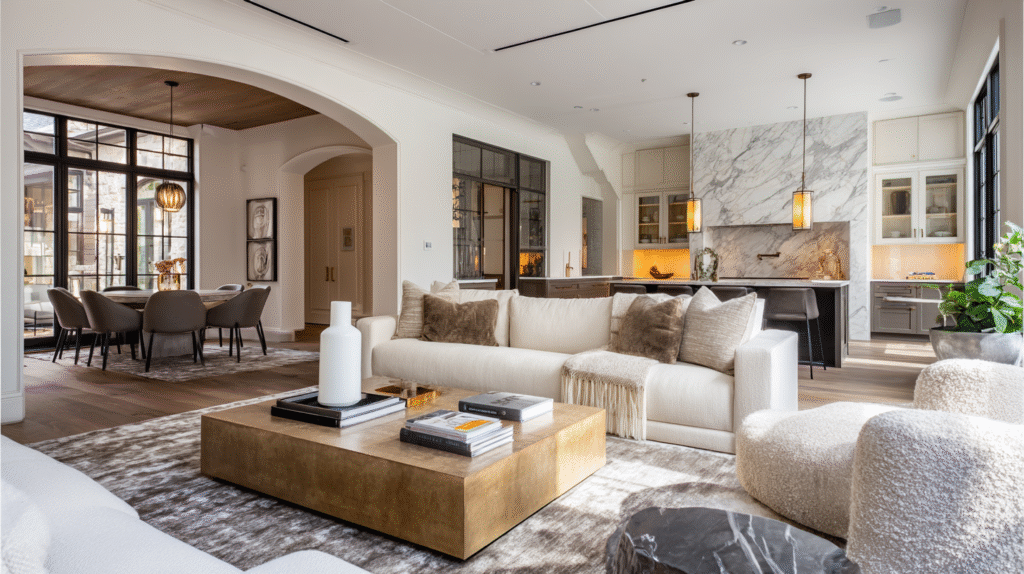
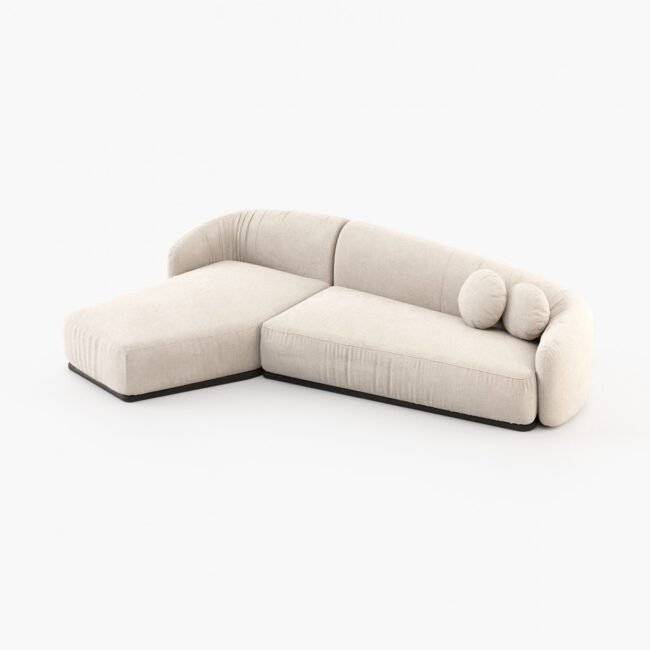
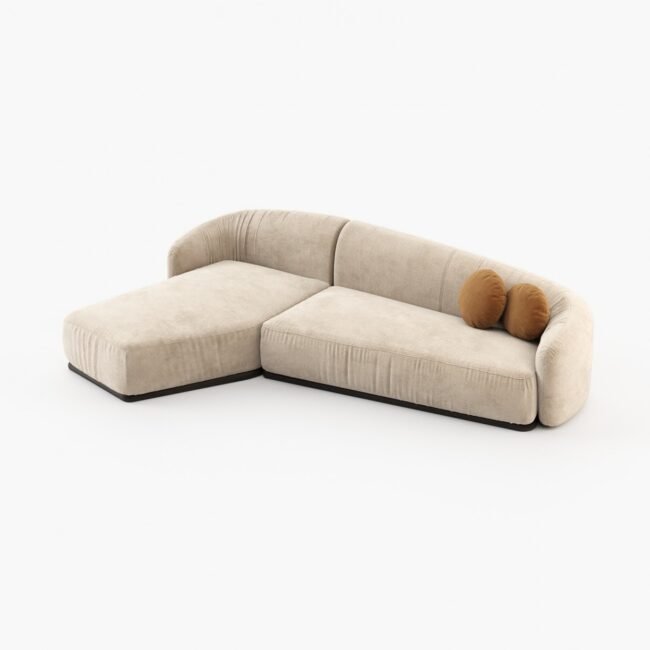
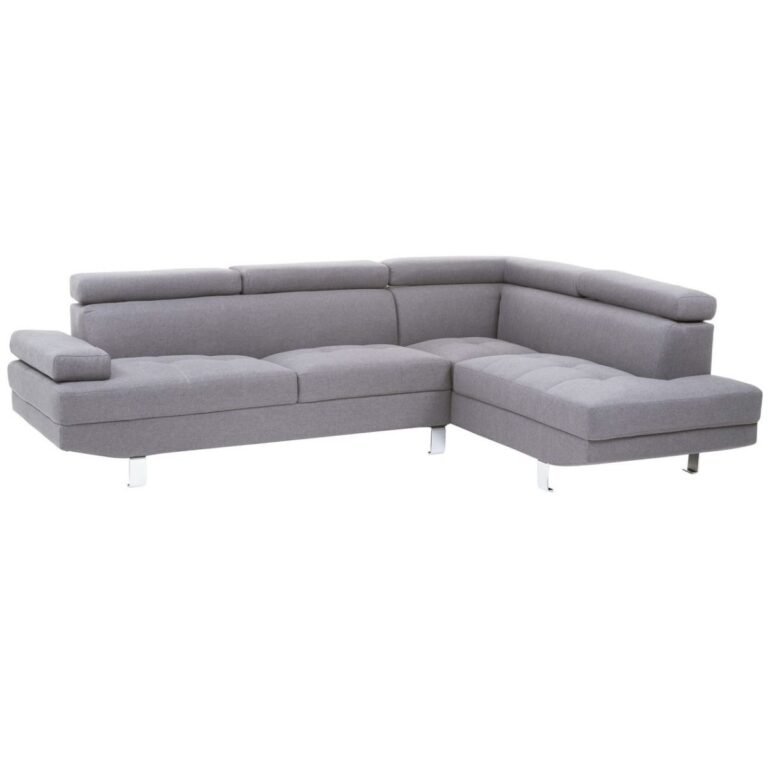
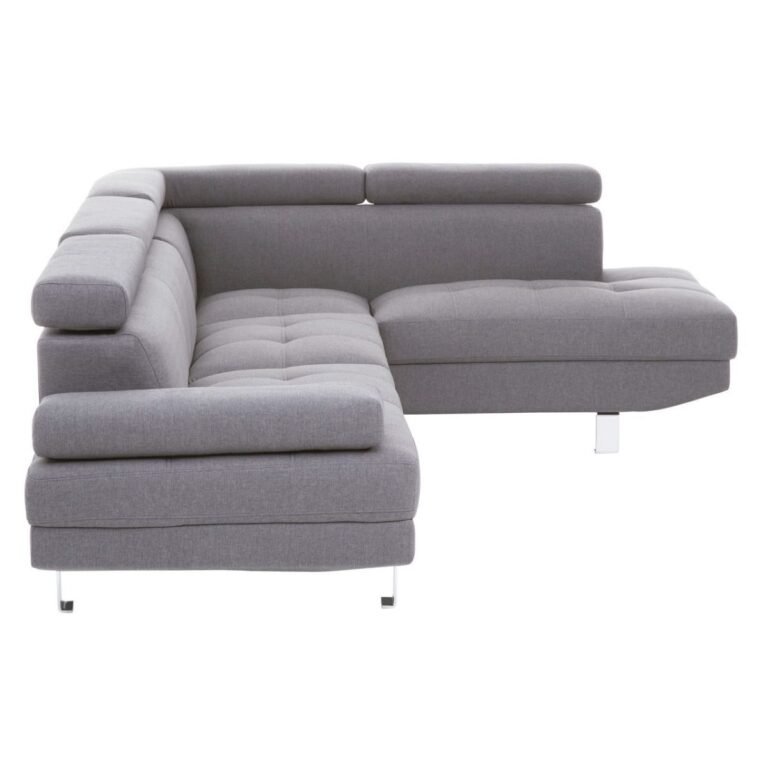
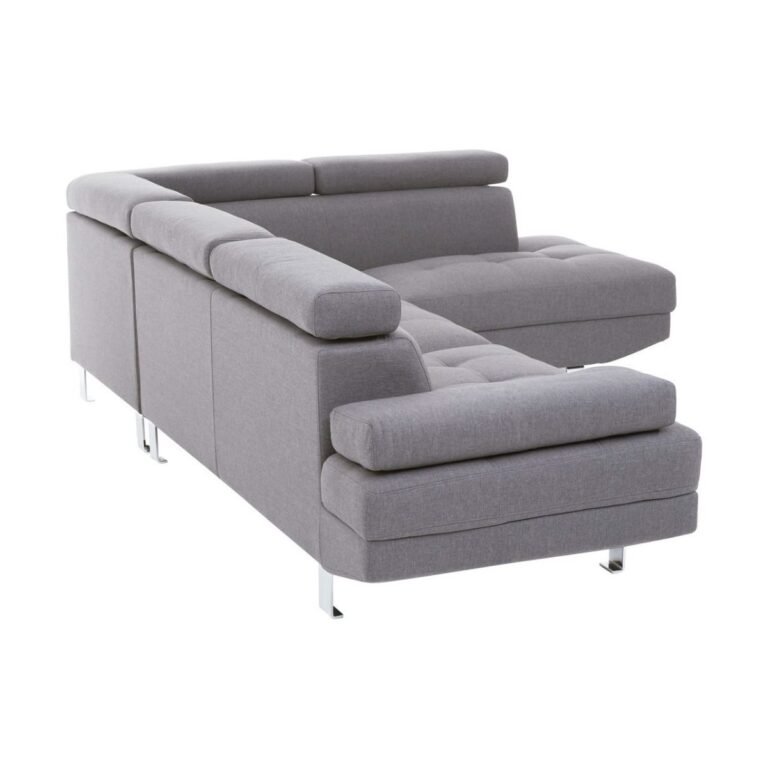
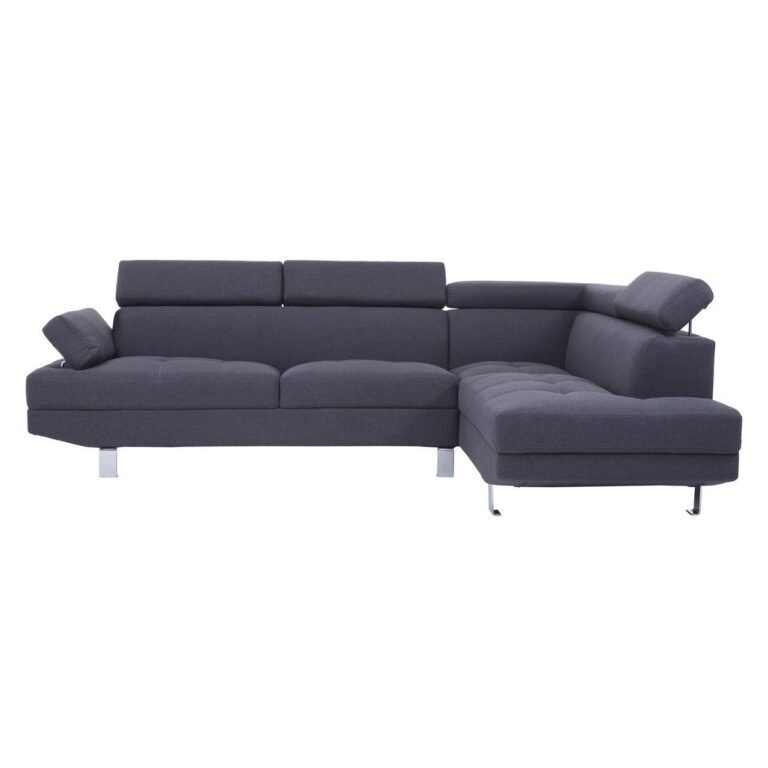
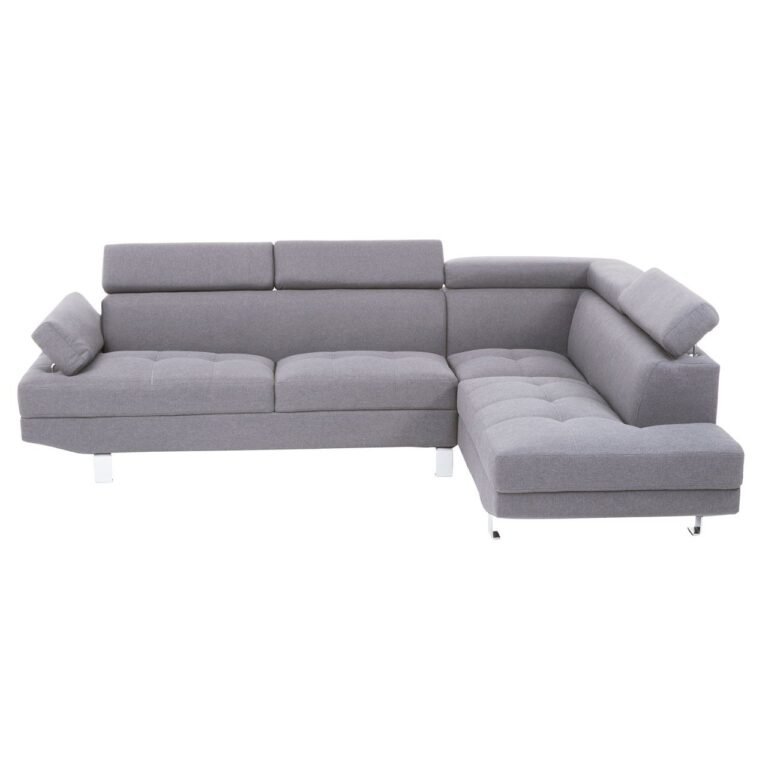
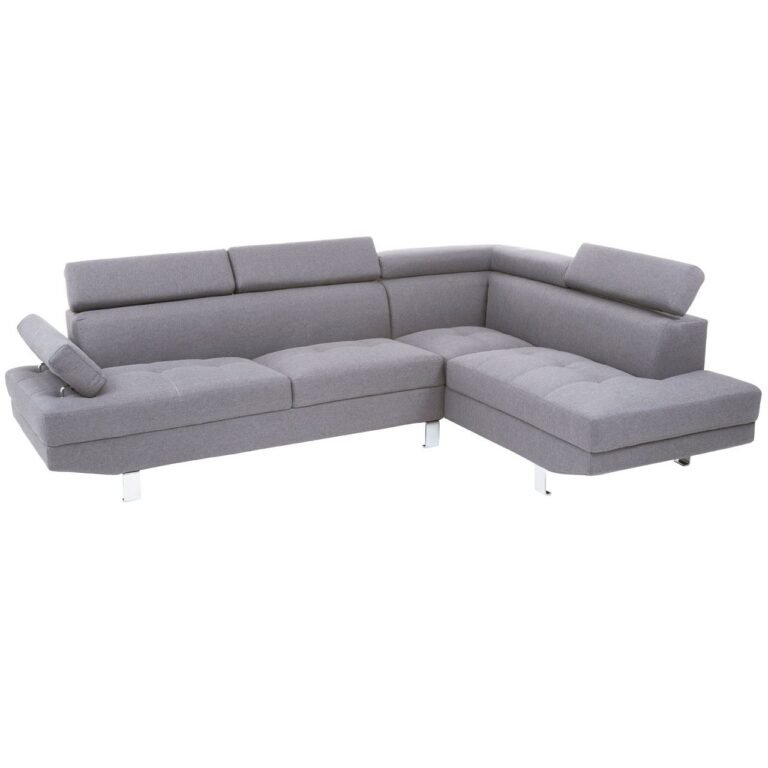
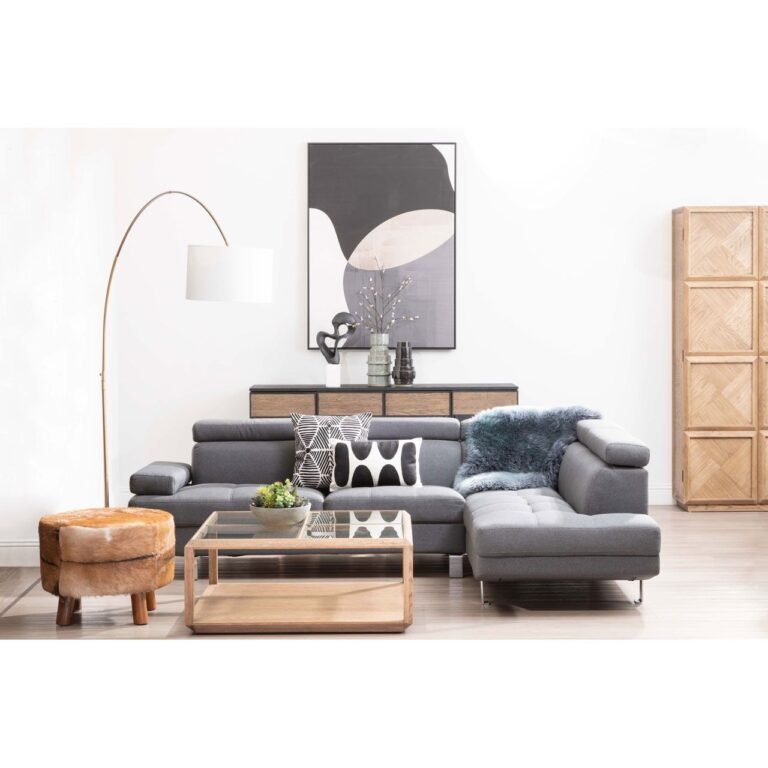
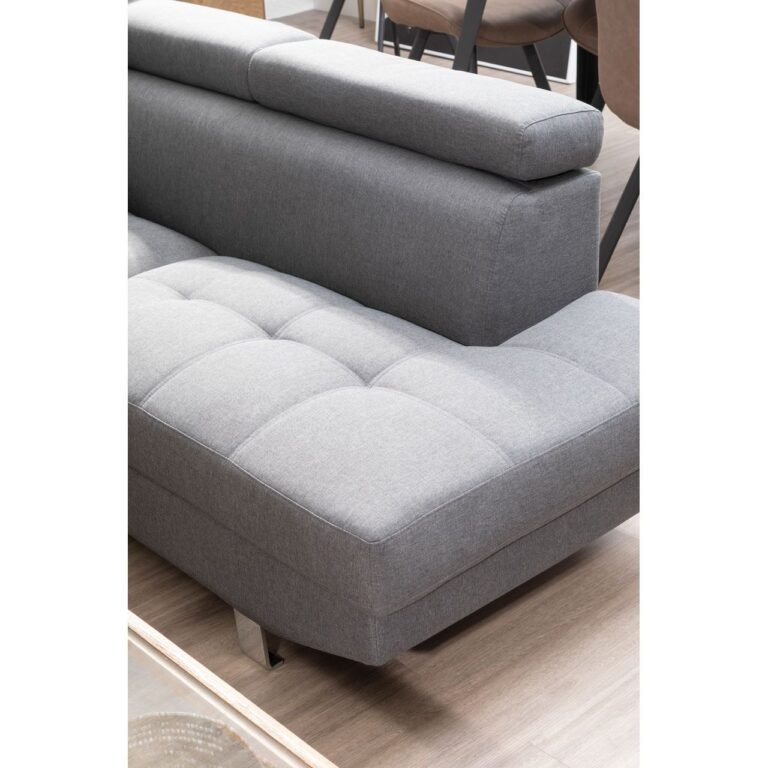
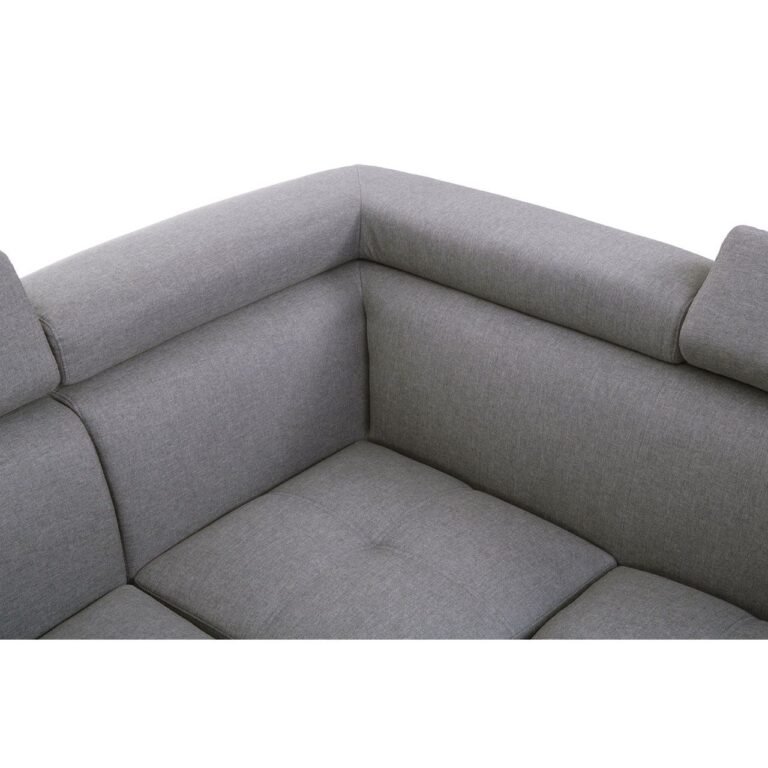
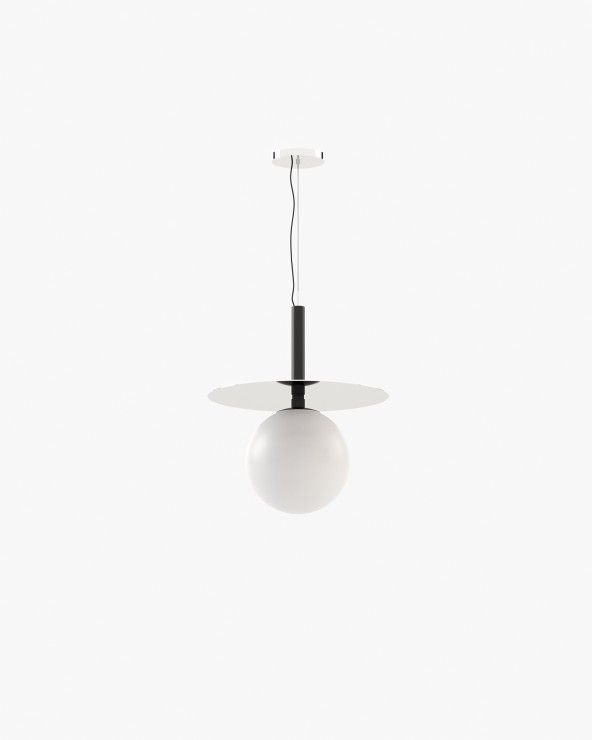
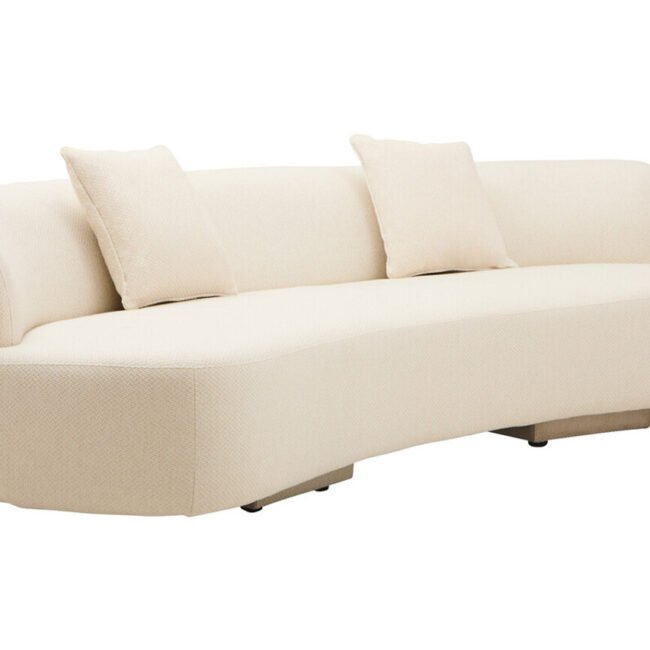
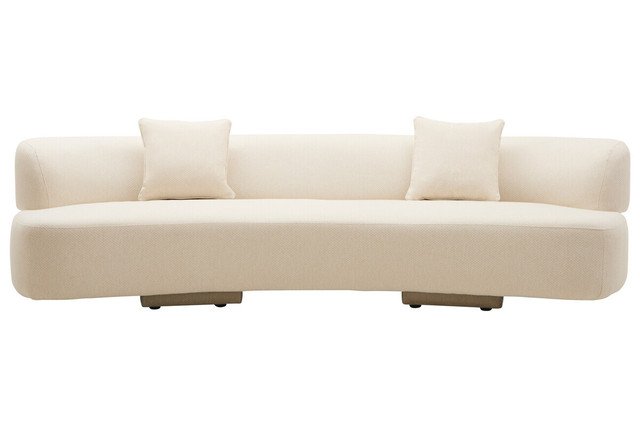
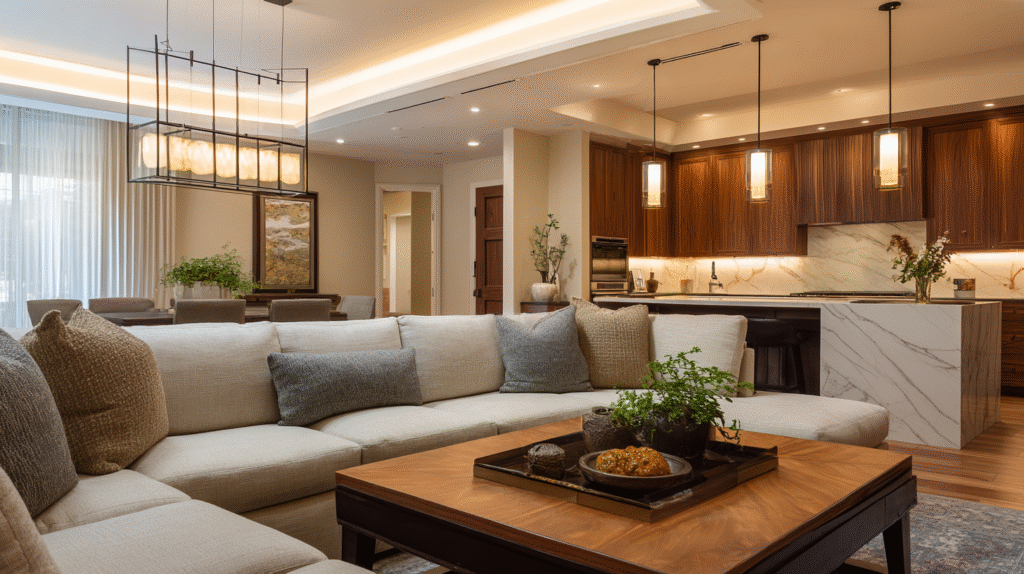
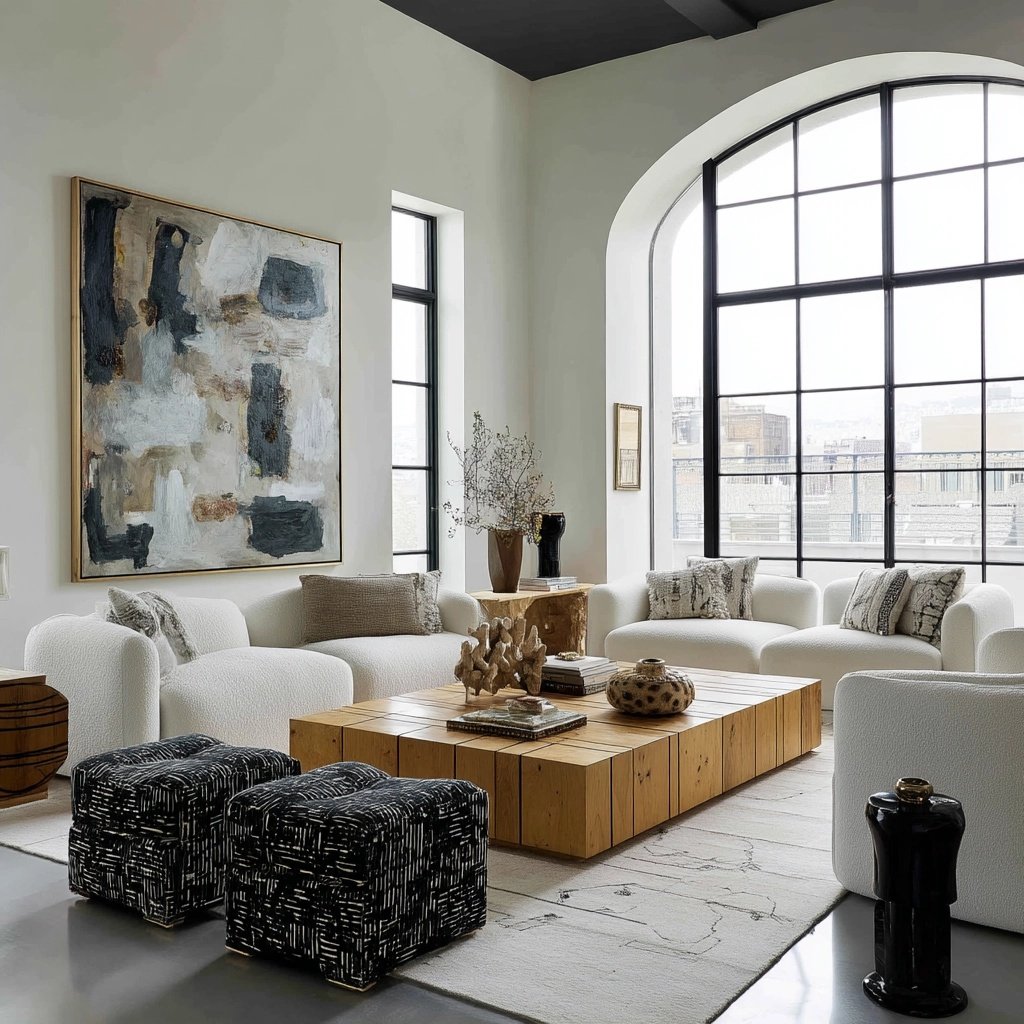
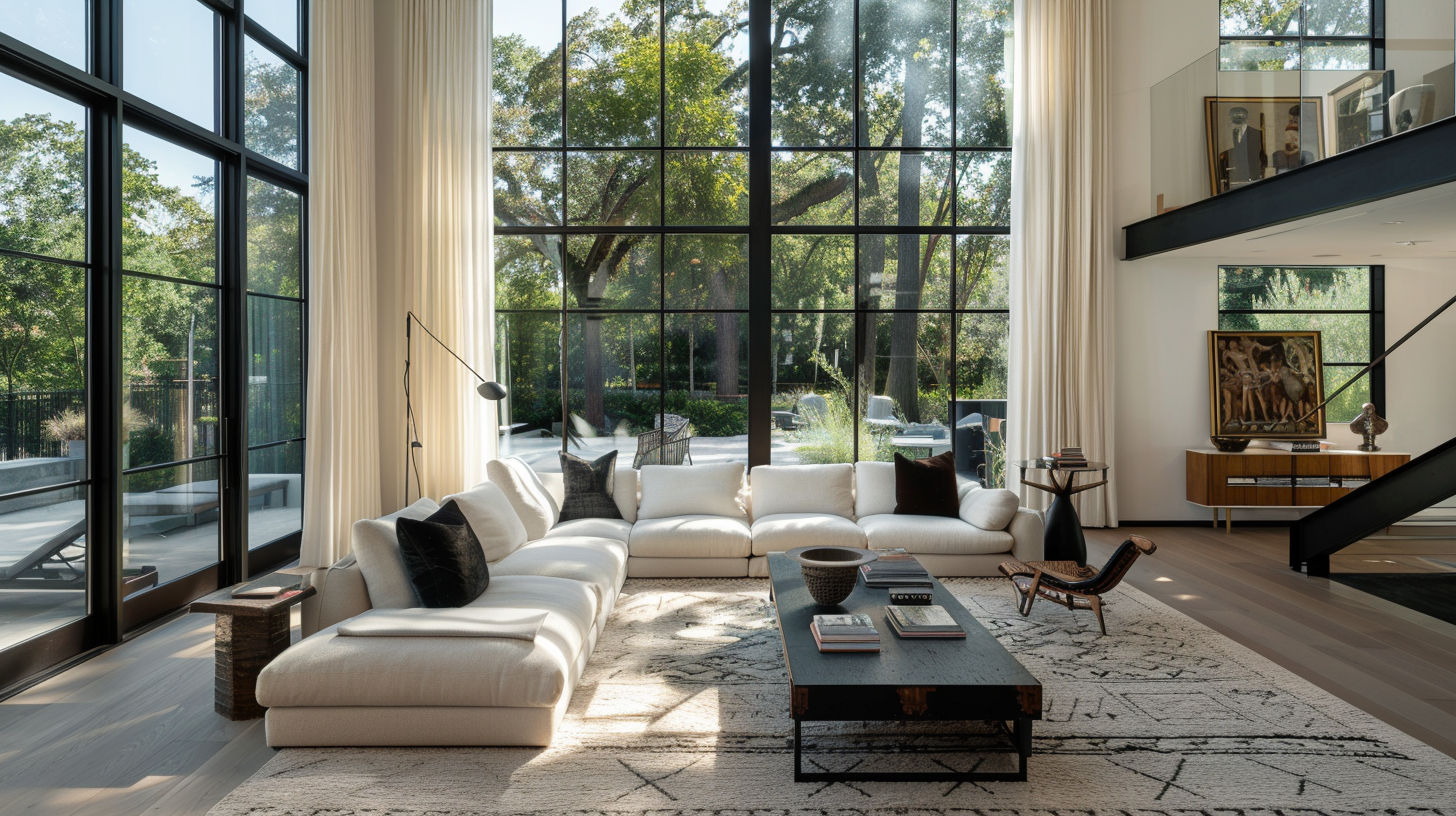
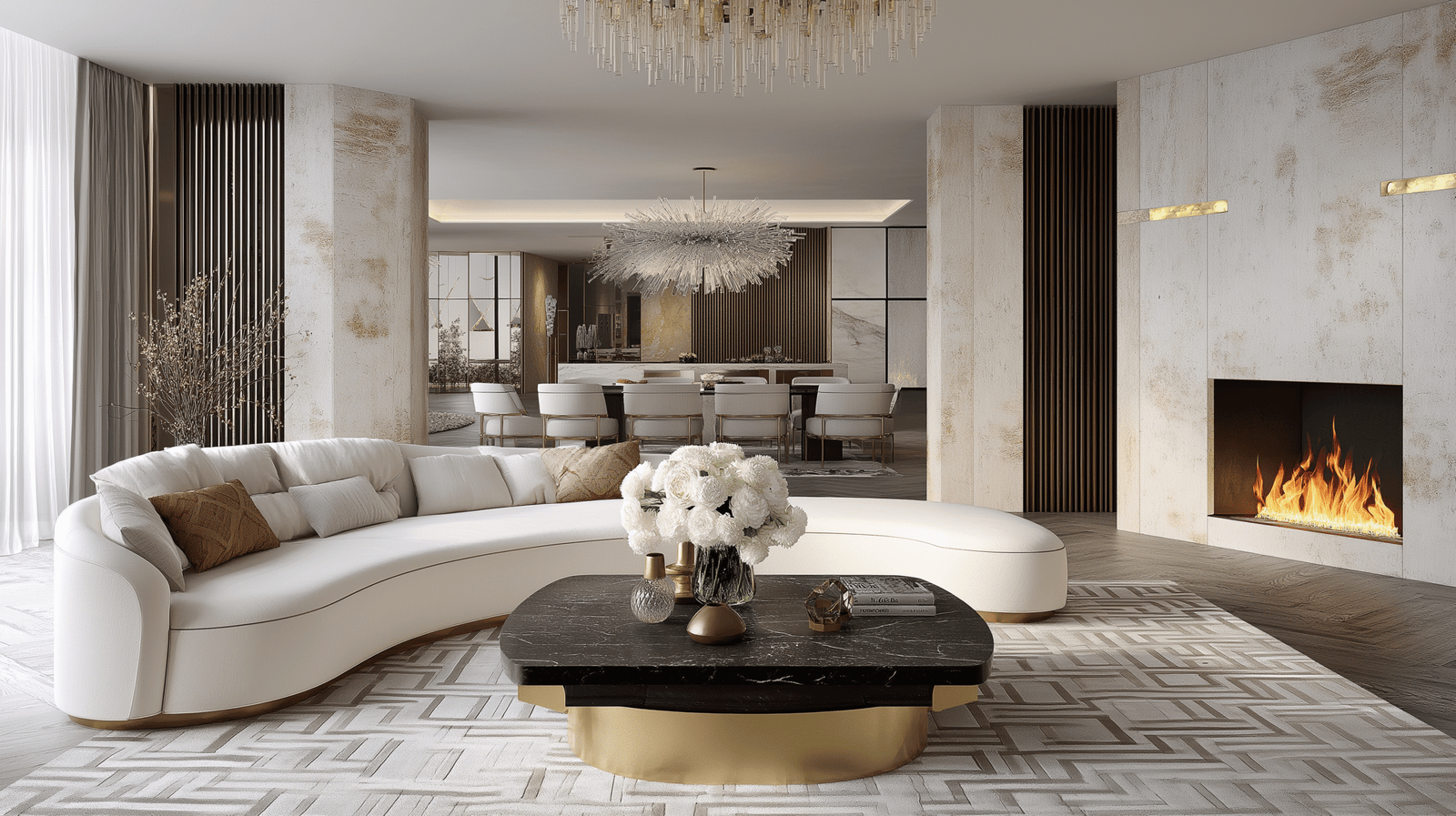
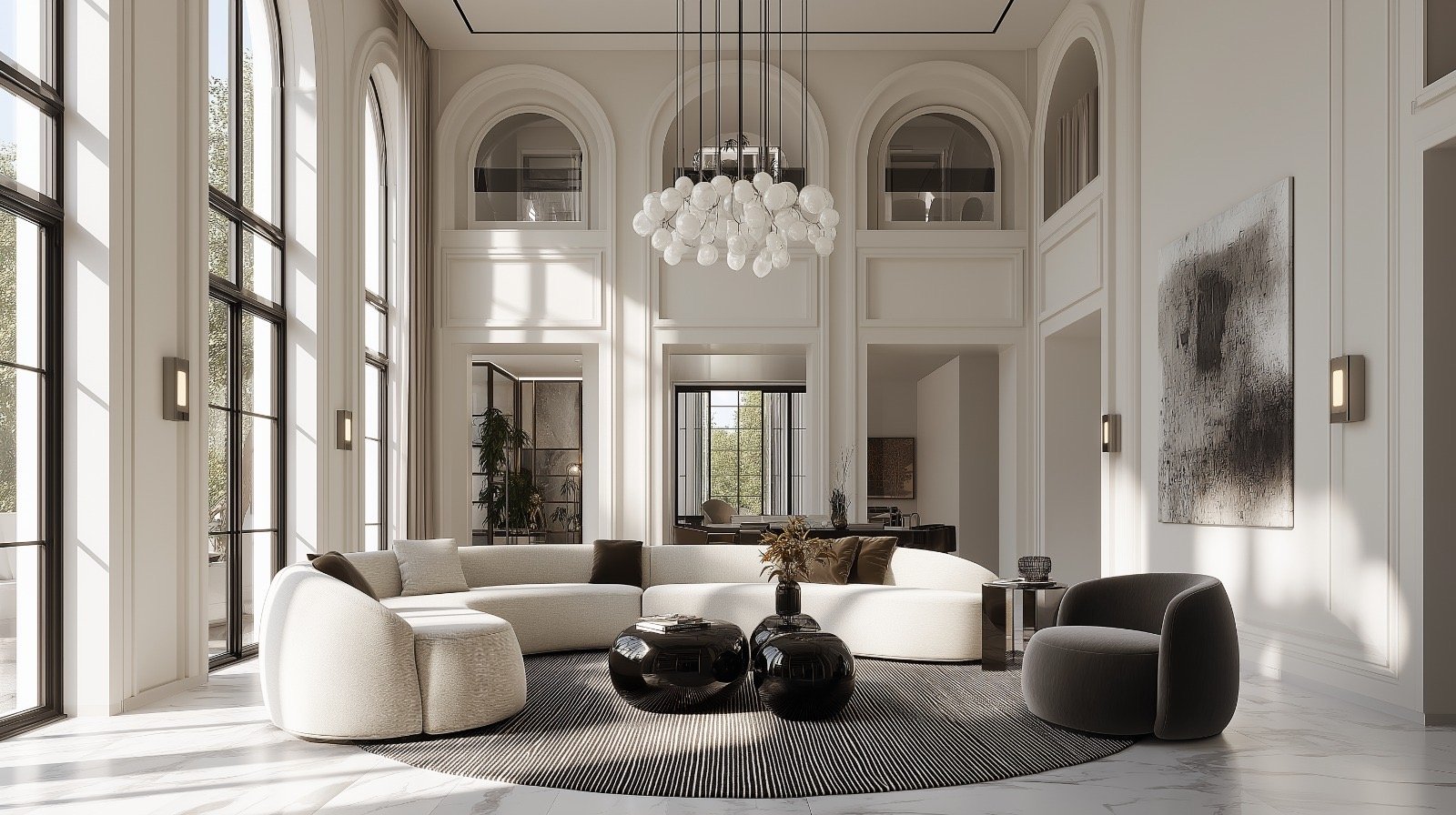
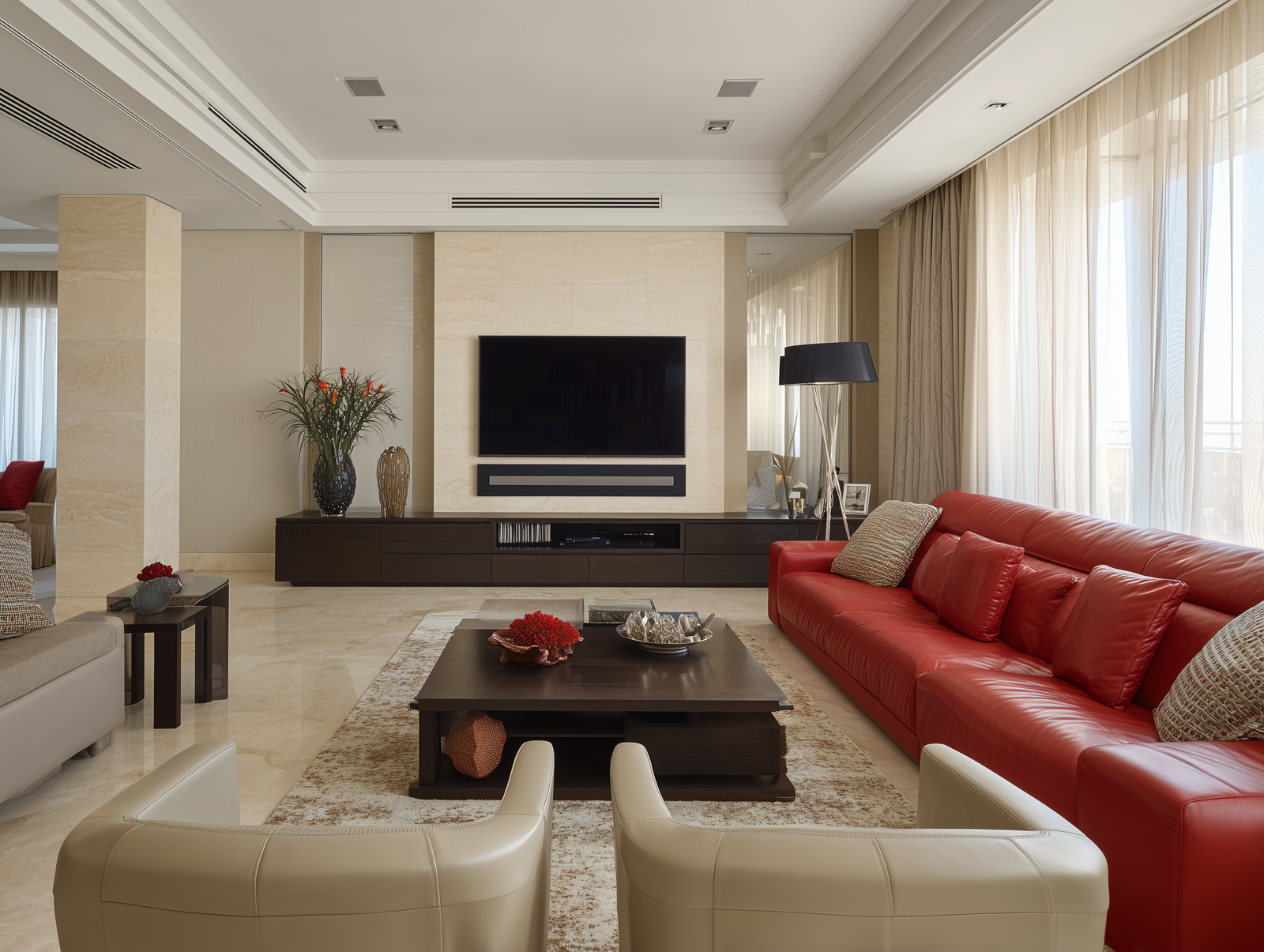
A contemporary living room might feature a sculptural sofa with clean geometric lines, walls devoid of trim or molding, and statement lighting that doubles as functional art. The space feels intentional and confident—never busy, never apologetic, never relying on decorative elements to create visual interest because the architecture and form are doing that work.

The Confusion That Costs You Thousands

Here’s where most people go wrong in the transitional vs contemporary debate: they confuse elements with philosophy. They think transitional means “mixing old and new” and contemporary means “all modern everything,” so they end up with spaces that feel incoherent rather than intentionally blended.

A contemporary space can absolutely include vintage pieces—a mid-century credenza, an antique Persian rug—if those pieces are chosen for their sculptural form and material quality rather than their historical reference. Similarly, a transitional space can feature brand-new furniture, as long as the silhouettes and proportions honor classical design DNA.

The difference isn’t in the age of your furniture. It’s in the why behind your choices.

Transitional vs. Contemporary: The One Difference That Changes Everything

Ready for it? Here’s the philosophical divergence that defines everything:

Transitional design seeks visual harmony through familiarity and balance. Contemporary design seeks visual impact through contrast and clarity.

Let that sink in for a moment, because this single distinction explains every subsequent difference between these styles—from color palette to furniture selection to how you hang artwork on your walls.

Transitional Design: The Art of Reconciliation

Transitional spaces are designed to feel inherently comfortable because they draw on forms, proportions, and spatial arrangements that humans have found pleasing for centuries. The aesthetic goal is creating environments that feel immediately welcoming, intuitively balanced, and gently refined.

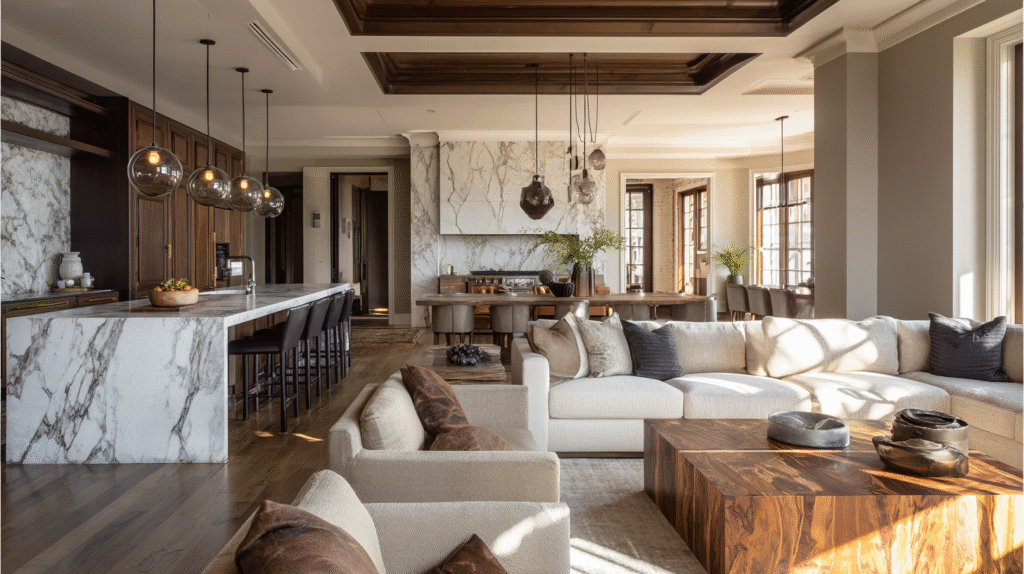
This doesn’t mean boring. It means considered. In a transitional space, nothing screams for attention because nothing needs to. The coffee table’s curved legs echo the arched doorway. The neutral palette creates a continuous visual flow rather than sharp color breaks. The overall composition feels like a well-conducted orchestra—every element contributing to a harmonious whole.

Contemporary Design: The Power of Intention

Contemporary spaces are designed to feel intellectually engaging because they make bold, unapologetic choices about form, material, and spatial relationships. The aesthetic goal is creating environments that feel purposeful, architecturally confident, and visually dynamic.

This doesn’t mean cold. It means decisive. In a contemporary space, every element earns its place through either functional necessity or deliberate visual impact. The sofa isn’t just seating—it’s a sculptural form. The wall color isn’t just background—it’s an architectural decision. The overall composition feels like a carefully edited gallery installation where negative space matters as much as the objects themselves.

Why This Difference Matters More Than Color or Furniture

Once you understand that transitional vs contemporary represents a fundamental split in design philosophy—comfort through familiarity versus impact through clarity—every other decision becomes easier.

Wondering if that ornate mirror works in your space? Ask yourself: are you building harmony through familiar forms (transitional yes) or impact through intentional contrast (contemporary maybe, if the mirror’s form is sculptural rather than decorative).

Can’t decide between warm greige walls or crisp white? Consider whether you’re creating visual flow and comfort (transitional warm neutrals) or architectural clarity and contrast (contemporary whites and bold accents).

Confused about whether to add more throw pillows or remove half of them? Recognize whether you’re designing for layered comfort and visual softness (transitional more) or edited clarity and breathing room (contemporary less).

The transitional vs contemporary framework isn’t about rules. It’s about understanding the intent behind design choices so you can make them strategically rather than randomly.

Now that you understand the philosophical foundation, let’s explore how this core difference manifests across the five most critical design decisions you’ll make.

1. Color Philosophy: Flow vs. Contrast

Transitional Color Strategy: Layered Neutrals and Subtle Progression

Transitional color palettes are built on the principle of visual continuity. You’re not creating stark divisions between surfaces—you’re building a cohesive tonal story where one shade flows gracefully into the next.

Think warm greiges that shift from taupe walls to mushroom upholstery to cream drapery, all within a narrow tonal range. The progression is subtle enough that your eye travels smoothly through the space without jarring color breaks, but varied enough to prevent flatness.

Accent colors in transitional spaces tend toward muted, sophisticated tones: soft sage, dusty blue, warm terracotta, aged brass. These colors add depth without disrupting the overall harmony. You might see them repeated throughout the space in varying intensities—a blue that appears in the rug, the artwork, and a single accent pillow, creating visual rhythm through repetition.

Common Transitional Mistake: Going so neutral that the space feels timid or hotel-generic. Transitional doesn’t mean no color—it means thoughtful color that serves the overall harmony.

Contemporary Color Strategy: Architectural Contrast and Bold Clarity

Contemporary color palettes are built on the principle of intentional contrast. You’re creating visual tension through deliberate color relationships—crisp whites against charcoal grays, saturated jewel tones against stark neutrals.

Think spaces where walls might be pure white, upholstery in deep charcoal or black, and a single accent chair in saturated emerald or burnt orange. The contrast is the point. Your eye is meant to notice the shifts, to engage with the visual dynamics of the space.

Colors in contemporary design are often either neutralized to near-absence (whites, grays, blacks, beiges) or intensified to statement-level saturation. There’s less interest in the “in-between” tones. A contemporary space might be 90% neutral with 10% saturated color used as architectural punctuation.

Common Contemporary Mistake: Creating so much contrast that the space feels disjointed or visually exhausting. Contemporary uses bold color strategically, not arbitrarily.

The Diagnostic Question: Do you want your space to feel like a continuous, flowing experience (transitional layered neutrals) or a series of intentional visual moments (contemporary contrast)?

Transitional vs. Contemporary: The One Difference That Changes Everything

2. Furniture Silhouettes: Softened Classicism vs. Sculptural Geometry Transitional Furniture DNA: Familiar Forms, Contemporary Restraint

Transitional furniture maintains classical proportions—the height relationships between seat, arm, and back that have felt comfortable to humans for generations—but simplifies decorative elements.

A transitional dining chair might have a gently curved back and tapered legs (classical references), but no carved details, tufting, or ornamental trim (contemporary restraint). A transitional bed frame features a substantial upholstered headboard in linen rather than carved wood or elaborate tufting.

The key word is refined. Transitional pieces often feature:

  • Curved or rolled arms on sofas rather than straight, boxy edges
  • Turned or tapered furniture legs rather than blocky or metal frames
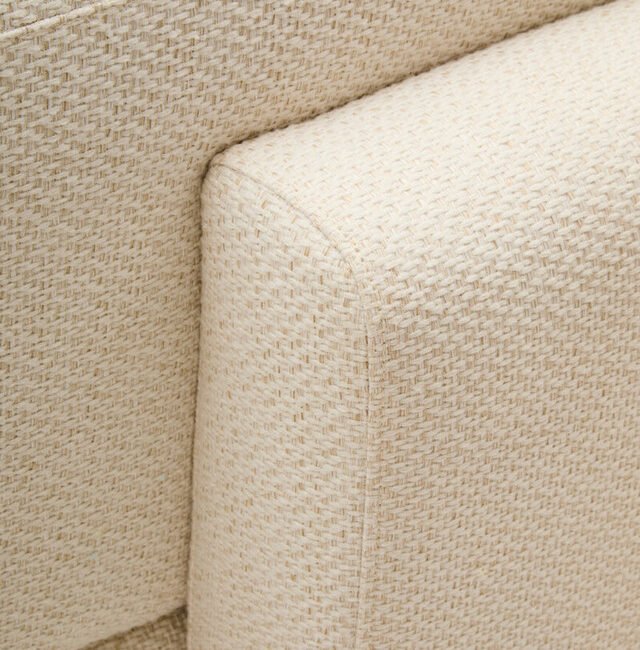
  • Upholstered surfaces in natural, textured fabrics
  • Traditional furniture types (wingback chairs, skirted sofas, console tables) executed with simplified detailing

Transitional Furniture Investment Strategy: Spend on upholstered anchor pieces (sofas, beds, dining chairs) in quality neutral fabrics. These classic silhouettes age gracefully and adapt to evolving tastes through updated accessories.

Contemporary Furniture DNA: Architecture-Driven Forms

Contemporary furniture prioritizes geometric clarity and material expression over historical reference. The silhouette itself creates visual interest—the furniture functions as sculptural object.

A contemporary dining chair might feature cantilever construction, molded plywood, or powder-coated steel—forms impossible before modern manufacturing. A contemporary sofa emphasizes clean horizontal lines, exposed structural elements, or unexpected material combinations.

The key word is intentional. Contemporary pieces often feature:

  • Straight, angular lines or purposefully organic sculptural curves
  • Exposed legs in metal, wood, or innovative materials
  • Minimal upholstery or upholstery that emphasizes the form beneath
  • Furniture as statement object rather than background element

Contemporary Furniture Investment Strategy: Spend on hero pieces with strong architectural presence (a sculptural dining table, a statement sofa, iconic designer chairs). These pieces define the space’s character and should be genuine investment items.

The Diagnostic Question: Do you want furniture that feels instantly familiar and inherently comfortable (transitional), or furniture that makes an architectural statement and rewards closer observation (contemporary)?

3. Texture and Materiality: Layered Warmth vs. Honest Surfaces

This is where the transitional vs contemporary distinction becomes almost tactile.

Transitional Texture Strategy: Comfort Through Layering

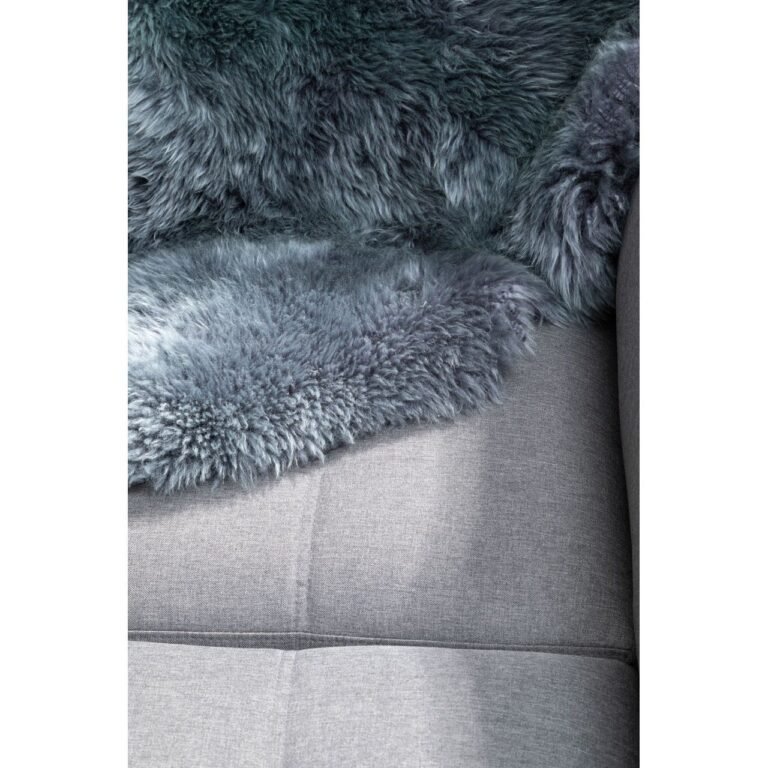
Transitional spaces build warmth through textile richness and mixed material finishes. You’re creating depth through the accumulation of varied textures—linen drapery, wool rugs, velvet throw pillows, leather upholstery, aged wood, brushed metals.

The goal is preventing visual or tactile monotony. Even in a neutral color palette, a transitional room feels rich because of textural variation. You might see:

  • Multiple textile weights and weaves in the same space (heavy linen, gauzy sheers, chunky knits)
  • Mixed wood tones and finishes (walnut dining table, oak flooring, painted cabinetry)
  • Layered window treatments (sheers plus drapery)
  • Rugs layered over carpet or multiple rugs defining zones

Transitional Texture Rule: Every surface should have discernible texture. Flat, smooth, or overly sleek materials feel out of place.

Contemporary Texture Strategy: Material Honesty and Surface Celebration

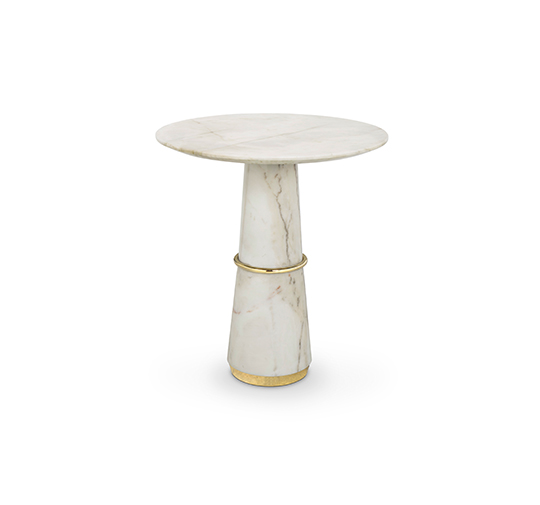
Contemporary spaces build interest through celebrating individual materials in their purest form. Rather than layering multiple textures, you’re showcasing the inherent beauty of each material—the veining in marble, the grain in wood, the patina on concrete.

The goal is material clarity and surface honesty. A contemporary room feels refined because each material is allowed to speak without competition. You might see:

  • Single-material installations (a room with concrete floors, plaster walls, minimal intervention)
  • Innovative or industrial materials used residentially (resin, terrazzo, blackened steel, glass block)
  • Minimal window treatments or architectural solutions like recessed shades
  • Rugs as sculptural elements rather than softening layers
Materials, Textures & Finishes

4. Pattern, Art, and Ornamentation: Subtle Repetition vs. Strategic Statement

How you handle visual pattern and decorative elements perfectly illustrates the transitional vs contemporary divide.

Transitional Pattern Approach: Classic Motifs, Restrained Application

Transitional spaces use pattern sparingly but consistently—often through traditional motifs (stripes, damasks, geometrics, florals) executed in low-contrast, sophisticated colorways.

You might see a subtle stripe on dining chairs, a tone-on-tone damask on throw pillows, or a classic geometric rug in neutrals. The pattern adds visual interest without creating busy-ness. It’s noticed upon closer inspection rather than announcing itself from across the room.

Transitional Art Strategy: Multiple pieces in coordinated frames, often arranged in traditional gallery wall configurations or symmetrical pairings. Art serves to enhance the space’s warmth and personality rather than functioning as primary focal point.

Contemporary Pattern Approach: Graphic Impact or Complete Absence

Contemporary spaces either embrace pattern as bold, graphic statement or eliminate it entirely in favor of form and material. There’s less interest in subtle, traditional pattern.

When contemporary design uses pattern, it’s often large-scale, geometric, and high-contrast—think oversized abstract art, graphic area rugs, or architectural tile work. Pattern functions as deliberate punctuation rather than gentle texture.

Contemporary Art Strategy: Fewer, larger pieces with significant visual impact. Art often functions as focal point, conversation starter, or architectural element. Frames tend toward minimal or absent (canvas wraps, floating frames).

5. Space Planning and Architectural Details: Symmetry vs. Asymmetry

This might be the most overlooked aspect of the transitional vs contemporary distinction—and it’s often what makes spaces feel “off” even when individual elements are beautiful.

Transitional Space Planning: Balanced Arrangements and Architectural Context

Transitional rooms favor symmetrical or balanced asymmetrical arrangements. Sofas face each other across coffee tables. Nightstands flank beds. Lamps balance at either end of a console table.

This doesn’t mean rigid formality—it means visual equilibrium. The space feels anchored, grounded, intuitively organized around conversation and human interaction.

Transitional Architectural Details:

  • Simplified crown molding, baseboards, and door casings (present but restrained)
  • Traditional room proportions and ceiling heights
  • Defined rooms rather than completely open plans
  • Updated wainscoting, picture rails, or board-and-batten treatments

Contemporary Space Planning: Dynamic Asymmetry and Functional Flow

Contemporary rooms embrace asymmetrical arrangements and unexpected spatial relationships. A sofa might float in the middle of a room rather than against a wall. Seating areas create visual tension through unequal groupings.

This doesn’t mean chaotic—it means intentionally dynamic. The space feels energized, forward-thinking, organized around movement and architectural expression.

Transitional vs Contemporary

How Understanding Transitional vs Contemporary Transforms Your Design Decision-Making

Here’s where this framework becomes genuinely useful—when you’re standing in a furniture store, scrolling through online retailers, or interviewing contractors, and you need to make actual decisions.

The Budget Reality: Where to Invest in Each Style

Transitional Investment Hierarchy:

  1. Quality upholstered furniture in classic silhouettes and durable neutral fabrics
  2. Window treatments (drapery hardware, lined panels, possibly layered treatments)
  3. Area rugs in sophisticated neutral patterns
  4. Architectural updates (simplified molding, updated hardware, cohesive paint)

Save on: Accent furniture, decorative accessories, art (can evolve over time)

Contemporary Investment Hierarchy:

  1. Hero furniture pieces with strong architectural presence
  2. Architectural lighting (recessed systems, statement fixtures)
  3. Flooring and material surfaces (since these are focal points)
  4. Built-in storage solutions to maintain visual calm

Save on: Decorative objects (less needed), window treatments (often minimal), excessive furniture (edited approach)

The Hybrid Path: When and How to Blend Transitional vs Contemporary

Understanding the core philosophical difference between transitional vs contemporary actually makes strategic blending possible—because you’re mixing from a place of knowledge rather than confusion.

Successful Blending Requires Dominant Direction

Choose one style as your primary language (70-80% of decisions) and use the other as intentional counterpoint (20-30%). A predominantly transitional space can absolutely feature contemporary lighting or a single sculptural furniture piece. A predominantly contemporary space can incorporate transitional comfort through textiles or a classical art piece.

What doesn’t work: attempting to give equal weight to both styles in the same space. This creates the visual equivalent of two people talking over each other.

Blending Through Shared Values

Both transitional and contemporary design value quality over quantity, restraint over excess, and intentionality over decoration for decoration’s sake. Focus on these shared principles:

  • Edited color palettes (whether layered neutrals or bold contrasts)
  • Quality materials and craftsmanship
  • Purposeful negative space
  • Cohesive rather than chaotic compositions
Transitional vs. Contemporary: The One Difference That Changes Everything

Your Personal Diagnostic: Discovering Where You Belong in the Transitional vs Contemporary Spectrum

Let’s get practical. Here are the honest questions that reveal your authentic design direction:

Comfort and Familiarity:

  • Do you feel more relaxed in spaces that feel immediately welcoming and familiar, or spaces that feel architecturally striking and purposeful?

  • When you walk into a beautifully designed room, do you first notice the overall harmony or the individual statement pieces?

Decision-Making Style:

  • Do you prefer making many small, coordinated decisions (layering textiles, arranging accessories, creating vignettes) or fewer, bolder decisions (selecting hero pieces, committing to strong color)?
  • Are you energized or exhausted by the idea of styling shelves and surfaces?

Lifestyle Realities:

  • Do you have children, pets, or high-traffic living situations requiring furniture that’s both beautiful and deeply practical? (Often points toward transitional durability)
  • Do you prefer minimal visual clutter and streamlined storage solutions? (Often points toward contemporary)

Long-Term Vision:

  • Can you envision yourself in the same aesthetic in 10 years, or do you enjoy evolving your style regularly?
  • Do you want your home to feel like a calm, consistent refuge (transitional) or an inspiring, energizing environment (contemporary)?

There are no wrong answers—only honest ones that guide you toward spaces that genuinely serve how you live.

The Freedom of Understanding: Why Knowing the Difference Changes Everything

Here’s what happens when you truly understand the transitional vs contemporary distinction:

You stop second-guessing every purchase decision because you have a clear framework for evaluation.

You stop accumulating beautiful but incoherent pieces because you understand whether each element serves your overall design philosophy.

You stop feeling overwhelmed by conflicting design advice because you can filter recommendations through your chosen lens.

You stop comparing your space to others because you understand that great design isn’t about replicating someone else’s aesthetic—it’s about executing your chosen approach with intention and confidence.

Most importantly, you stop designing for some imagined future buyer or hypothetical guest who might judge your choices. You design for the person who lives in your space every single day—you.

The transitional vs contemporary framework isn’t about limitation. It’s about liberation. It’s permission to make confident choices, edit ruthlessly, and create spaces that feel cohesive rather than chaotic because every decision supports a clear, intentional vision.

Transitional vs. Contemporary: The One Difference That Changes Everything

The Bottom Line: Your Style, Your Rules, Your Authentic Space

Understanding the core difference between transitional vs contemporary design—comfort through familiarity versus impact through clarity—is not about choosing a team and defending it forever. It’s about understanding the why behind design decisions so you can make choices that create spaces feeling genuinely, authentically yours.

Maybe you’re firmly transitional, building warmth through layered neutrals, classical silhouettes, and balanced arrangements.

Maybe you’re decisively contemporary, creating impact through architectural clarity, bold contrast, and edited restraint.

Maybe you’re strategically blending both, using transitional comfort as your foundation with contemporary moments as punctuation—or building contemporary architecture and softening with transitional textiles.

All of these approaches work beautifully when executed with understanding and intention.

What doesn’t work is making random decisions based on what’s trending on Instagram, what’s on sale at that moment, or what your neighbor chose. What doesn’t work is accumulating beautiful individual pieces with no cohesive vision holding them together. What doesn’t work is designing for some imaginary person who might walk into your space instead of designing for the very real person who lives there.

The one difference that changes everything isn’t actually about transitional vs contemporary at all. It’s about moving from unconscious decoration to conscious design. It’s about understanding that every choice you make either supports or undermines your overall vision. It’s about recognizing that creating a beautiful, functional, genuinely personal space requires understanding the language of design well enough to speak it fluently.

Now you have the framework. You understand the philosophical foundation separating transitional and contemporary design. You know how this distinction manifests across color, furniture, texture, pattern, and space planning. You have diagnostic questions to identify your authentic preferences and strategic guidance for executing your vision—whether you’re working with a renovation budget or just rearranging what you already own.

The next step isn’t buying a single thing. It’s looking at your current space with new eyes and asking: What story am I trying to tell? What feeling am I trying to create? What design language serves how I actually live?

Answer those questions honestly, and the transitional vs contemporary distinction becomes not a confusing choice but a clarifying framework—one that transforms every subsequent decision from a source of stress into an opportunity for intentional, confident, authentically personal design.

That’s the difference that changes everything.

What do you think?
Leave a Reply

Blog

Get fresh home inspiration and helpful tips from our interior designers

top
1
    1
    Your Cart
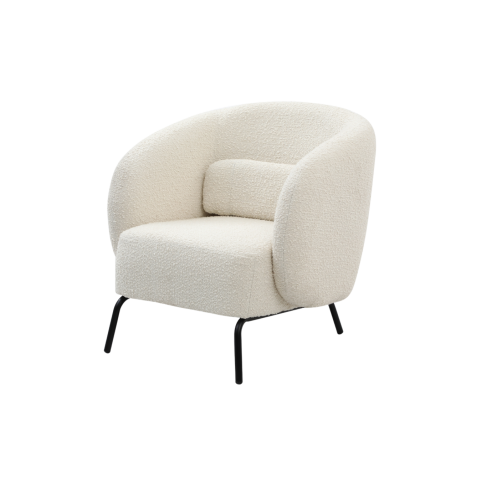
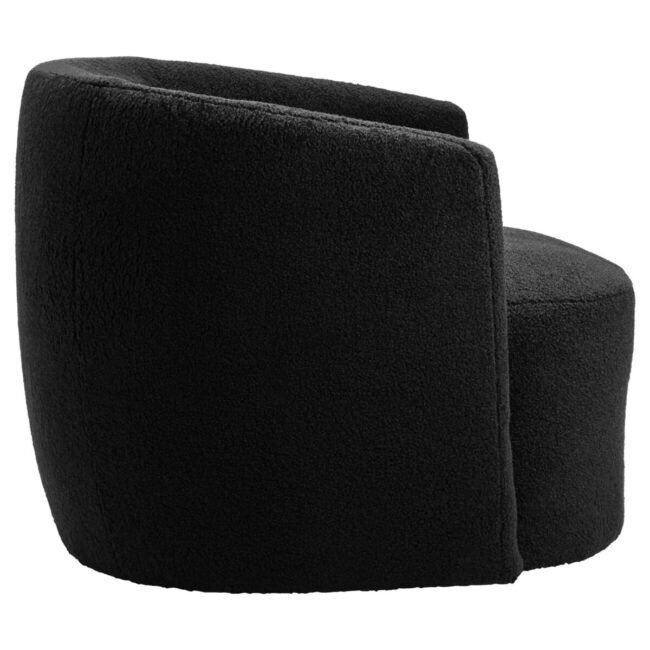
    Joey Armchair Remove
    Joey Armchair
    Qty: 1
    Price: Original price was: £570.Current price is: £536.
    £536

    Inactive

    Privacy Overview

    This website uses cookies so that we can provide you with the best user experience possible. Cookie information is stored in your browser and performs functions such as recognising you when you return to our website and helping our team to understand which sections of the website you find most interesting and useful.