Beyond Lighting: How Circadian Lighting Can Fix Your Sleep Schedule

Circadian Lighting

It’s 2:47 AM. Again. You’ve counted backward from 100 three times, tried the 4-7-8 breathing technique, and toggled between podcasts and white noise. Nothing works. You finally drift off around 4 AM, only to wake up at 7 feeling like you’ve been hit by a truck. Sound familiar? For millions of people, this nightly ritual isn’t just frustrating—it’s a health crisis. But here’s the plot twist: the real culprit might not be stress, caffeine, or your racing mind. It could be the very lights you flip on and off every day.

Enter circadian lighting—a science-backed approach that works with your body’s natural rhythms instead of against them. Unlike conventional lighting, which treats all hours as equal, circadian lighting mimics the sun’s daily arc: bright, blue-toned light in the morning to signal wake-up time, and warm, dim light in the evening to prepare your body for sleep. The result? A sleep schedule that actually works without melatonin supplements, sleep apps, or sheer willpower. In this guide, we’ll explore what circadian lighting is, how it fixes your sleep schedule, and how you can implement it in your own home—room by room, step by step.

If you’ve been battling insomnia, inconsistent wake times, or grogginess that lingers all day, circadian lighting might be the missing piece. Let’s dig into the science, the benefits, and the practical strategies that make it work.

Circadian lighting is a lighting design approach that adjusts color temperature and brightness throughout the day to align with your body’s natural circadian rhythms—the internal 24-hour clock that regulates sleep-wake cycles, hormone production, and countless biological processes. Your circadian rhythm is primarily controlled by light exposure. Specifically, it responds to the wavelength and intensity of light hitting specialized cells in your retina, which then signal the brain’s suprachiasmatic nucleus (SCN)—the master clock.

Here’s the science in plain English: when your eyes detect bright, blue-rich light (similar to daylight), your brain suppresses melatonin production, increasing alertness and signaling that it’s time to be awake. When you’re exposed to dim, warm light (like a sunset), melatonin production ramps up, preparing your body for sleep. Traditional lighting disrupts this process by flooding your environment with the same bright, cool-toned light at all hours—especially in the evening, when your brain should be winding down. This is why scrolling through your phone at midnight (with its blue-heavy screen) or sitting under harsh LED ceiling lights at 10 PM can sabotage your sleep.

Circadian lighting solves this by dynamically shifting throughout the day. In the morning, it delivers bright, blue-enriched light (5000K–6500K color temperature) to wake you up naturally. Midday, it maintains moderate brightness and neutral tones to sustain alertness. By evening, it transitions to warm, amber tones (2000K–3000K) and lower intensity to signal your body that sleep is approaching. This isn’t just about aesthetics—it’s about resynchronizing your biology with the rhythm it evolved to follow. When implemented correctly, circadian lighting can reduce sleep onset latency (the time it takes to fall asleep), improve sleep quality, stabilize wake times, and even enhance mood and cognitive performance during the day.

Beyond Lighting: How Circadian Lighting Can Fix Your Sleep Schedule

1. Regulates Your Wake-Up Time Naturally

The most immediate benefit of circadian lighting is its ability to anchor your wake-up time—no alarm clock required. When you expose yourself to bright, blue-rich light within 30 minutes of waking, you’re essentially resetting your circadian clock for the day. This light exposure suppresses residual melatonin in your system, signals cortisol production (the hormone that promotes wakefulness), and tells your SCN, “This is the start of the day.”

The science: A 2017 study published in the Journal of Clinical Sleep Medicine found that morning light therapy significantly improved sleep onset and wake times in participants with delayed sleep phase disorder. The key is intensity and timing—you need at least 1,000 lux (preferably 10,000 lux for maximum effect) of bright light within the first hour of waking. Circadian lighting systems can deliver this automatically, whether through smart bulbs programmed to simulate sunrise or dedicated light therapy lamps placed on your bedside table or desk.

Real-world application: Install tunable white LED bulbs in your bedroom and bathroom. Set them to 6000K–6500K (daylight white) at maximum brightness starting 30 minutes before your desired wake time. If you’re budget-conscious, a $30–$50 sunrise alarm clock or a $20 Philips Hue white bulb paired with a smart plug timer works beautifully. For those willing to invest, full smart lighting systems like Philips Hue, LIFX, or Nanoleaf can automate the entire process, gradually brightening and cooling your lights as you wake.

How to implement: Start by identifying your ideal wake time. Program your lights to begin brightening 15–30 minutes before, starting at 10% brightness and ramping up to 100% by wake time. Keep the color temperature above 5000K. If natural light floods your bedroom in the morning, supplement it with circadian lighting on overcast days or during winter months when daylight is scarce.

2. Reduces Evening Alertness for Faster Sleep Onset

If you struggle to fall asleep at night, your lighting is likely keeping you wired when you should be winding down. Circadian lighting addresses this by shifting to warm, low-intensity light in the evening, which reduces the brain’s alertness signals and allows melatonin production to rise naturally. This is the opposite of what most people experience—bright overhead LEDs in the kitchen, living room, and bathroom well into the night, all of which scream “stay awake” to your biology.

The science: Blue wavelengths (400–490 nanometers) are the most potent suppressors of melatonin. A landmark 2011 study in the Journal of Applied Physiology found that exposure to even moderate levels of blue light in the evening delayed melatonin onset by up to 90 minutes. Conversely, warm light (amber, orange, red tones around 2000K–2700K) has minimal impact on melatonin, making it ideal for evening use. Circadian lighting leverages this by gradually dimming your lights and warming the color temperature as bedtime approaches.

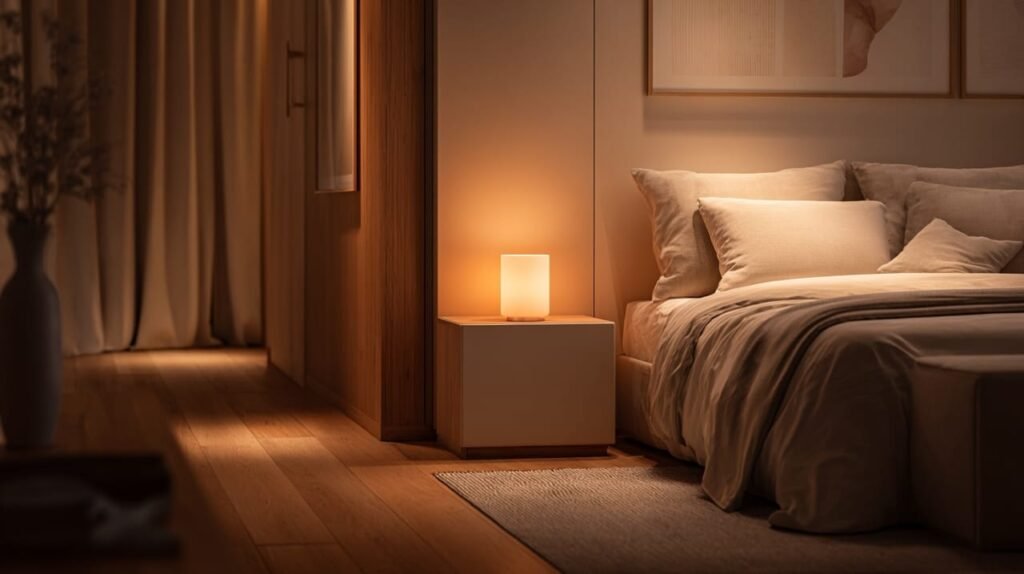
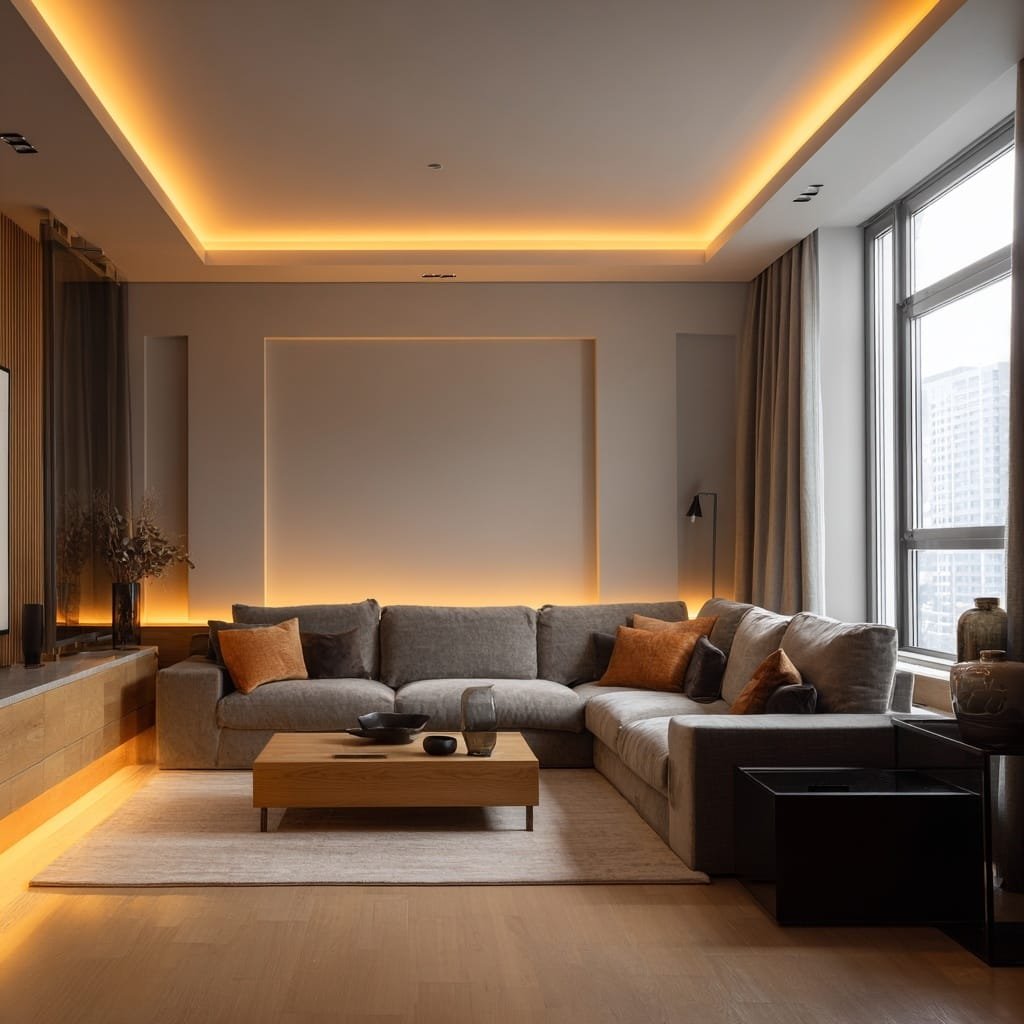
Real-world application: Two hours before your target bedtime, begin transitioning your home’s lighting. Replace bright white bulbs (4000K+) with warm white or amber bulbs (2000K–3000K) in living areas, bedrooms, and bathrooms. Salt lamps, warm LED strips, or dedicated amber bulbs are inexpensive options. For smart home enthusiasts, set automation routines: at 8 PM, all lights dim to 40% and shift to 2700K; by 9:30 PM, they’re at 20% and 2200K.

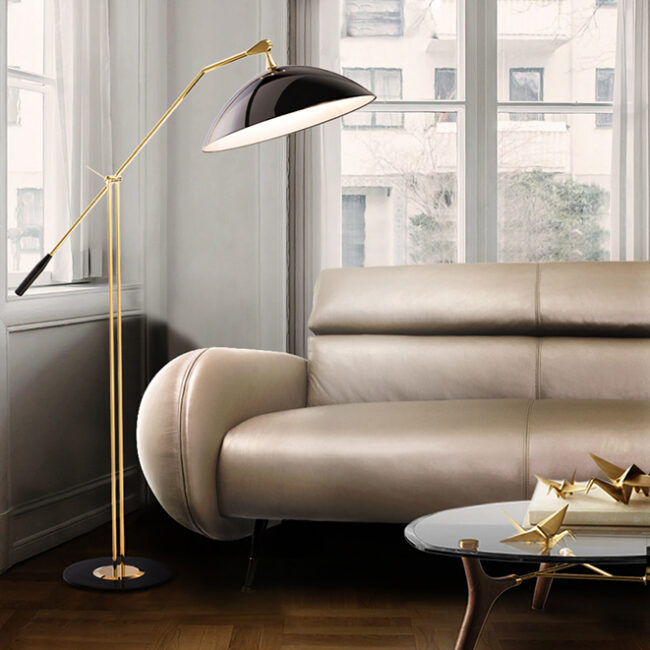
How to implement: Audit your evening lighting. Replace or supplement overhead lights with dimmable warm bulbs. Use table lamps, floor lamps, or wall sconces instead of bright ceiling fixtures. Consider installing dimmer switches or smart bulbs. Budget hack: Use $8 clip-on book lights with amber bulbs for reading in bed instead of overhead lights. The goal is to create a sunset gradient in your home—gradually darker, warmer, softer.

Beyond Lighting: How Circadian Lighting Can Fix Your Sleep Schedule

3. Improves Deep Sleep Quality

Circadian lighting doesn’t just help you fall asleep faster—it improves the architecture of your sleep itself. Deep sleep (stages 3 and 4 of non-REM sleep) is when your body repairs tissue, consolidates memories, and clears metabolic waste from the brain. Light exposure during the day, particularly in the morning, has been shown to increase the proportion of deep sleep you get at night. When your circadian rhythm is aligned, your brain cycles through sleep stages more efficiently, resulting in more restorative rest.

The science: Research from Northwestern University found that daytime exposure to bright light increased deep sleep duration by up to 23% in office workers. The mechanism is simple: robust circadian alignment strengthens the contrast between wake and sleep states, allowing your brain to transition more cleanly between them. Circadian lighting creates this contrast by delivering strong daytime light signals and eliminating disruptive evening light.

Real-world application: Maximize daytime light exposure by positioning your workspace near windows or using bright task lighting (5000K, 500+ lux) at your desk. Combine this with evening light restriction. Use blackout curtains or sleep masks to block ambient light while sleeping. If you wake during the night, avoid turning on bright lights—use motion-activated amber night lights (under 50 lux) instead.

How to implement: Install high-lux task lighting in your workspace. A $25 LED desk lamp with adjustable brightness can provide 1,000+ lux at close range. Pair this with blackout shades in your bedroom and dim amber night lights for middle-of-the-night bathroom trips. Track your sleep quality using a wearable or sleep app to see improvements within 7–14 days.

Beyond Lighting: How Circadian Lighting Can Fix Your Sleep Schedule

4. Eliminates Daytime Grogginess

Ever feel foggy-headed and sluggish even after eight hours of sleep? That’s sleep inertia—the groggy, disoriented feeling that lingers when your circadian rhythm is misaligned. Circadian lighting combats this by ensuring your body fully transitions from sleep to wakefulness. Morning light exposure accelerates the suppression of melatonin, increases core body temperature, and triggers the release of serotonin and cortisol—all of which promote alertness.

The science: A 2019 study in Sleep Health found that participants exposed to bright morning light experienced a 50% reduction in sleep inertia compared to those in dim environments. The effect is dose-dependent: brighter light produces faster results. Circadian lighting systems can deliver therapeutic-level brightness (10,000 lux) right when you need it most.

Real-world application: Use a sunrise alarm clock that gradually brightens over 20–30 minutes, peaking at your wake time. Philips SmartSleep Wake-Up Light ($80–$120) is a popular option. Alternatively, program smart bulbs to achieve the same effect. Immediately after waking, get 10–20 minutes of bright light exposure—either from natural sunlight or a 10,000-lux light therapy box positioned 16–24 inches from your face.

How to implement: Place your brightest light source near your wake-up routine—bedroom, bathroom, or kitchen. Use cool-toned bulbs (5500K+) and keep them on for at least 30 minutes. If you’re remote working or have flexible mornings, step outside for natural daylight within 15 minutes of waking. This is free, highly effective circadian lighting.

5. Stabilizes Irregular Sleep Patterns

Shift workers, frequent travelers, and anyone with an inconsistent schedule know the pain of a drifting sleep schedule. You fall asleep at different times each night, wake up at odd hours, and never feel fully rested. Circadian lighting provides an anchor by delivering consistent light cues that override environmental variability. Even if your schedule changes, you can manually adjust your lighting to maintain circadian alignment.

The science: The SCN can be retrained with consistent light exposure. A 2020 study in Frontiers in Neurology showed that circadian lighting interventions reduced sleep variability in shift workers by up to 40%. The key is consistency: same wake-up light exposure time, same evening dim-down schedule, regardless of external factors.

Real-world application: If you work night shifts, use blackout curtains and amber lighting during your “evening” (even if it’s 8 AM). Expose yourself to bright light during your wake period, regardless of the actual time of day. Portable light therapy lamps ($40–$100) are ideal for this. For travelers crossing time zones, adjust your circadian lighting to the destination time zone 2–3 days before departure.

How to implement: Use programmable smart bulbs or light therapy boxes to create artificial “day” and “night” cues. Set a fixed wake-up time and stick to it for at least two weeks. Track your sleep schedule to identify patterns. Gradually shift your light exposure earlier or later (by 15–30 minutes per day) to realign with your desired schedule.

Beyond Lighting: How Circadian Lighting Can Fix Your Sleep Schedule

6. Reduces Dependency on Sleep Aids

Many people rely on melatonin supplements, prescription sleep medications, or over-the-counter aids to fall asleep. While these can be helpful in the short term, they don’t address the root cause of sleep dysfunction—circadian misalignment. Circadian lighting offers a non-pharmaceutical alternative by restoring your body’s natural melatonin production cycle. Instead of supplementing melatonin externally, you optimize the conditions for your body to produce it on its own.

The science: A 2018 review in the Journal of Pineal Research found that light therapy was as effective as low-dose melatonin supplements for improving sleep onset in people with circadian rhythm disorders, with fewer side effects. Circadian lighting works by addressing the upstream cause (misaligned light exposure) rather than downstream symptoms (low melatonin).

Real-world application: If you currently take melatonin, continue using it while implementing circadian lighting. Over 2–4 weeks, as your sleep schedule stabilizes, gradually reduce your dosage. Monitor your sleep quality and onset times. Many people find they no longer need supplements once their lighting is optimized.

How to implement: Combine circadian lighting with good sleep hygiene: consistent sleep and wake times, no screens 1 hour before bed, cool bedroom temperature (65–68°F), and complete darkness while sleeping. Use amber bulbs or blue-light-blocking glasses in the evening. As your circadian rhythm strengthens, you’ll naturally produce melatonin at the right times.

7. Boosts Mood and Mental Clarity During the Day

The benefits of circadian lighting extend far beyond sleep. Proper light exposure regulates not just melatonin but also serotonin, dopamine, and cortisol—neurotransmitters and hormones that affect mood, focus, and mental performance. When your circadian rhythm is aligned, you experience more stable energy levels, better concentration, and improved emotional resilience. This is especially valuable during winter months when reduced daylight can trigger Seasonal Affective Disorder (SAD).

The science: Bright light therapy is a first-line treatment for SAD, with studies showing up to 60–70% remission rates. Daytime circadian lighting provides ongoing, lower-intensity exposure that supports mood stability year-round. A 2021 study in Nature found that office workers in environments with dynamic circadian lighting reported 15% higher productivity and 22% better mood scores than those under static lighting.

Real-world application: Use bright, cool-toned light (5000K–6500K) in your workspace during the day. Position lamps or overhead lights to provide at least 500 lux at eye level. If you work from home, invest in a full-spectrum LED panel ($50–$150) or daylight bulbs for your desk area. Pair this with breaks outdoors or near windows for natural light exposure.

How to implement: Replace standard office bulbs with daylight-spectrum LEDs. Use smart lighting to automatically adjust brightness and color temperature throughout the day: bright and cool in the morning, moderate midday, warm and dim in the evening. Track your mood and energy levels over 2–3 weeks to see the impact.

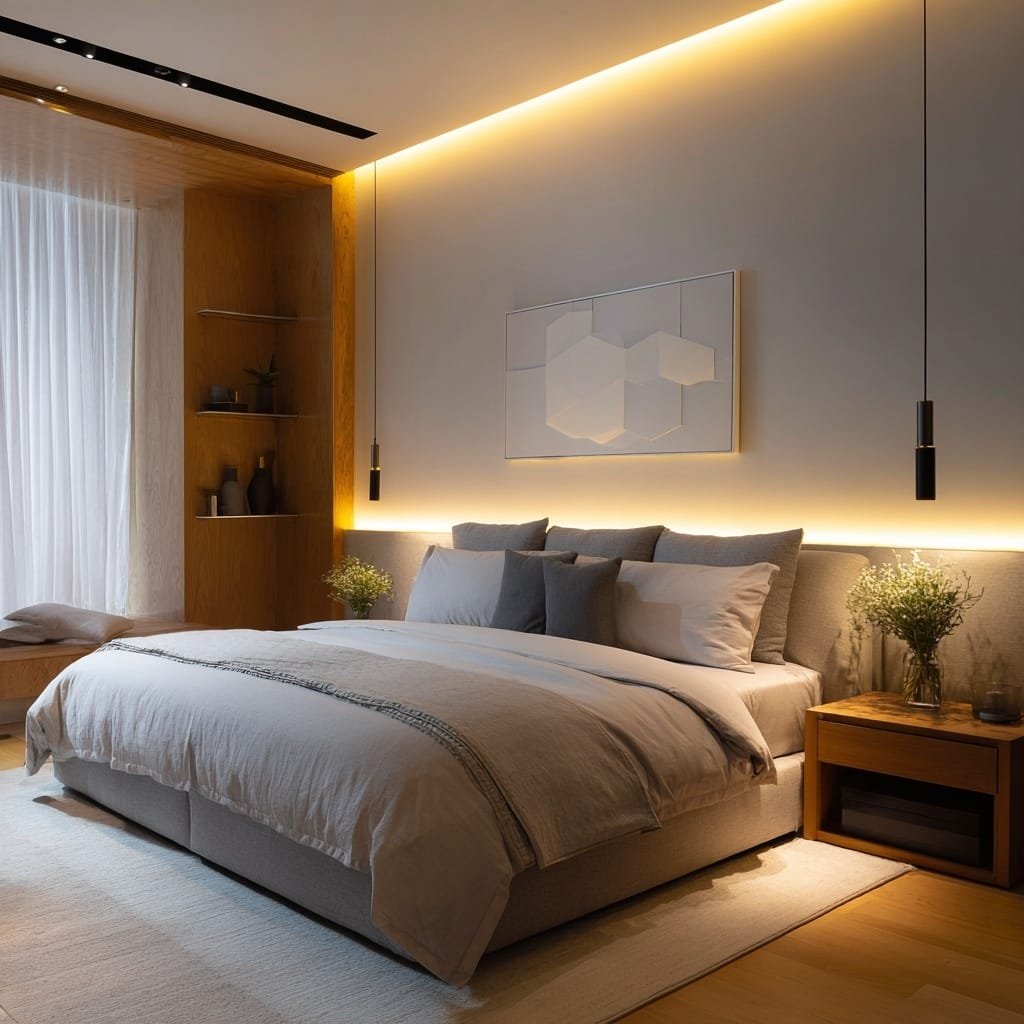
Beyond Lighting: How Circadian Lighting Can Fix Your Sleep Schedule

Common Mistakes When Implementing Circadian Lighting

Even with the best intentions, people often make critical errors when setting up circadian lighting. Here are the most common pitfalls and how to avoid them.

Mistake #1: Using the wrong color temperature at the wrong time. Many people install tunable white bulbs but leave them on a neutral 3500K setting all day and night, defeating the entire purpose. Circadian lighting requires intentional shifts: 5500K+ in the morning, 3500K–4000K midday, and 2700K or lower in the evening. If your lights don’t change, your circadian rhythm won’t either. Fix: Program your smart bulbs or create manual routines. Set reminders on your phone if you’re not using automation. The contrast between morning and evening lighting is what drives results.

Mistake #2: Insufficient brightness in the morning. A single 60-watt-equivalent LED bulb at 800 lumens provides only about 100–200 lux at typical distances. That’s not enough to trigger a strong circadian response. You need 1,000+ lux (ideally 10,000 lux) within the first hour of waking. Fix: Use multiple bulbs, position lights closer to your face, or invest in a dedicated 10,000-lux light therapy box. Place it on your nightstand, bathroom counter, or breakfast table and use it for 20–30 minutes each morning.

Mistake #3: Inconsistent implementation. Circadian lighting only works if you use it consistently. Skipping weekends, forgetting to dim lights in the evening, or exposing yourself to bright screens late at night will undermine your progress. Your circadian rhythm craves predictability. Fix: Treat circadian lighting like brushing your teeth—non-negotiable. Use automation wherever possible. Enable blue light filters on devices (Night Shift on iOS, Night Light on Windows). Wear blue-light-blocking glasses if you must use screens after 8 PM.

Mistake #4: Ignoring natural light. The most powerful circadian lighting is free: the sun. Even the best smart bulbs can’t replicate the full spectrum and intensity of daylight. If you’re indoors all day under artificial light, you’re missing the strongest cue your circadian system responds to. Fix: Get outside for 10–20 minutes within an hour of waking. Open curtains and blinds during the day. Position your workspace near windows. Natural light in the morning is worth more than an hour of artificial light in the afternoon.

How to Set Up Circadian Lighting in Your Home (Room by Room)

Implementing circadian lighting doesn’t require a complete home renovation. Here’s how to optimize each room for circadian alignment across different budgets.

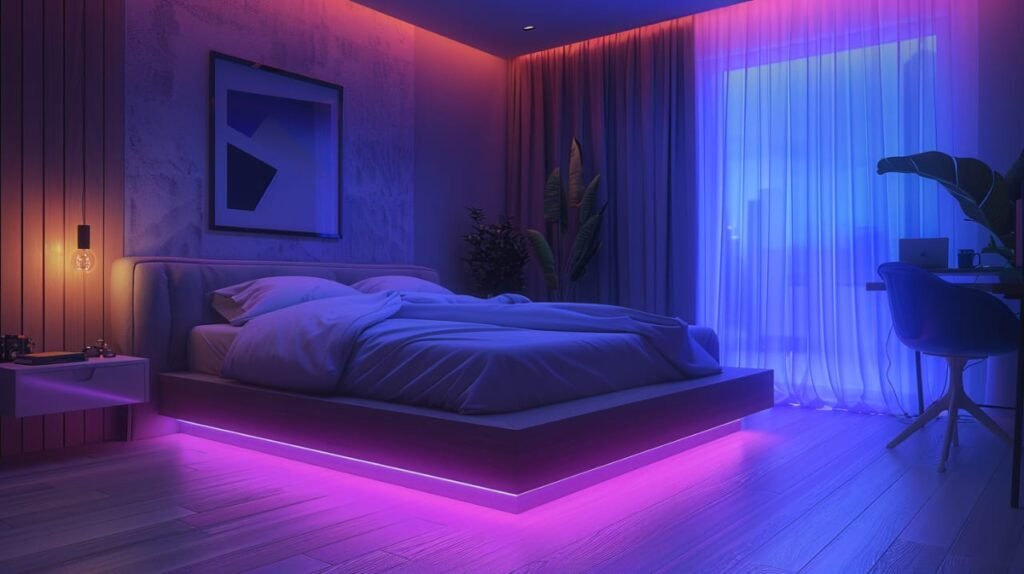
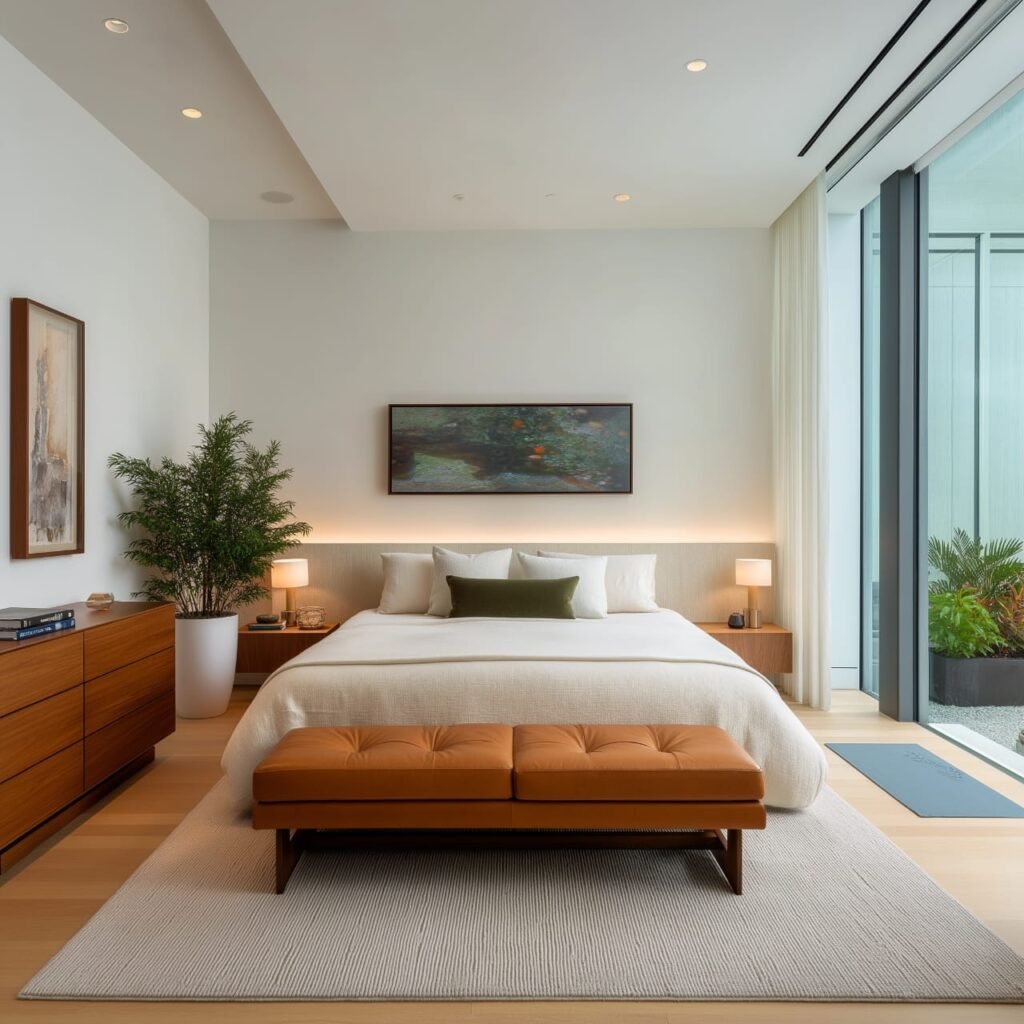
Bedroom: This is ground zero for circadian lighting. Your goal is bright, cool light in the morning and complete darkness at night. Budget option ($30–$60): Use a sunrise alarm clock (Hatch Restore, Philips Wake-Up Light) and install blackout curtains. Add a plug-in amber night light for nighttime navigation. Mid-range ($100–$200): Install 2–3 tunable white smart bulbs (Philips Hue, LIFX) in bedside lamps or ceiling fixtures. Program them to gradually brighten from 2700K to 6000K starting 30 minutes before wake time, then reverse the process in the evening. Premium ($300+): Install smart switches or LIFX+ bulbs for complete automation. Add motion-sensor amber night lights that activate only when needed.

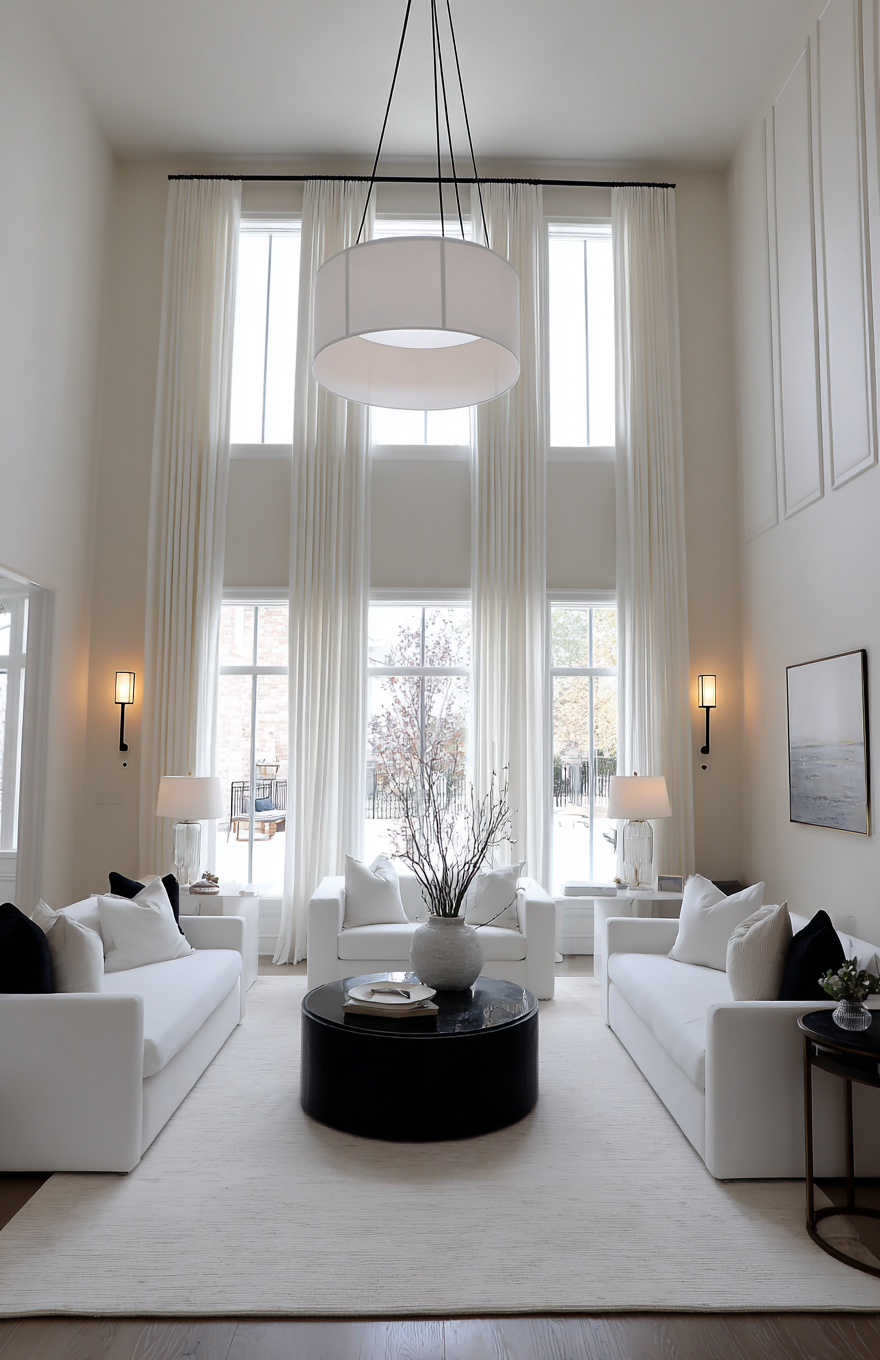
Living Room: This is where most people spend their evenings, so lighting here has a huge impact on sleep. Budget option ($20–$50): Replace overhead bulbs with warm white LEDs (2700K). Add table lamps or floor lamps with dimmers. Use these instead of bright overhead lights after 7 PM. Mid-range ($100–$250): Install smart bulbs in 3–5 key fixtures. Create evening scenes: “Relax” mode at 40% brightness and 2500K, “Bedtime” mode at 20% and 2200K. Premium ($400+): Full smart lighting with color-changing bulbs, automated schedules, and motion sensors. Integrate with voice assistants for hands-free control.

Home Office: Daytime light exposure in your workspace is critical for maintaining alertness and supporting nighttime sleep. Budget option ($25–$60): Add a high-lumen LED desk lamp (1,000+ lumens, 5000K+). Position it to illuminate your face and workspace. Use it from morning through mid-afternoon. Mid-range ($100–$200): Install overhead daylight-spectrum bulbs or LED panels. Supplement with an adjustable task lamp. Use dimmer switches to reduce intensity in late afternoon. Premium ($300+): Install tunable white smart lighting throughout the office. Program it to shift from 6500K at 100% brightness in the morning to 4000K at 60% by 5 PM. Add bias lighting behind monitors to reduce eye strain.

Integration with smart home systems: Most circadian lighting setups work seamlessly with Google Home, Amazon Alexa, or Apple HomeKit. Create routines that trigger based on time of day, sunrise/sunset, or even your sleep tracker data. Advanced users can integrate with Home Assistant for fully customized automation: lights that adjust based on local sunrise times, weather conditions, or your personal sleep schedule logged in apps like Sleep Cycle or Oura

Beyond Lighting: How Circadian Lighting Can Fix Your Sleep Schedule

Conclusion

Your sleep schedule isn’t broken—it’s just misaligned. For too long, we’ve treated sleep as something we can force through willpower, supplements, or sheer exhaustion. But sleep is fundamentally a biological process driven by light. Circadian lighting works because it addresses the root cause: the disconnect between our modern lighting environment and the light patterns our bodies evolved to expect. By delivering bright, blue-enriched light in the morning and warm, dim light in the evening, circadian lighting realigns your internal clock with your desired schedule.

The benefits are profound: faster sleep onset, deeper sleep quality, stable wake times, reduced grogginess, better mood, and greater daytime clarity. You don’t need to overhaul your entire home overnight. Start with one change—a sunrise alarm clock, a set of warm evening bulbs, or a bright morning task lamp. Track your sleep for two weeks and observe the difference. Then expand room by room, building a lighting environment that works with your biology instead of against it.
Circadian lighting isn’t just about better sleep—it’s about reclaiming control over one of the most fundamental aspects of your health. The science is clear, the tools are accessible, and the results speak for themselves. It’s time to fix your sleep schedule for good.

What do you think?
Leave a Reply

Blog

Get fresh home inspiration and helpful tips from our interior designers

top
4
    4
    Your Cart
    Elvetham Champagne Gold Finish Coffee Table Remove
    Winnow Table Lamp Remove
    Winnow Table Lamp
    Qty: 1
    Price: £1,524
    £1,524
    Durham Pendant Remove
    Durham Pendant
    Qty: 1
    Price: £2,261
    £2,261
    Remy Table Lamp Remove
    Remy Table Lamp
    Qty: 1
    Price: £1,195
    £1,195

    Inactive

    Privacy Overview

    This website uses cookies so that we can provide you with the best user experience possible. Cookie information is stored in your browser and performs functions such as recognising you when you return to our website and helping our team to understand which sections of the website you find most interesting and useful.